
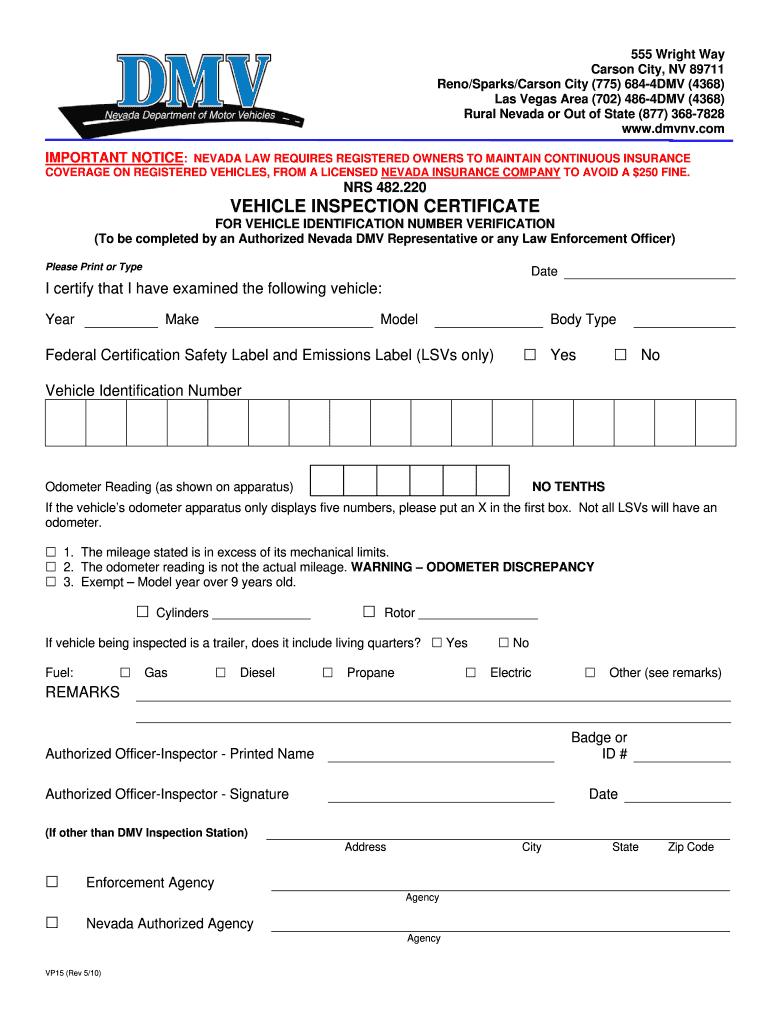







Understanding the VP 015 Vehicle Inspection Certificate
The VP 015 Vehicle Inspection Certificate is an essential document used in the vehicle registration process in the United States to confirm that a vehicle has met specific inspection requirements. This certificate plays a crucial role in ensuring that vehicles on the road comply with safety and emissions standards, thereby enhancing public safety and environmental protection.
Essential Components of the VP 015 Vehicle Inspection Certificate
The VP 015 includes several key elements that are critical to its validity:
- Vehicle Identification Number (VIN): This unique identifier is essential for accurately tracking the vehicle’s history.
- Inspection Date: The date when the inspection was performed is recorded, indicating the certificate's validity period.
- Inspector Information: Details regarding the personnel or agency that conducted the inspection, ensuring accountability.
- Inspection Results: A summary of the inspection findings, including any noted repairs or modifications that were made to achieve compliance.
How to Obtain the VP 015 Vehicle Inspection Certificate
Acquiring the VP 015 requires a straightforward process that typically includes the following steps:
- Schedule an Inspection: Contact an authorized inspection station, which may include local motor vehicle departments or private facilities.
- Prepare Your Vehicle: Ensure your vehicle meets all state inspection requirements. This may include an overall health check, emissions tests, and safety features.
- Complete the Inspection: During the appointment, an inspector will evaluate the vehicle based on predetermined criteria. They will document their findings on the VP 015.
- Receive the Certificate: If the vehicle passes all inspections, the certificate will be issued, confirming compliance with local regulations.
Important State-Specific Rules for the VP 015
Each state can have specific regulations and requirements regarding vehicle inspections and the VP 015. It is important to understand these unique rules to avoid any compliance issues, which may include:
- Inspection Frequency: Some states require annual inspections while others may have biennial requirements.
- Emissions Regulations: States with strict environmental laws may have additional emissions testing as part of the inspection.
- Documentation: Certain states may require additional forms or proof of insurance when obtaining the VP 015.
Penalties for Non-Compliance with the VP 015 Requirements
Failure to comply with the local requirements for the VP 015 can lead to significant repercussions for vehicle owners. Such penalties may include:
- Fines: Monetary penalties may be imposed for driving without a valid inspection certificate.
- Registration Issues: In some states, non-compliance could hinder the ability to renew vehicle registrations.
- Increased Insurance Premiums: Insurance companies may charge higher rates or deny coverage if proper documentation, such as the VP 015, is not provided.
Legal Implications Surrounding the VP 015 Vehicle Inspection Certificate
The VP 015 serves as formal documentation affirming that a vehicle adheres to safety and environmental standards. Therefore, it holds legal weight in various situations:
- Evidence in Legal Disputes: The VP 015 can be used in court cases as proof that a vehicle was compliant at a given time.
- Insurance Claims: In the event of an accident, having a current VP 015 may influence the outcomes of insurance claims.
- Government Regulations: Compliance with the VP 015 is crucial for adhering to state and federal regulations regarding vehicle operation.
Key Elements to Include When Completing the VP 015
When filling out the VP 015, it's vital to ensure all relevant information is accurately recorded. Important details typically include:
- Owner Information: Accurate details about the vehicle's owner, including name, address, and contact information.
- Vehicle Information: Comprehensive data about the vehicle, including make, model, year, and VIN.
- Inspection Outcomes: Clear notation of any items that passed or failed the inspection process to ensure transparency.
Use Cases for the VP 015 Vehicle Inspection Certificate
The VP 015 is applicable in various real-world scenarios, including:
- When Selling a Vehicle: Sellers may need to present the VP 015 to demonstrate the vehicle is roadworthy and compliant with safety standards.
- During Title Transfers: A valid VP 015 is often required to transfer ownership of a vehicle legally.
- For Loan or Lease Applications: Financial institutions may request the VP 015 to verify that the vehicle in question meets safety standards before approving loans or leases.
Conclusion
The VP 015 Vehicle Inspection Certificate is a pivotal document that underscores vehicle safety and compliance with state regulations. Understanding its components, acquisition process, state-specific rules, and implications is essential for vehicle owners. By ensuring that all requirements surrounding the VP 015 are met, vehicle owners can avoid penalties and promote safer roads.




