




01. Edit your nevada vin inspection locations online
Type text, add images, blackout confidential details, add comments, highlights and more.

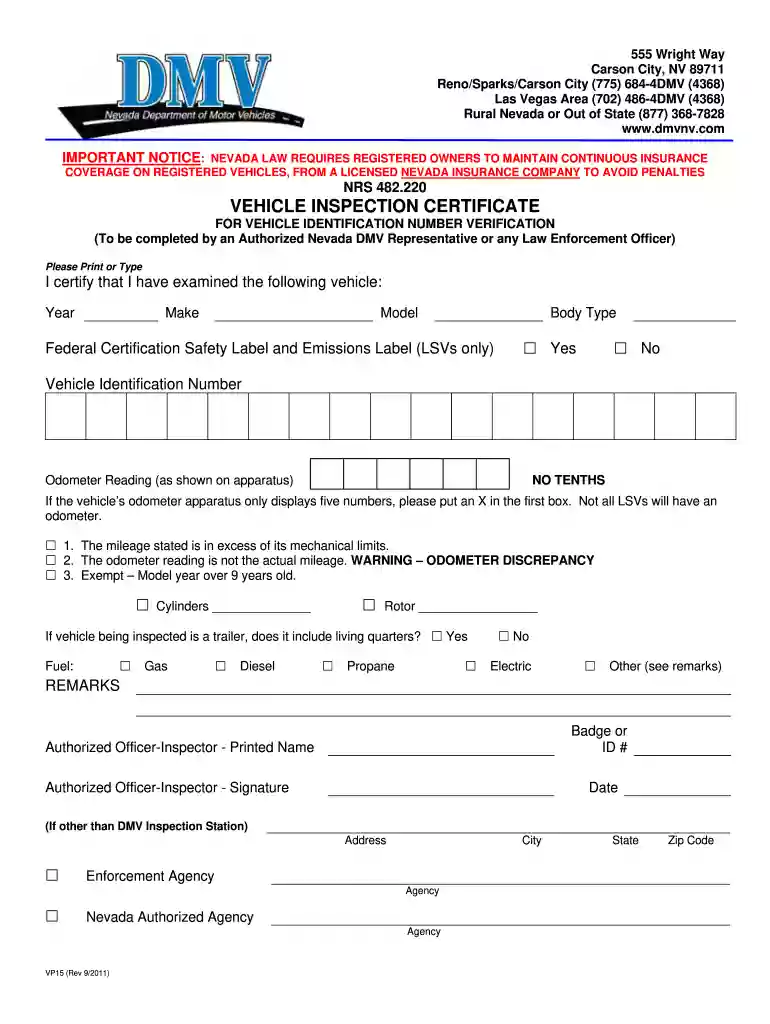
Type text, add images, blackout confidential details, add comments, highlights and more.

Draw your signature, type it, upload its image, or use your mobile device as a signature pad.

Send vin inspection nevada via email, link, or fax. You can also download it, export it or print it out.
The vehicle identification number (VIN) inspection in Nevada is a critical procedure, particularly when registering a vehicle or transferring ownership. This inspection confirms the VIN on the vehicle matches the information presented on the title or registration documents, ensuring legal compliance and helping prevent fraud.
To ensure a successful VIN inspection, certain requirements must be met:
Documentation: You need to bring specific documents to the inspection. This typically includes:
Vehicle Condition: The vehicle should be accessible for inspection. This means it must have:
Various designated locations throughout Nevada, including DMV offices and certified inspection facilities, conduct VIN inspections. Some key places include:
Nevada DMV Offices: Many DMV offices perform inspections on-site; however, it is advisable to check if appointments are necessary.
Authorized Inspection Stations: These might include some vehicle dealerships and automotive service centers.
Regional Inspection Locations: Las Vegas and Reno have specific VIN inspection locations, facilitating easier access for residents in those areas.
The cost for a VIN inspection can vary by location and type of inspection needed. Generally, fees may include:
Completing a VIN inspection in Nevada involves several straightforward steps:
Gather Required Documentation: Prepare the necessary paperwork, including the vehicle title and your ID.
Find an Inspection Location: Identify a nearby DMV office or authorized inspection facility or check the hours of operation if visiting a specific location.
Present Your Vehicle and Documents: Go to the inspection site, bring your vehicle, and show the inspector the required documents.
Undergo the Inspection: The inspector will check the VIN, ensuring it aligns with your documentation and measuring vehicle compliance with Nevada regulations.
Receive Inspection Certificate: Upon successful inspection, you will receive a vehicle inspection certificate, which you will need for registering or titling your vehicle.
VIN inspections are mandated by Nevada law, particularly when:
Registering Out-of-State Vehicles: If moving to Nevada with a vehicle from another state, a VIN inspection is often required to ensure proper registration.
Title Transfers: When changing ownership, new owners must complete a VIN inspection to finalize the title transfer process.
Sometimes issues can arise during the inspection process, including:
Illegible VIN: If the VIN is worn or difficult to read, you may need to contact a professional mechanic to remedy this before the inspection.
Discrepancies in Documentation: Ensure that the VIN on your documents matches the physical VIN on your vehicle to avoid complications.
Understanding the process for a VIN inspection in Nevada is essential for vehicle owners. By meeting requirements, knowing locations, and following steps, vehicle registration and ownership transfers can occur smoothly and legally. This ensures compliance with state laws and contributes to vehicle security and identification integrity.
We've got more versions of the nevada vin inspection locations form. Select the right nevada vin inspection locations version from the list and start editing it straight away!
At DocHub, your data security is our priority. We follow HIPAA, SOC2, GDPR, and other standards, so you can work on your documents with confidence.
Inspection means an official examination or observation, including, but not limited to, tests, surveys and monitoring to determine compliance withRead more
VEHICLE INSPECTION CERTIFICATE. FOR VEHICLE IDENTIFICATION NUMBER VERIFICATION. (To be completed by an Authorized Nevada DMV Agent or a Peace Officer).Read more


