
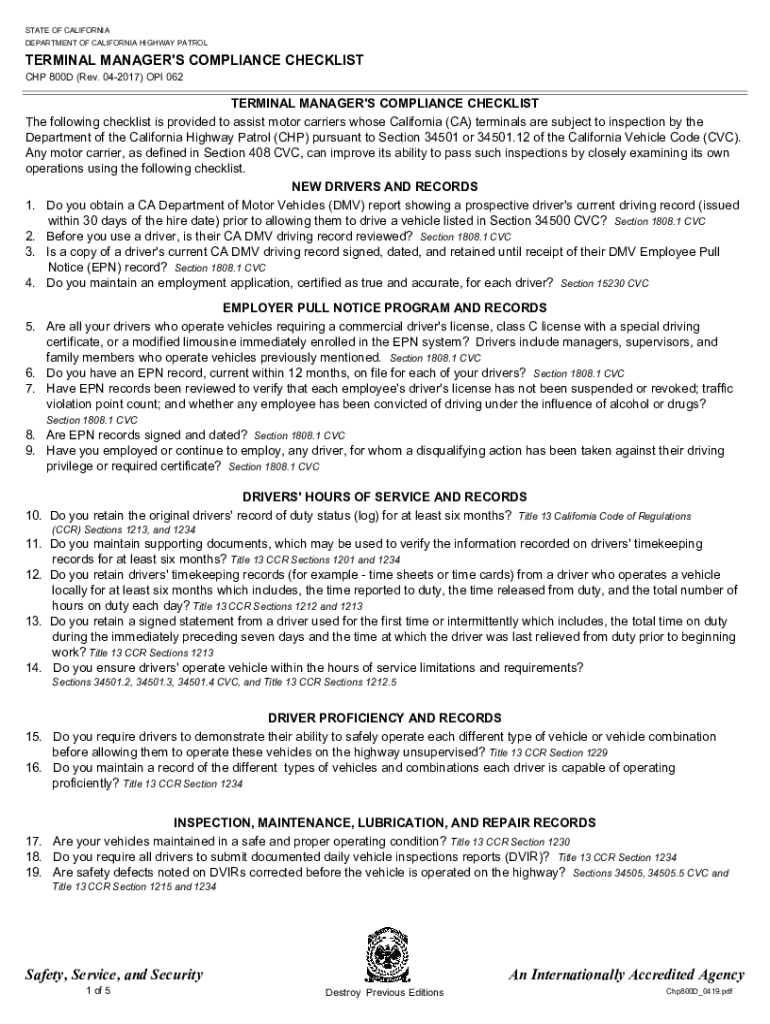







Definition & Meaning
The "Bit Inspection Checklist - Fill Online, Printable, Fillable, Blank" is a compliance tool used primarily by motor carriers and terminal managers in California. Developed by the California Highway Patrol (CHP), this checklist ensures adherence to the California Vehicle Code. It highlights essential regulatory requirements for vehicle maintenance, driver records, hours of service, handling hazardous materials, and overall safety standards. This checklist serves as a guide for carriers to regularly assess their operations, ensuring compliance and enhancing safety, which improves their chances of passing state inspections.
How to Use the Bit Inspection Checklist
To effectively use the Bit Inspection Checklist, follow these steps:
-
Access the Checklist: Obtain the checklist in a format that suits your needs — it can be filled online, printed, or used as a fillable PDF or blank form for manual completion.
-
Review Each Section: Carefully go through each section of the checklist. These typically include items related to driver records, vehicle checks, and safety protocols.
-
Gather Necessary Information: Collect data such as vehicle maintenance logs, driver records, and hours of service logs before filling out the checklist.
-
Complete the Checklist: Fill in each part of the checklist accurately, ensuring that all required details are provided. Use DocHub to input data directly into the online form and save time.
-
Review for Accuracy: Double-check your entries to ensure all data is correct and complete, minimizing the risk of errors that could affect compliance status.
-
Follow Up as Needed: If any compliance issues are identified, promptly address them to meet state regulations and improve operational safety.
Key Elements of the Bit Inspection Checklist
The Bit Inspection Checklist contains critical components that must be thoroughly understood:
- Driver Records: Details on driver qualifications, licensing, and training.
- Vehicle Maintenance: Logs and records of vehicle inspections and repairs.
- Hours of Service: Documentation of driver working hours to ensure compliance with rest regulations.
- Safety Protocols: Procedures for handling hazardous materials and emergency protocols.
- Record Keeping: Guidelines for maintaining accurate and accessible records for inspection purposes.
These elements are vital for ensuring regulatory compliance and maintaining safety standards.
Steps to Complete the Bit Inspection Checklist
- Preparation: Gather all relevant data and documents necessary for the checklist.
- Section-by-Section Completion: Start from the top of the checklist, filling out each section fully.
- Verify Information: Ensure that all information is complete and correct before moving on to the next section.
- Sign and Submit: If applicable, use DocHub's electronic signature feature for any required signatures before submitting the checklist to the relevant authorities or storing it as part of your compliance documentation.
Legal Use of the Bit Inspection Checklist
The Bit Inspection Checklist should be used within the legal framework provided by the California Vehicle Code. It assists with:
- Ensuring compliance with state regulations.
- Documenting adherence to required safety and maintenance standards.
- Providing evidence of compliance in the event of inspections or audits by authorities.
Using the checklist as intended helps prevent legal issues related to non-compliance, ensuring the transport operations meet all required standards set by law.
Who Typically Uses the Bit Inspection Checklist
- Terminal Managers: Responsible for ensuring that all vehicles and drivers under their supervision comply with state regulations.
- Motor Carrier Operators: Those overseeing the operation of fleets, tasked with keeping vehicles and operations within legal guidelines.
- Safety Officers: Individuals charged with overseeing safety protocols and ensuring adherence to regulatory requirements.
- Regulatory Inspectors: While not the primary users, inspectors rely on this checklist to quickly assess a company's compliance with state laws.
These users benefit from the checklist by streamlining compliance and ensuring operational safety.


Examples of Using the Bit Inspection Checklist
Real-world scenarios where the checklist might be applied include:
- Routine Compliance Checks: Regularly verifying that all operational aspects comply with state regulations.
- Pre-Inspection Preparations: Ensuring that all elements are in place before a scheduled state inspection.
- Internal Audits: Use this checklist to periodically review compliance status, identifying areas needing improvement.
Using such examples can aid organizations in adopting proactive measures towards maintaining compliance.
State-Specific Rules for the Bit Inspection Checklist
This checklist aligns specifically with California regulations under the California Vehicle Code, meaning it may not apply directly in other states. Companies operating interstate should be aware of state-specific requirements and adjust their records and practices accordingly. This may involve supplementing the California checklist with other forms or documentation required by states with differing regulations. Understanding these distinctions is crucial for maintaining compliance across various jurisdictions.
Who Issues the Form
The California Highway Patrol (CHP) is the authority responsible for issuing the Bit Inspection Checklist. They ensure the form's alignment with the regulatory standards outlined in the California Vehicle Code. The CHP oversees compliance with these standards and conducts both scheduled and random inspections to monitor adherence among motor carriers in California. Understanding the role of the CHP in form issuance underscores the importance of maintaining accurate and current paperwork.




