




01. Edit your form online
Type text, add images, blackout confidential details, add comments, highlights and more.

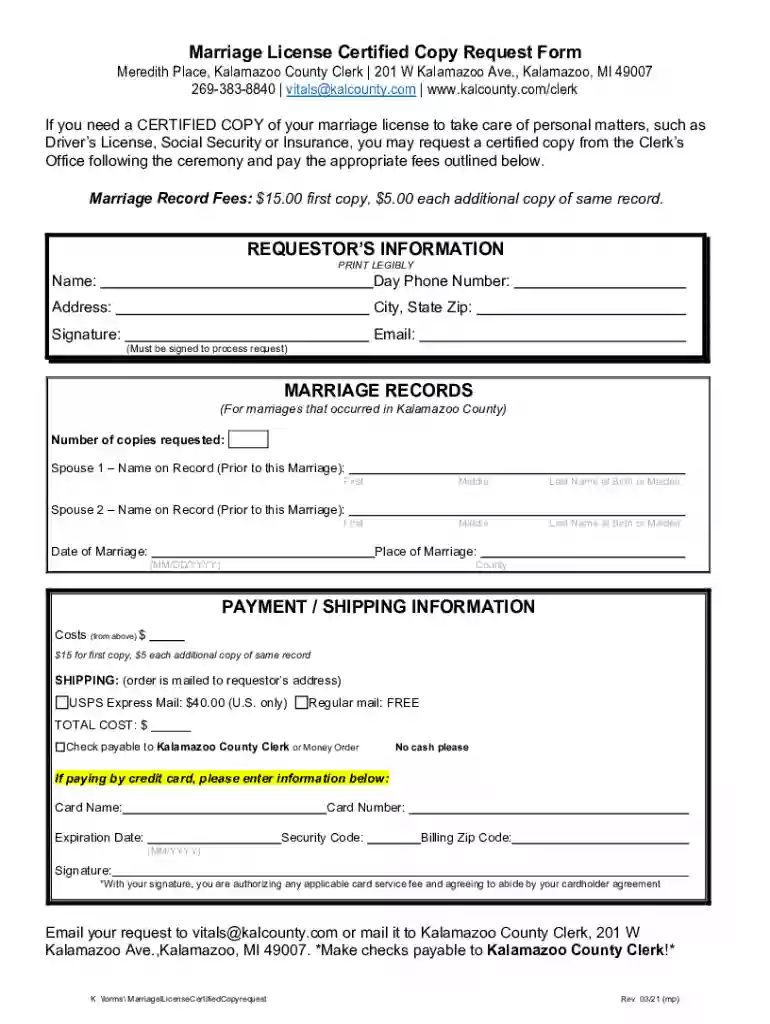
Type text, add images, blackout confidential details, add comments, highlights and more.

Draw your signature, type it, upload its image, or use your mobile device as a signature pad.

Send it via email, link, or fax. You can also download it, export it or print it out.
Visit the Courthouse in Person: To obtain a marriage license in Virginia, you and your partner must appear together at a circuit court clerk's office. The state of Virginia does not permit proxy applications where one party is not present.
Prepare Necessary Identification: Both parties must provide identification. Acceptable forms include a driver's license, state-issued ID, passport, or military ID. Ensure that the identification is current and not expired.
Provide Personal Information: You will need to provide personal information, such as your full name, date of birth, social security number, and parents' full names, including mothers' maiden names.
Pay the Required Fee: Each courthouse sets its fee for a marriage license. It typically ranges from $30 to $50. Check with the specific courthouse for payment methods, as they may vary. Some accept only cash, while others may allow credit or debit card payments.
Receive and Sign the License: After completing the application form and paying the fee, the court will issue the marriage license. Both parties must sign the license in the presence of the clerk.
By being aware of these steps and requirements, couples can ensure a smooth transition through the courthouse marriage process in Virginia.
We've got more versions of the how to get married in a virginia courthouse will - Yahoo form. Select the right how to get married in a virginia courthouse will - Yahoo version from the list and start editing it straight away!
At DocHub, your data security is our priority. We follow HIPAA, SOC2, GDPR, and other standards, so you can work on your documents with confidence.
International human rights activists are advocating for the minimum legal age to enter into a marriage to be set at 18 years old.Read more
Apr 24, 2025 Both parties must appear before the Clerk to obtain a license. You may obtain a license at any Circuit Court Clerks Office in the State ofRead more


