







Definition and Purpose of the New York State Department of Health Infectious Diseases Form
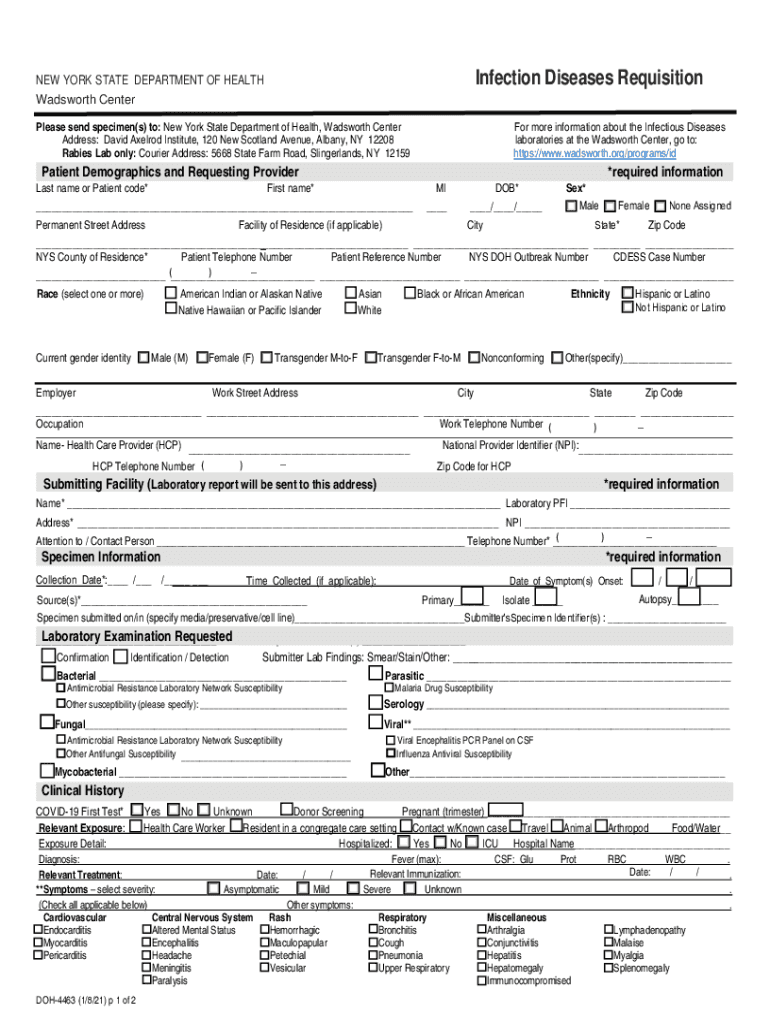
The New York State Department of Health Infectious Diseases Form is an essential document used for the accurate collection and submission of data related to infectious diseases. This form plays a crucial role in tracking and diagnosing infectious diseases by collecting patient demographics, specimen information, and clinical history. By standardizing the data collection process, the form facilitates timely and precise laboratory examinations.
Key Elements of the Form
- Patient Demographics: Includes essential information such as the patient's name, age, gender, and contact information to accurately identify and track individuals affected by infectious diseases.
- Specimen Information: Details regarding the type of specimen collected, the method of collection, and any relevant handling instructions to ensure proper laboratory analysis.
- Clinical History: Comprehensive details on the patient's medical background, symptoms, and any previous diagnoses relevant to the current infection under investigation.
How to Use the Form
Understanding the proper usage of this form is critical for accurate data collection and submission. Proper completion ensures that laboratory analysis and infectious disease tracking are conducted effectively.
Steps to Complete the Form
- Gather Patient Information: Collect all necessary demographic details, including name, age, and contact information.
- Document Specimen Details: Provide a thorough description of the specimen, including the collection method and any special handling instructions.
- Complete Clinical Information: Fill out the patient's medical history and symptoms pertinent to the infection being tested.
Practical Example
Consider a case where a healthcare provider needs to submit a specimen for influenza testing. The provider would complete sections detailing the fever, respiratory symptoms, and any relevant travel history alongside the specimen information to provide a full clinical picture.
Importance of the Form
This form is a vital tool in public health for controlling and preventing the spread of infectious diseases. By providing a standardized method for collecting and submitting data, it contributes to effective disease surveillance and response.
Who Typically Uses the Form?
- Healthcare Providers: Doctors, nurses, and laboratory technicians frequently utilize this form to submit specimens and obtain diagnostic results.
- Public Health Officials: Use the form to monitor disease trends and coordinate response efforts.


Obtaining the Form
This form can typically be obtained through healthcare facilities, laboratories, or directly from the New York State Department of Health.
Form Submission Methods
Options for submitting the form might include:
- Online Submission: Through designated healthcare portals.
- Physical Mail: Directly mailing the completed form to the relevant public health department.
- In-Person: Delivering to specific health department locations.
Legal Considerations
Understanding the legal usage and guidelines surrounding the form is essential to ensure compliance with state health regulations.
Legal Use of the Form
- Confidentiality Obligations: Adherence to regulations that protect patient privacy is essential. The form must be used and submitted in compliance with HIPAA and state-specific privacy laws.
Penalties for Non-Compliance
Failure to comply with proper submission and data handling procedures may result in legal penalties, illustrating the importance of diligence when handling this documentation.
Practical Examples of Form Utilization
The form serves multiple use cases within healthcare settings and governmental monitoring programs.
Case Study Examples
- Small Outbreak Monitoring: A cluster of measles cases in a community requires rapid collection of patient data and specimens.
- Ongoing Surveillance Programs: Public health initiatives use ongoing data collection to study and mitigate seasonal flu impacts.
Software Compatibility
Consideration should be given to the integration and submission of this form using compatible software systems.
Digital vs. Paper Version
While paper submissions may still be accepted, digital submission via compatible systems such as health information exchanges or public health portals enhances efficiency and accuracy.
Key Considerations and Takeaways
Summarizing the core aspects of this form highlights its role in public health and its requirements for effective use by healthcare providers.
Quick Facts
- Essential Tool for Disease Tracking: Supports accurate and timely infection diagnosis and management.
- Comprehensive Data Collection: Enables effective public health response and planning through standardized data submission methodology.




