
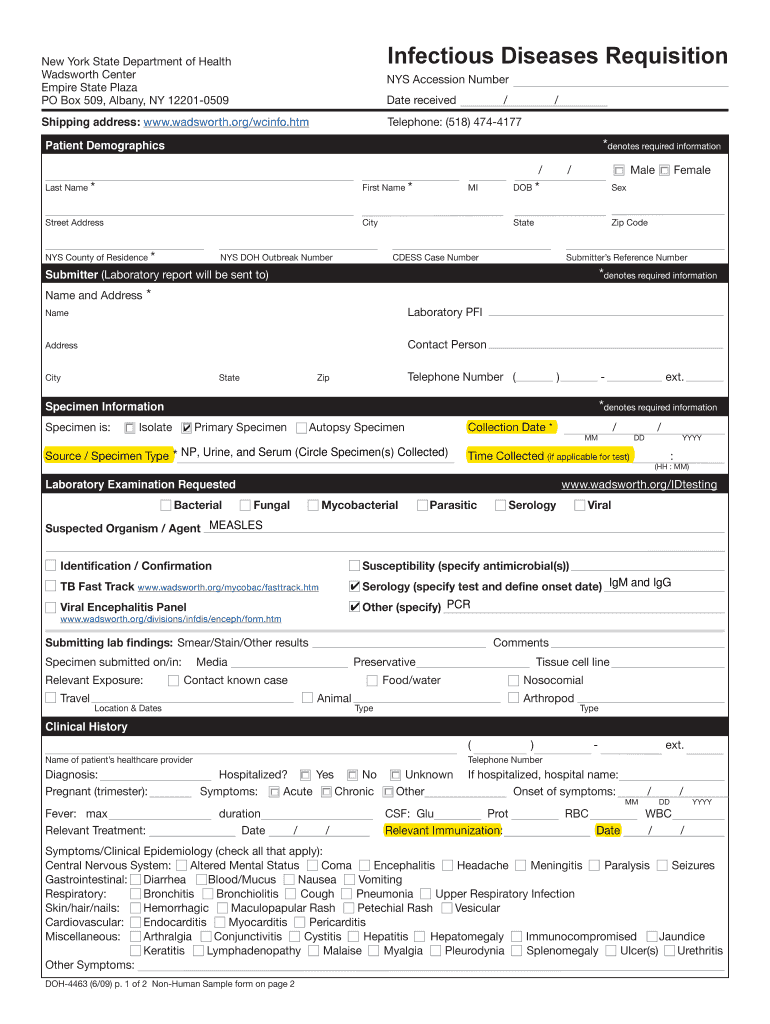







Definition and Meaning of the NYS Accession Number
The NYS Accession Number is a unique identifier assigned by the New York State Department of Health, specifically for tracking specimens submitted for laboratory examination. It serves as a reference for both health officials and the submitter to monitor the status of tests related to infectious diseases. Unique to each case, the accession number simplifies retrieval and identification of specific test results within large datasets.
An accession number facilitates efficient management of specimen information. It is essential for ensuring accurate tracking from the point of submission through the testing process until the completion of laboratory analysis. Not only does it aid in organizational record-keeping, but it also enhances communication between medical staff and health departments.
Purpose and Importance
The primary purpose of the NYS Accession Number is to maintain an organized and systematic approach to handling laboratory data. This is particularly crucial in disease control and prevention efforts, where timely and precise information is vital for public health responses.
Without accession numbers, managing and accessing large volumes of test data would be inefficient and prone to errors. Moreover, these numbers help ensure data integrity, reducing the risk of misidentifying specimens, which can lead to erroneous conclusions or inappropriate medical decisions.
How to Use the NYS Accession Number
Professionals in the healthcare sector rely on the NYS Accession Number to streamline processes regarding lab test submissions. Once a specimen is submitted to a lab, this number becomes the number one reference throughout the testing lifecycle.
Usage in Healthcare Settings
-
Tracking Specimens: Healthcare providers use this number to check the progress and status of laboratory tests, ensuring all parts of the procedure are advancing correctly and timely.
-
Result Retrieval: Upon completion of tests, the NYS Accession Number assists in obtaining results quickly by providing a direct link or reference to specific records in the database.
-
Patient Records: This unique number is also entered into patient records, helping medical professionals access and validate test outcomes easily when consulting with patients or referring to their medical history.
Steps to Obtain the NYS Accession Number
Obtaining a NYS Accession Number involves a structured process aligned with laboratory protocols. It begins when a specimen is collected and continues through until it's logged into the laboratory information system.
Process Overview
-
Specimen Collection: The process starts in healthcare settings where a specimen, such as blood or tissue, is collected from the patient.
-
Submission Form: The healthcare provider fills out a submission form specific to the type of test required, detailing necessary patient and specimen information.
-
Number Assignment: Once the specimen and form are submitted to the laboratory, the specimen is logged, and a unique NYS Accession Number is automatically generated.
-
Confirmation: Healthcare providers receive confirmation of the accession number, ensuring it aligns with the correct specimen and patient data.
Key Considerations
Proper adherence to form protocols ensures the NYS Accession Number is assigned correctly, reflecting accurate and current information necessary for effective disease tracking and management.
Why the NYS Accession Number is Essential
The NYS Accession Number plays a fundamental role in maintaining the integrity and reliability of health data. Its unique attributes cater to various healthcare processes, including diagnostics, treatment planning, and epidemiological research.
Benefits in Healthcare Operations
-
Enhanced Data Organization: The number helps structure the vast amounts of data generated by laboratories, thereby improving retrieval and analysis of test results.
-
Improved Communication: It provides a straightforward reference for discussions between laboratories, healthcare providers, and health departments, facilitating clear and problem-free communication.
-
Streamlined Patient Care: With precise tracking and result management, the accession number aids in delivering timely and accurate healthcare services to patients.
Who Typically Uses the NYS Accession Number
While the NYS Accession Number is primarily a tool for healthcare professionals, it is important across various sectors and roles involved in public health management and patient care.


User Demographics
-
Medical Laboratories: These facilities handle the bulk of operations involving accession numbers, ensuring specimens are tracked accurately from entry through to result output.
-
Healthcare Providers: Physicians and nurses use these numbers to request and review test results as part of diagnosing and treating patients.
-
Public Health Officials: These professionals rely on data associated with accession numbers to monitor and respond to infectious disease trends, contributing to public health strategies and interventions.
Key Elements of the NYS Accession Number
Several critical elements define the structure and use of the NYS Accession Number, each serving a purpose in its operation.
Structural Components
-
Unique Identifier: Comprising a mix of numbers and letters to prevent duplication or confusion between specimens.
-
Linkage to Patient Data: The number correlates directly to specific patient and specimen entries, supporting clinical accuracy.
-
Integration with Systems: It is compatible with lab information systems, ensuring seamless data flow and retrieval within and across healthcare platforms.
Ensuring the accurate assignment and use of the NYS Accession Number is essential for efficient healthcare delivery and data management, ultimately contributing to better patient outcomes and effective public health monitoring.




