







Definition and Purpose of the OFA Database
The OFA database, maintained by the Orthopedic Foundation for Animals, is an essential resource for the veterinary community and dog owners. It facilitates the collection and dissemination of data regarding canine health, with a particular focus on orthopedic conditions and hereditary diseases. This database serves as a central repository for information on the genetic and phenotypic traits of dogs, helping breeders, veterinarians, and researchers make informed decisions that can aid in the prevention and management of disease prevalence in dog populations.
How to Use the OFA Database
Using the OFA database is straightforward. Users can search for specific dogs or breed health statistics to gain insights into health trends, conditions, and lineage. To start, visit the Orthopedic Foundation for Animals website and navigate to the database search page. Users can enter either a dog’s registration number, the dog’s name, or apply filters like breed and health certifications to find specific information. For detailed breed statistics, select the breed of interest and review the data provided on the conditions of concern and the percentage of afflicted dogs. The database is invaluable for identifying potential genetic health issues before breeding, ensuring informed breeding decisions that prioritize the long-term health of canine breeds.
Steps to Complete the OFA Database Form
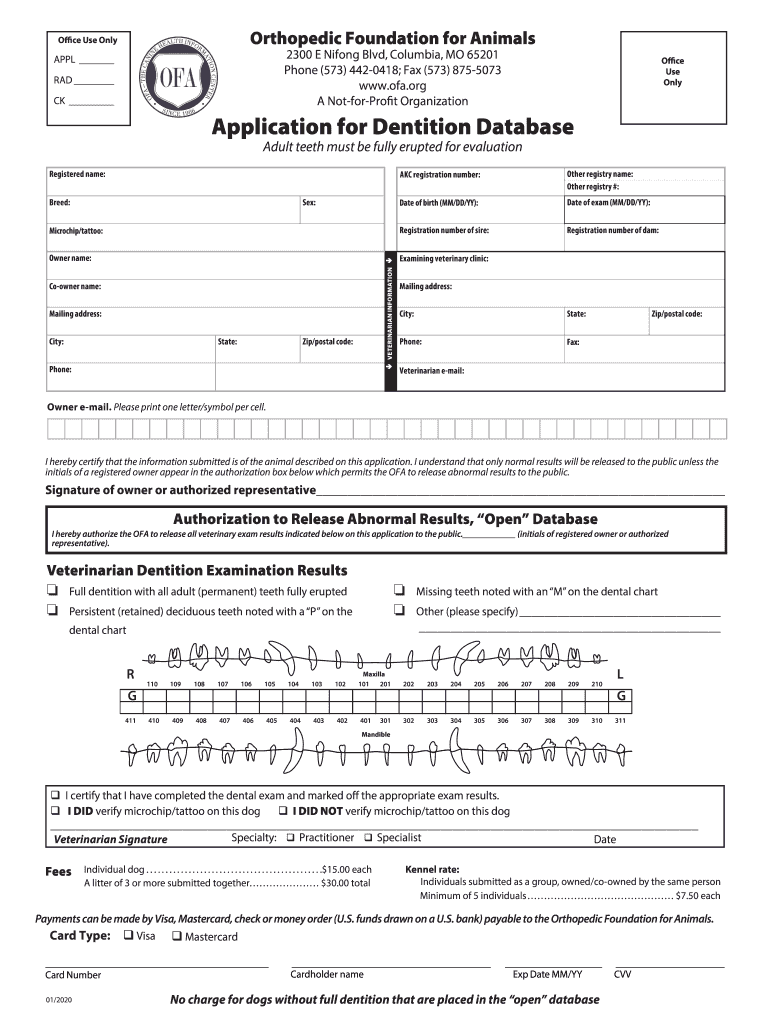
Completing the OFA database form involves several steps to ensure accurate and comprehensive information submission. Initially, gather all required documents, including veterinary records, ownership details, and animal identification information. Next, download the appropriate form from the OFA website. Fill in the sections detailing animal information, including breed, sex, birthdate, and registration number. Include veterinary examination results and upload relevant images or radiographs if needed. After carefully reviewing all entered information, submit the form, along with the processing fee, either online or via mail. Successful submission will update the database and allow other users to access this health data.
Who Typically Uses the OFA Database
The OFA database is utilized by a diverse group, including dog breeders, veterinarians, researchers, and dog owners. Breeders heavily rely on the database to screen potential breeding pairs to minimize the risk of passing on genetic disorders. Veterinarians use it for reference and to provide informed health advice to pet owners. Researchers studying canine genetics and hereditary conditions also benefit from the extensive dataset. Meanwhile, dog owners may consult the database to understand potential health issues in their breeds and ensure they are well-prepared to manage any health concerns.


Important Terms Related to the OFA Database
Understanding key terms is vital for accurately navigating the OFA database. Important terms include:
- Phenotype: Observable traits of an animal resulting from the interaction of its genotype with the environment.
- Genotype: The genetic makeup of an animal that influences its hereditary traits.
- OFA Certification: A formal confirmation that an individual dog has been evaluated and meets the standards for a specific health condition.
- Breed Median: A statistical measure used to interpret health data against the average tendencies within the breed.
These terms help users interpret the data effectively and utilize the database for precise decision-making.
Legal Use of the OFA Database
The use of the OFA database is subject to legal and ethical standards to ensure the integrity of its information. Users are required to use the data primarily for the intended purposes of advancing canine health and welfare. Misuse of the data, such as falsifying records or using it for non-health-related commercial purposes, could result in penalties or restrictions from accessing the database. The OFA database operates under strict guidelines that comply with privacy laws and aims to protect the rights of individuals submitting information regarding their animals.
Key Elements of the OFA Database Form
Completing the OFA database form involves several key elements that ensure a thorough entry. These include:
- Animal Details: Information on the breed, registration number, sex, and birthdate.
- Owner Information: Owner's full contact details and authorization for data release.
- Veterinary Examination Results: Specific details from a licensed veterinarian regarding the health assessment.
- Certification Request: Selection of specific health tests for official OFA certification.
Correctly filling in these elements ensures data accuracy and efficacy in health assessments.
Examples of Using the OFA Database
To illustrate real-world applications, consider a dog breeder assessing the hip health of a Labrador Retriever. By accessing the OFA database, the breeder evaluates the hip health certifications of potential breeding dogs, selecting those with favorable scores to minimize the risk of hip dysplasia in puppies. Similarly, a veterinarian advising a client with a newly adopted Golden Retriever could use the database to explore prevalent health issues within that breed, aiding in crafting a proactive health management plan. These examples underscore the utility of the database in decision-making processes that uphold canine health and welfare in varying contexts.




