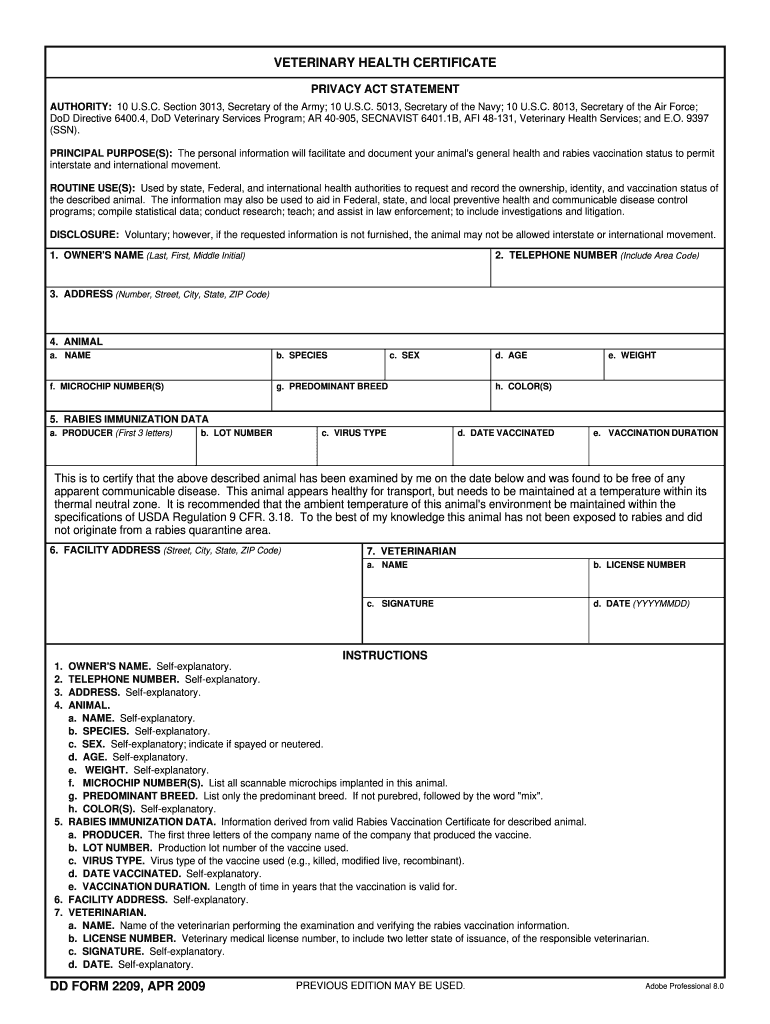







Definition and Purpose of a Veterinary Health Certificate
A veterinary health certificate is an official document that confirms the health status of an animal, particularly in relation to its ability to travel domestically or internationally. This certificate outlines essential health information, including vaccination records, particularly for rabies, and overall fitness for travel. It plays a crucial role in facilitating compliance with regulatory requirements set by various state and federal agencies.
- Health Verification: The certificate serves as verification from a licensed veterinarian that the animal has been examined and deemed healthy for travel. This includes a check for infectious diseases that may pose risks to humans or other animals.
- Travel Requirements: For most states, a health certificate is required for animals traveling across state lines. Additionally, international travel often requires more stringent documentation and compliance with the importing country's health regulations.
Key Components of a Veterinary Health Certificate
A comprehensive veterinary health certificate contains specific sections that ensure all necessary information is presented. These sections typically include:
- Owner Information: Details of the pet owner, including their name, address, and contact information.
- Animal Identification: Description of the animal, including species, breed, age, weight, and microchip or tattoo numbers if applicable.
- Vaccination Records: Information regarding rabies vaccination and any other vaccinations required for travel, including dates administered and expiration dates.
- Veterinarian Verification: Signature and seal of the veterinarian, along with their license number, confirming that they are authorized to issue health certificates.
Obtaining a Veterinary Health Certificate
The process for obtaining a veterinary health certificate generally includes several steps, ensuring thorough health assessment and documentation. Here’s a sequential breakdown:
- Schedule an Appointment: Contact a licensed veterinarian to schedule a health examination for your pet.
- Preparation for the Visit: Gather all necessary documentation, including past vaccination records, any existing health issues, and travel details.
- Veterinary Examination: During the appointment, the veterinarian will conduct a comprehensive health assessment, which may include physical examinations and checking vaccination status.
- Issuance of Certificate: If the animal meets the health requirements, the veterinarian will issue the veterinary health certificate. This document may be provided in a paper format or as a veterinary health certificate PDF, depending on the practice.
Common Uses of Veterinary Health Certificates
Veterinary health certificates are commonly required for various scenarios, particularly when traveling with pets. Here are some significant contexts in which these certificates are critical:
- Interstate Travel: Many states mandate a valid veterinary health certificate for animals crossing state lines, serving as proof of their health and vaccination status.
- International Travel: Countries often have strict requirements for importing pets, which may include obtaining a USDA veterinary health certificate. These certificates must comply with the specific regulations of the destination country.
- Pet Adoption Events: When participating in cross-state or international pet adoption events, a veterinary health certificate may be necessary to confirm that pets are healthy for potential adopters.
Legal and Regulatory Considerations
Understanding the legal implications of veterinary health certificates is essential for pet owners and veterinarians alike. Key considerations include:
- Compliance with State Laws: Varying state laws govern the issuance and requirements of health certificates. It's vital to stay informed about the regulations specific to your state.
- USDA Regulations: For international travel, compliance with USDA guidelines is mandatory. This includes adhering to specific formats, such as the USDA pet health certificate form, ensuring that it includes all requested information.
Examples of Veterinary Health Certificate Uses
The application of veterinary health certificates is wide-ranging. Some practical examples include:
- Traveling to a Pet-Friendly Hotel: Many hotels request proof of your pet’s health status in the form of a veterinary health certificate to ensure the safety of other guests.
- Moving to a New State: Individuals relocating to a new state with their pets often require a health certificate to meet local regulations.
- Participating in Competitions: Animal competitions and events may require a veterinary health certificate to confirm that all participating animals are healthy.
By understanding the significance and details of veterinary health certificates, pet owners can ensure they meet all necessary health requirements for safe travel, compliance with laws, and ensuring the well-being of their pets.