
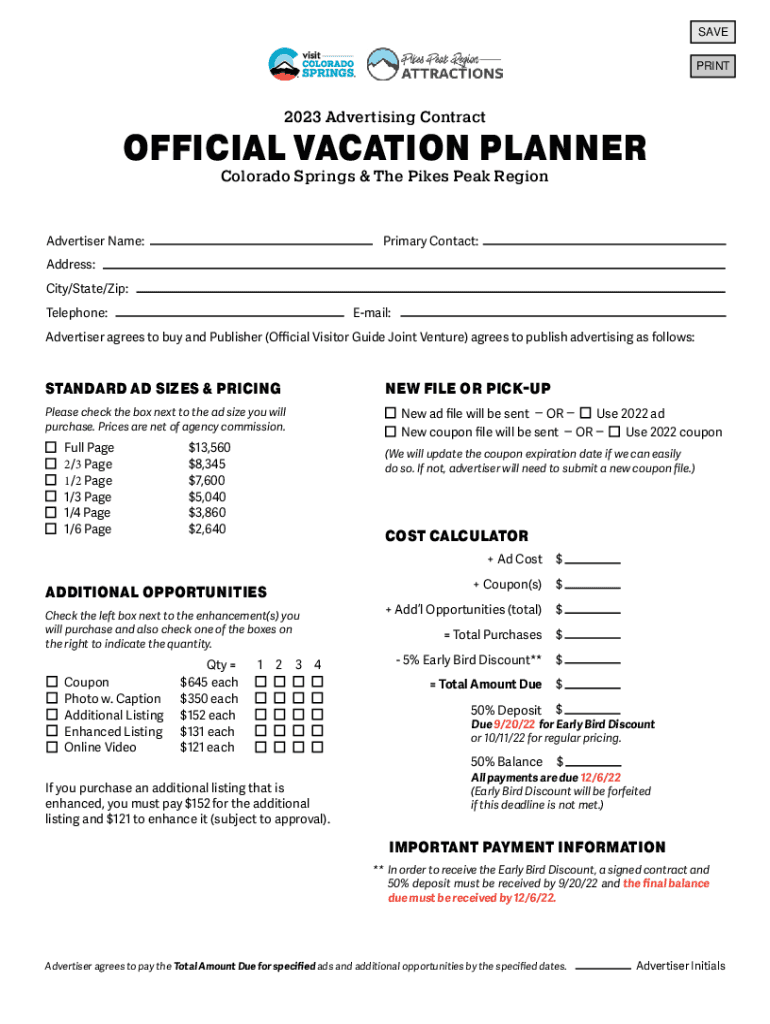







Definition and Meaning
The Official Vacation Planner serves as a comprehensive resource for planning vacations, providing vital information for travelers visiting specific regions. It includes a variety of details such as destination highlights, accommodations, itineraries, and local attractions. This planner is often used by tourism boards or travel organizations to promote tourism to their destinations, offering detailed insights to help tourists maximize their travel experience. The planner is designed to inform and simplify the vacation planning process, ensuring travelers have a wide array of options and information at their fingertips.
Key Elements of the Official Vacation Planner
The Official Vacation Planner comprises several critical components, each contributing to a comprehensive travel guide. These elements often include:
- Destination Highlights: Detailed descriptions of key attractions, natural landscapes, and cultural sites.
- Accommodation Listings: Options for hotels, bed-and-breakfasts, and vacation rentals, often including pricing and contact information.
- Travel Itineraries: Sample day-by-day plans to help structure visitors' time in the area efficiently.
- Local Events: Information on festivals, events, and activities unique to the region during certain times of the year.
- Maps and Navigation Tools: Detailed maps and tips for navigating within the region to aid tourists in easily finding attractions and accommodations.
Each section aims to provide travelers with all necessary information to plan a successful and enjoyable trip.
How to Use the Official Vacation Planner
Utilizing the Official Vacation Planner effectively requires understanding its layout and how to extract pertinent information. Follow these steps:
- Review Destination Highlights: Begin with an overview of the main attractions to prioritize what aligns with your interests.
- Select Accommodations: Based on your budget and preferences, choose suitable lodging from the provided listings.
- Plan Itinerary: Use the suggested itineraries as a base, customizing activities to fit your specific interests and timeframe.
- Check Local Events: Look for events that may enhance your visit experience, noting the dates and locations.
- Use Maps: Familiarize yourself with provided maps to understand the geographic layout and plan routes to your chosen attractions.
Each step ensures you maximize the planner’s utility, tailoring the vacation to fit personal preferences and timelines.
Steps to Complete the Official Vacation Planner Process
Completing the vacation planning process with the Official Vacation Planner includes several stages:
- Research: Start by thoroughly reviewing all sections of the planner to understand the destination fully.
- Contact Relevant Services: Reach out to accommodations and event organizers for bookings and further inquiries.
- Organize Documentation: Prepare necessary travel documents like reservations confirmations and identification for a smooth journey.
- Finalize Itinerary: Customize your itinerary with confirmed bookings and preferred daily activities.
- Review and Adjust: Review the plan closer to the travel dates, making adjustments for any last-minute changes or preferences.
Following these steps helps ensure that all aspects of the trip are well-organized and enjoyable.
Legal Use of the Official Vacation Planner
When using the Official Vacation Planner, it is important to understand its legal implications. This planner often involves adherence to intellectual property laws, ensuring the information and images are used legally and ethically. Typically, these materials are copyrighted by the issuing tourism body, meaning unauthorized reproduction or distribution can lead to legal consequences. Users should also ensure compliance with local tourism regulations when planning activities, such as respecting permits for visiting protected areas. Therefore, it is crucial to use the planner within legal guidelines to avoid any disputes or penalties.
Who Typically Uses the Official Vacation Planner
The Official Vacation Planner is typically used by a variety of individuals and organizations:
- Tourists: Individuals planning vacations utilize the planner for comprehensive travel information.
- Travel Agents: These professionals refer to the planner to offer clients informed recommendations.
- Event Organizers: Those managing local events may use it to align activities with the interests of incoming tourists.
- Tourism Boards: Government and local tourism bodies employ the planner to promote their region effectively.
These users rely on the planner to ensure they have the most accurate and useful information for effective decision-making.


Examples of Using the Official Vacation Planner
Using the Official Vacation Planner effectively can be seen in different scenarios:
- Family Vacation: A family plans their visit around kid-friendly activities and accommodations suggested in the planner.
- Adventure Seekers: Enthusiasts use the planner’s information on hiking trails and natural parks to map their outdoor activities.
- Cultural Enthusiasts: Individuals interested in cultural experiences customize their itinerary to attend local festivals and visit museums highlighted in the planner.
- Business Travelers: Professionals use the planner to balance meetings and leisure by exploring after-work dining and city tours.
These examples showcase diverse ways that the planner can cater to distinct travel preferences and needs.
State-Specific Rules for the Official Vacation Planner
Certain vacation planners include state-specific regulations travelers must adhere to:
- Travel Restrictions: Knowing regional travel advisories or restrictions is important, especially in protected areas.
- Accommodation Regulations: Understanding state tourism taxes or legal requirements for short-term rentals.
- Activity-related Permits: Some activities, like fishing or camping, may require state-issued permits.
- Health and Safety Protocols: Especially crucial post-pandemic, these may vary by state and affect access to certain attractions.
Awareness of these rules ensures compliance and a smoother travel experience, highlighting the importance of consulting the planner for state-specific information.




