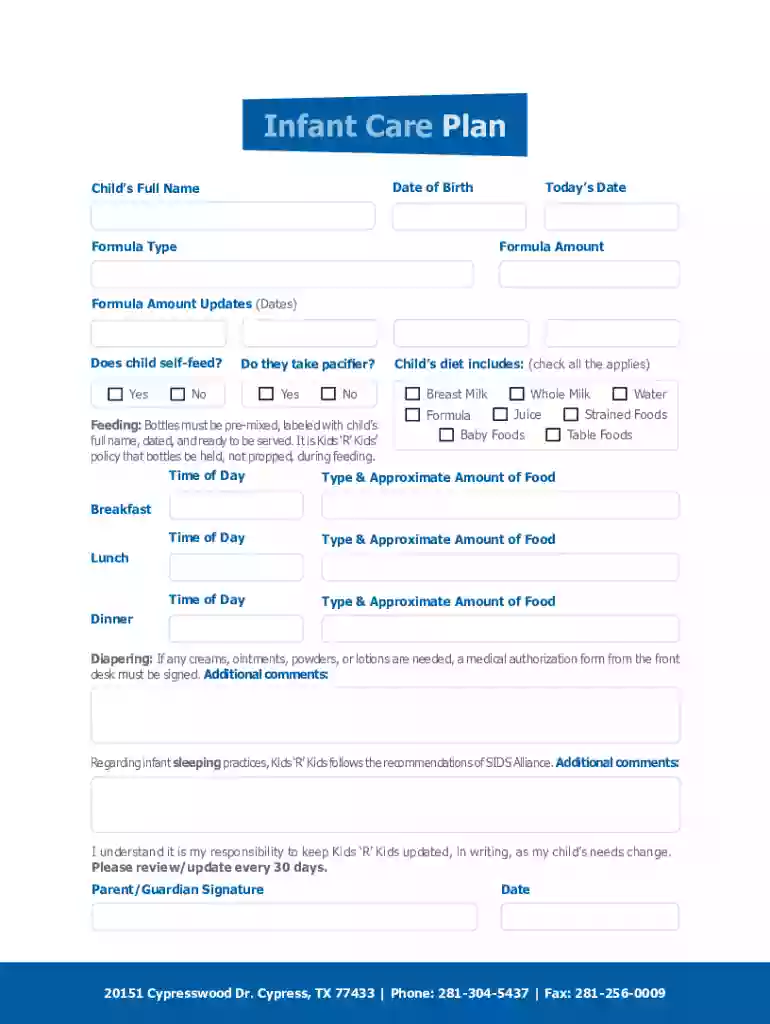
Coursehero file641028778infantcareplan5-14-12New doc - Kids R Kids of Round 2026

Get Form
hsmv 83390 Preview on Page 1

Here's how it works

01. Edit your hsmv 83390 online
Type text, add images, blackout confidential details, add comments, highlights and more.

02. Sign it in a few clicks
Draw your signature, type it, upload its image, or use your mobile device as a signature pad.

03. Share your form with others
Send florida window tint exemption via email, link, or fax. You can also download it, export it or print it out.

Definition and Meaning

The coursehero file, titled "coursehero file641028778infantcareplan5-14-12New doc - Kids R Kids of Round," serves as an Infant Care Plan. This document outlines essential information related to the care of an infant in a childcare setting. It includes comprehensive details about the child’s feeding schedule, diapering needs, sleep practices, and any other specific care requirements necessary to ensure the well-being of the infant. The document aims to provide a structured plan that guides childcare providers and ensures that all the child's needs are met efficiently and safely.

How to Use the Infant Care Plan

Parents and childcare providers utilize the Infant Care Plan to ensure consistent care. The document highlights specific information such as feeding instructions, including formula type and self-feeding habits, diapering routines, and sleep positions to comply with SIDS prevention guidelines. To maximize its utility, caregivers should review the document regularly and update it as needed, ensuring alignment with any changes in the child's care requirements. Utilizing this plan helps in maintaining a cohesive care environment, as all caregivers have access to the same detailed instructions.

Steps to Complete the Infant Care Plan

  1. Gather Necessary Information: Start by collecting essential details about the child, including full name, date of birth, dietary needs, and sleep preferences.
  2. Fill Out Feeding Instructions: Document the specific type and amount of formula or food required, as well as any self-feeding habits.
  3. Detail Diapering Routine: Include diaper brand preferences, changing frequency, and any specific considerations, such as lotion or powder usage.
  4. Specify Sleep Practices: Outline the child’s sleep schedule, preferred nap times, and adherence to SIDS guidelines.
  5. Review and Confirm Information: Parents and providers should review the completed plan together to ensure accuracy and completeness.
  6. Update Regularly: The document should be revisited every 30 days to reflect any changes in the infant’s care needs.

Key Elements of the Infant Care Plan

  • Child Identification: Includes the child's name and date of birth.
  • Feeding Information: Details on formula type, feeding schedules, and dietary preferences.
  • Diapering Needs: Specifics about diaper changes, including frequency and product preferences.
  • Sleep Guidelines: Instructions for safe sleeping practices, following SIDS recommendations.
  • Emergency Contacts: List of primary contacts in case of emergencies, including parents and healthcare providers.
  • Additional Care Instructions: Any other care directives or special considerations that caregivers should be aware of.

Who Typically Uses the Infant Care Plan

The Infant Care Plan is primarily used by parents of infants enrolled in childcare facilities and the staff responsible for the child's care. It serves as a communication tool between the parents and providers to ensure that the child receives consistent and thoughtful care. The plan benefits facilities such as daycare centers, babysitters, and in-home care providers, as it establishes a clear understanding of the child's needs and routines.


decoration image ratings of Dochub

Legal Use of the Infant Care Plan

The Infant Care Plan should be used in compliance with childcare facility laws and regulations, ensuring it aligns with state guidelines for infant care. It's critical that the document is filled out accurately and maintained confidentially to safeguard the child's and family's privacy. Updating the plan regularly helps adhere to legal standards regarding childcare documentation, supporting compliance with both state and federal regulations.

Examples of Using the Infant Care Plan

  • A daycare provider uses the plan to prepare bottles in advance, matching the specified formula type and amount.
  • During diaper changes, a caregiver follows the documented routines, ensuring consistency in product use and frequency.
  • At nap time, staff members reference the plan’s sleep guidelines to place the infant in a safe sleeping position as recommended for SIDS prevention.

Important Terms Related to Infant Care Plans

  • SIDS (Sudden Infant Death Syndrome): Refers to the sudden and unexpected death of an infant, often during sleep. The care plan includes guidelines to minimize risk, such as safe sleep practices.
  • Self-Feeding Habits: Describes the child's ability and preference to eat independently, which can include the use of certain types of foods or utensils.
  • Diapering Products: Specifies the types of diapers, wipes, and any additional care essentials needed for diaper changes.

Who Issues the Infant Care Plan

Infant Care Plans are typically developed by the childcare facility in collaboration with the parents. The childcare provider is responsible for offering the template, while parents provide the specific details related to their child. This collaborative process ensures that all parties are aligned on the care strategies and that the plan is tailored to the unique needs of each child.

See more coursehero file641028778infantcareplan5-14-12New doc - Kids R Kids of Round versions

We've got more versions of the coursehero file641028778infantcareplan5-14-12New doc - Kids R Kids of Round form. Select the right coursehero file641028778infantcareplan5-14-12New doc - Kids R Kids of Round version from the list and start editing it straight away!
Versions Form popularity Fillable & printable
2022 4.3 Satisfied (44 Votes)
2019 4.8 Satisfied (34 Votes)
2018 4.2 Satisfied (60 Votes)
2017 4.8 Satisfied (36 Votes)
2014 4.5 Satisfied (21 Votes)
2011 4 Satisfied (48 Votes)
2007 4 Satisfied (44 Votes)
be ready to get more

Complete this form in 5 minutes or less

Get form

Got questions?

We have answers to the most popular questions from our customers. If you can't find an answer to your question, please contact us.
Contact us
David Vinson, President and CEO of Kids R Kids International, Inc., has plenty to celebrate in early 2024. The Kids R Kids Learning Academies, now present in nearly 170 locations, represent the growing momentum of a family business begun by Davids father, Pat, and his grandmother, June, in 1961.
Kids R Kids Learning Academies impact over 35,000 children a day in over 170 Franchised Academies across the country. We are passionate about children and dedicated to making sure they receive the most innovative educational experience possible. Each school is individually owned and operated.
Kids R Kids Learning Academies is a privately owned preschool franchising system that educates and cares for children from 6 weeks through 12 years. All Learning Academies are individually owned and operated.
Kids R Kids Learning Academies operates as a franchising system, offering support for individually owned and operated preschools in the US.
Statistics back up the fact that private schools challenge students to meet a higher academic standard. ing to the National Center for Education Statistics, private high schools list more vigorous graduation requirements than their public school counterparts, requiring more coursework to be completed.

Security and compliance

At DocHub, your data security is our priority. We follow HIPAA, SOC2, GDPR, and other standards, so you can work on your documents with confidence.

Learn more
ccpa2
pci-dss
gdpr-compliance
hipaa
soc-compliance
be ready to get more

Complete this form in 5 minutes or less

Get form

People also ask

Is Kids R Kids a private or public company? Kids R Kids is a Private company.