







Definition & Meaning
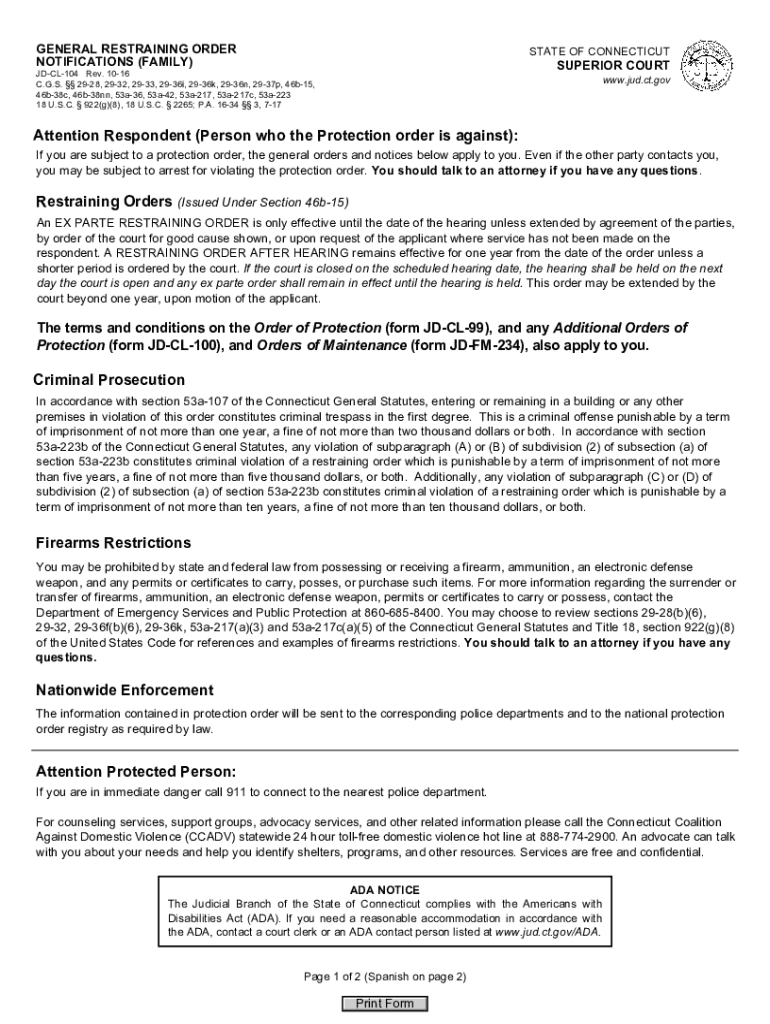
The "CT Notifications Family" refers to the group of notifications issued by the state of Connecticut that typically involves legal updates or information about family-related legal matters. These notifications often pertain to court orders such as restraining orders, protective measures, or family court procedures. The focus is on informing all relevant parties about legal obligations and changes concerning family law, ensuring compliance with established legal standards. Understanding these notifications is crucial for individuals directly involved in family legal matters, such as divorce or custody disputes.
- Notifications are typically issued by the Connecticut Judicial Branch or related legal entities.
- They serve to inform affected parties about legal proceedings or responsibilities.
- Typically include procedural information and compliance requirements for respondents and applicants involved in family-related legal actions.
How to Use the CT Notifications Family
Understanding how to properly use the "CT Notifications Family" is crucial for anyone involved in Connecticut's family legal systems, such as parties to a family court case, legal representatives, or social service providers. These notifications provide essential information on legal proceedings, requirements, and deadlines.
-
Review the Notification Content:
- Look for key details such as case numbers, dates, involved parties, and court locations.
- Identify any required actions or responses.
-
Comply with Legal Requirements:
- Follow any instructions for filing documents, attending court sessions, or adhering to restraining orders.
- Ensure any specified actions are carried out within indicated time frames to avoid penalties.
-
Seek Legal Advice:
- Consult with a legal professional to understand the implications of the notification and to plan appropriate actions.
- Consider legal counsel for assistance in responding to notifications correctly.
Steps to Complete the CT Notifications Family
Completing obligations linked to the "CT Notifications Family" typically involves a series of steps ensuring thorough compliance with Connecticut's legal procedures.
-
Gather Required Documentation:
- Collect any relevant documents such as previous court orders, evidence for your case, and personal identification documents.
-
Submit Necessary Forms:
- Ensure all required forms are filled out completely and accurately.
- Forms may require signatures, additional documentation, or proof of service.
-
Attend Required Meetings or Hearings:
- Attend any scheduled court appearances or mediation sessions.
- Present any required information or documentation as requested by the court.
-
Verify Compliance:
- Once actions are completed, confirm compliance with the notification and any resulting court orders.
- Keep records of all submissions and communications with the court.
Key Elements of the CT Notifications Family
The "CT Notifications Family" encompasses critical elements that those involved need to be aware of to ensure compliance and understanding.
- Legal Notices: These might include warnings about breaches of court orders or updates about court proceedings.
- Deadlines: Specific time frames are often outlined for submitting responses or fulfilling legal obligations.
- Responsibilities: Notifications frequently delineate duties required of parties, such as abiding by a restraining order or attending a court hearing.
Legal Use of the CT Notifications Family
The legal use of the "CT Notifications Family" is targeted at ensuring that all involved parties in legal proceedings are informed of their roles, rights, and obligations under the law.
- Notifications aim to facilitate legal processes by informing parties of their scheduled court dates, required document submissions, and other procedural necessities.
- They play a crucial role in enforcing compliance with court orders and legal standards within the state's jurisdiction.
State-Specific Rules for the CT Notifications Family
Connecticut's legal notifications include state-specific rules that embody local legal standards and requirements.
- Procedural Specificity: Each notification may contain unique procedural instructions following Connecticut's family law standards, requiring careful reading and adherence.
- Jurisdictional Limits: The applicability of notifications is strictly limited to the scope of Connecticut state law.
Examples of Using the CT Notifications Family
Understanding practical examples of how notifications function can demystify their usage and highlight their importance.
- Restraining Order Notification: Informs the respondent of the order's terms, prohibiting certain actions like contact with the petitioner.
- Child Custody Hearing Notification: Provides details on hearing dates and required paperwork.
- Modification of Orders: Notification about changes to existing court orders, such as child support adjustments.
Important Terms Related to the CT Notifications Family
Familiarity with certain terms is essential for correctly interpreting these notifications.
- Respondent: The individual whom the notification addresses, usually required to take action.
- Petitioner: The party that initiates the legal notification process, seeking a legal remedy.
- Compliance Date: The deadline by which specific actions dictated in the notification must be completed.
By understanding these aspects of the "CT Notifications Family," individuals can better navigate their legal responsibilities and ensure timely and compliant responses to all issued notifications.




