





Definition & Meaning
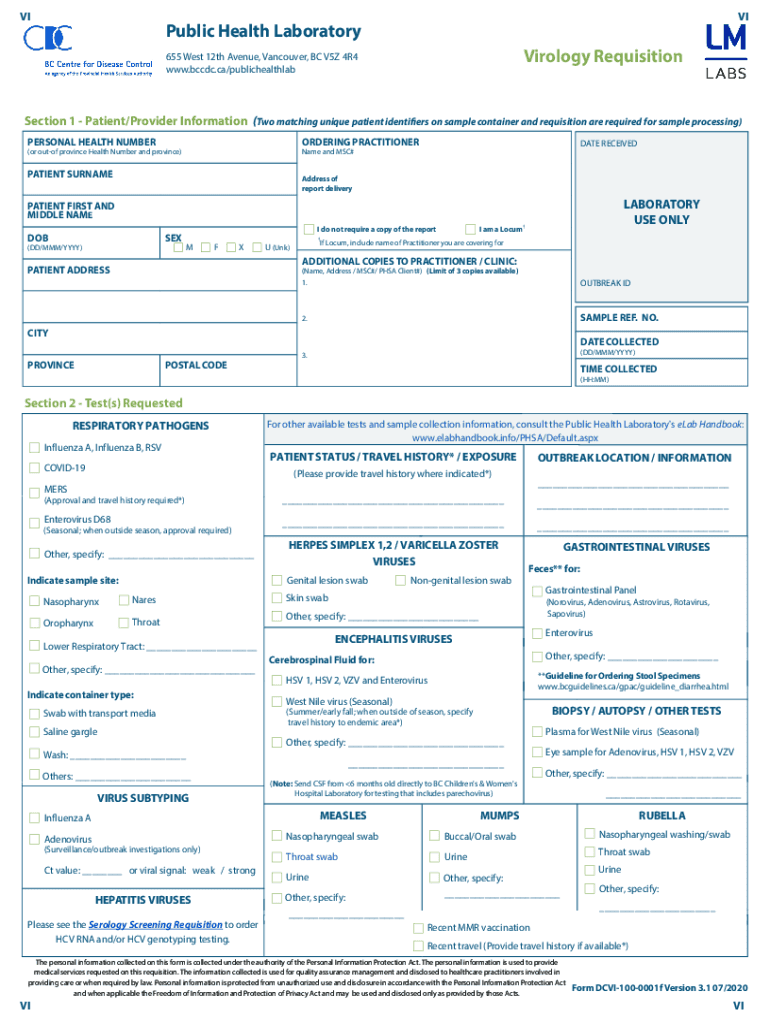
A virology requisition is an essential form utilized in public health laboratories to request virus testing. It serves as a formal document that captures detailed information about patients and healthcare providers, ensuring that laboratory tests for viral pathogens are conducted accurately. The form is specifically designed to streamline the collection of vital data such as personal health numbers, patient demographics, and specific test requests for various viral infections.
Importance of Accurate Information
- Patient Identification: Accurate patient information is crucial, including name, date of birth, and personal health numbers. This ensures precise matching between the sample and the requisition form.
- Provider Details: The healthcare provider's information, including contact details and signature, is required for result communication and follow-up.
- Test Specifications: Clearly stating the required tests helps lab technicians in conducting appropriate analyses without delays or errors.
Steps to Complete the Virology Requisition
Completing the virology requisition form requires attention to detail to avoid processing delays.
- Gather Required Information: Collect all necessary patient details, including their unique health identifiers and demographic information.
- Select Test Type: Identify the specific viral tests required, such as influenza or COVID-19, and indicate these clearly on the form.
- Include Specimen Information: Detail the type of specimen collected, such as nasal swab or blood sample, and the date/time of collection.
- Provide Provider Details: Fill in the healthcare provider’s name, contact information, and any associated healthcare institution data.
- Review for Accuracy: Double-check all entries for completeness and correctness to ensure the form is processed without issues.
- Submit with Sample: Submit the completed form along with the collected specimen to the designated public health laboratory.
Key Elements of the Virology Requisition
Understanding the components of the virology requisition form is critical for accurate completion and submission.
Patient Information
- Essential Details: Full name, date of birth, and contact information.
- Health Identifiers: Personal health number and insurance details.
Test Requests
- Pathogen Choices: Options for respiratory and gastrointestinal virus tests.
- Specimen Details: Indicating the type and status of the sample.
Provider Information
- Institutional Affiliation: Hospital or clinic association of the requestor.
- Contact Methods: Phone number, email, and mailing address for follow-up.
Legal Use of the Virology Requisition
The virology requisition form is legally binding and ensures ethical compliance with health data privacy laws. In the United States, the handling and submission of this form must adhere to HIPAA regulations to protect patient confidentiality.
Privacy Commitment
- Confidential Data Handling: Ensures all personal data is managed with strict confidentiality.
- Authorized Access: Only designated individuals within the healthcare and laboratory teams have access to the data for processing and results interpretation.
Examples of Using the Virology Requisition
The virology requisition form is used in various scenarios within healthcare settings.
Hospitals and Clinics
- Emergency Cases: Rapid response in cases like flu outbreaks or pandemic surveillance.
- Routine Surveillance: Regular virus screening in vulnerable populations.
Public Health Initiatives
- Outbreak Management: Monitoring and controlling viral diseases at a community level.
- Research and Data Collection: Gathering data for epidemiological studies and public health research.
Penalties for Non-Compliance
Failure to submit or incorrectly completing a virology requisition form can lead to significant repercussions.
Operational Impacts
- Delayed Testing: Incomplete requisitions can result in postponed laboratory testing, impacting patient outcomes.
- Data Inaccuracies: Incorrect data can skew public health data analysis and research findings.
Legal Consequences
- HIPAA Violations: Inadequate protection of patient data can lead to legal penalties and fines.
- Non-Compliance with Standards: Failing to adhere to public health standards may result in institutional sanctions.
Software Compatibility with Virology Requisition
Modern technology facilitates the completion and management of virology requisition forms through software compatibility.
Integration with Online Platforms
- Document Management Systems: Platforms like DocHub enable seamless editing, signing, and sharing of requisition forms.
- Security Features: Ensure that all communications are encrypted and secure, maintaining compliance with data protection laws.
Use with Healthcare Systems
- Electronic Health Records (EHR): Integration with EHR systems allows streamlined data entry and retrieval processes.
- Automation Potential: Automates reminders and follow-ups for incomplete or pending requisitions.
Important Terms Related to Virology Requisition
Understanding specific terminology related to the virology requisition form can reduce errors and ensure proper form completion.
Key Terms
- Pathogen: Refers to any virus, bacterium, or other microorganisms causing disease.
- Specimen: The sample obtained for laboratory testing, such as blood or tissue.
- Requisition: An official order or request for services.
This comprehensive overview serves as a guide for healthcare professionals to efficiently utilize the virology requisition form, bridging the gap between patient data collection and laboratory testing.