





Definition and Purpose of the CT-1041 Form
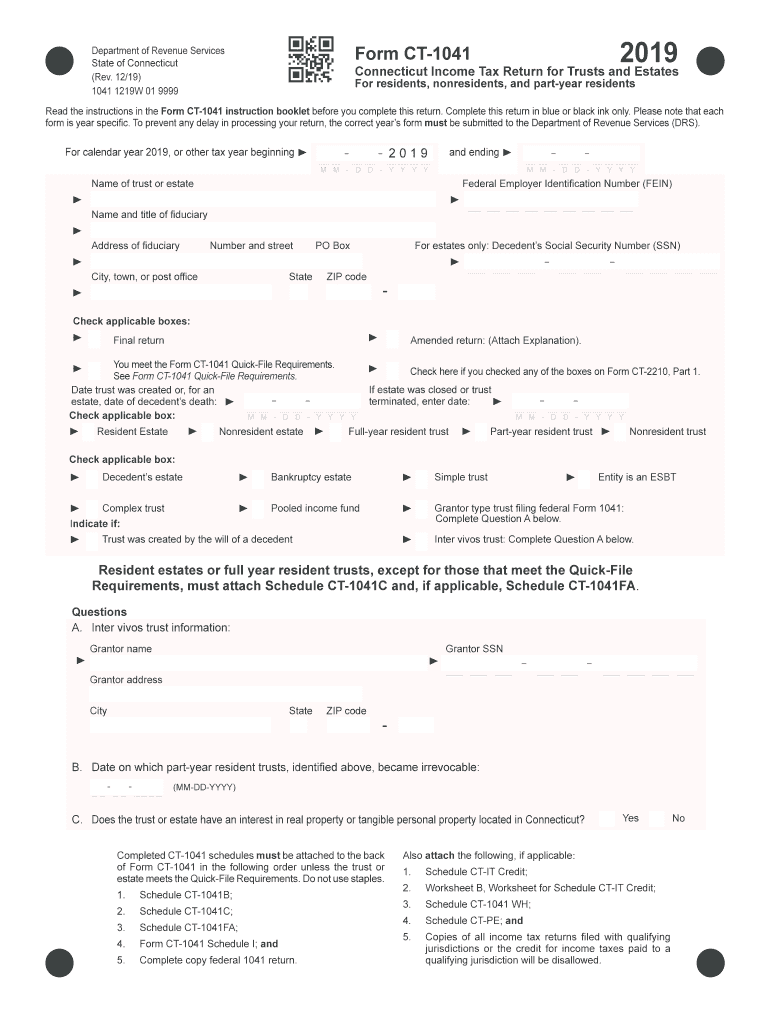
The CT-1041 form is the Connecticut Income Tax Return designated for trusts and estates. It serves as a comprehensive document for taxpayers to report income, deductions, and credits specific to trusts and estates. This form is used to compute the state income tax liabilities for these entities and ensure they comply with state tax obligations. Designed for residents, non-residents, and part-year residents, the CT-1041 is crucial for accurately capturing the financial activities within a fiscal year and adhering to taxation requirements set forth by Connecticut state laws.
Distinguishing Characteristics
- Entity Focus: Applicable specifically to trusts and estates.
- Income Reporting: Includes sections for detailing income derived from various sources.
- Official Tax Documentation: Functions as the main document for state income tax submissions for trusts and estates.
Steps to Complete the CT-1041 Form
Filing the CT-1041 form requires meticulous attention to detail to ensure accuracy. Follow these steps to successfully complete the form:
- Gather Required Documents: Collect all necessary financial statements, including income statements, documentation of deductions, and any prior tax filings.
- Enter Personal Information: Fill in details about the trust or estate, including name, address, and federal identification number.
- Report Income: Record income from interest, dividends, capital gains, and other relevant sources in the appropriate sections.
- Calculate Deductions and Credits: Include applicable deductions and credits, ensuring that they are specific to the trust or estate.
- Compute Tax Owed: Use the provided schedules and instructions to calculate the total tax liability.
- Review for Accuracy: Thoroughly check all entries for errors or omissions.
- Prepare for Submission: Attach any required schedules and supplementary documents.
Tips for Accuracy
- Double-check all numbers to prevent computation mistakes.
- Ensure all attached schedules align with the reported information.
- Verify signatures from trustees or estate administrators.
How to Obtain the CT-1041 Form
Acquiring the CT-1041 form can be done easily through several methods:
- Online Access: Download the form from the Connecticut Department of Revenue Services (DRS) official website. This ensures you have the most up-to-date version.
- In-Person: Visit a local DRS office to pick up a physical copy.
- Tax Preparation Software: Many tax software programs offer the CT-1041 form within their suite of forms, allowing for direct input and filing.
Advantages of Digital Access
- Immediate availability and download.
- Ability to fill the form electronically, reducing paper waste.
- Convenient for integrating with electronic filing systems.
Filing Deadlines and Important Dates
Understanding key deadlines is crucial for timely compliance with state tax requirements for trusts and estates:
- Annual Filing Date: Typically due by the fifteenth day of the fourth month following the close of the tax year (usually April 15 for calendar year filers).
- Extension Requests: Possible through a formal request using Form CT-1041 EXT to gain an additional six months.
- Estimated Payments: May be required throughout the year for trusts or estates anticipating a significant tax liability.
Consequences of Missing Deadlines
- Late filing penalties and interest charges may apply.
- Potential loss of certain exemptions or credits.
Legal Use and Compliance
The CT-1041 form ensures legal compliance with Connecticut state tax laws for trusts and estates. It helps maintain transparency and accountability regarding the financial operations of these entities.
Key Legal Considerations
- Filing Obligations: Legally required for any trust or estate with taxable income in Connecticut.
- Compliance Verification: The DRS may audit records to ensure correct tax filing.
- Penalties for Non-Compliance: Failing to file or inaccurately reporting can result in penalties and interest.
Required Documents
Filing the CT-1041 necessitates preparation of several supporting documents to ensure completeness and accuracy:
- Income Documents: Statements from banks, brokerage accounts, and any other income sources.
- Deduction Records: Receipts and logs for expenses claimed as deductions.
- Prior Year Tax Information: Reference for consistency in reporting.
Document Preparation Tips
- Maintain organized records throughout the year.
- Copies should be legible and complete.
- Ensure all information matches data entered on the CT-1041 form.
Who Typically Uses the CT-1041 Form
The CT-1041 is predominantly used by trustees and fiduciaries responsible for managing the financial affairs of trusts and estates. It applies to:
- Irrevocable Trusts: Permanent trusts for estate planning.
- Decedent Estates: Managing finances of an individual who has passed away.
- Charitable Trusts: Trusts established for charitable purposes with incomes subject to state taxes.


Responsibilities of Users
- Accurately report all financial transactions.
- Ensure timely and compliant tax filing.
- Manage any tax liabilities or refunds appropriately.
Important Terms Related to the CT-1041 Form
Understanding specific terminology is critical when dealing with the CT-1041 form:
- Fiduciary: An individual or institution responsible for managing assets for another party.
- Distributable Net Income (DNI): A calculation used to determine the amount of income that can be distributed to beneficiaries.
- Taxable Year: The period for which the tax return is filed, usually aligning with the calendar year or fiscal year of the trust or estate.
Clarifying Complex Terms
- Trust vs. Estate: A trust is an arrangement for holding assets, while an estate involves managing a deceased person's assets.
- Grantor Trust: A type of trust where the grantor retains powers or benefits, leading to income being taxed to the grantor rather than the trust.