







Definition & Meaning
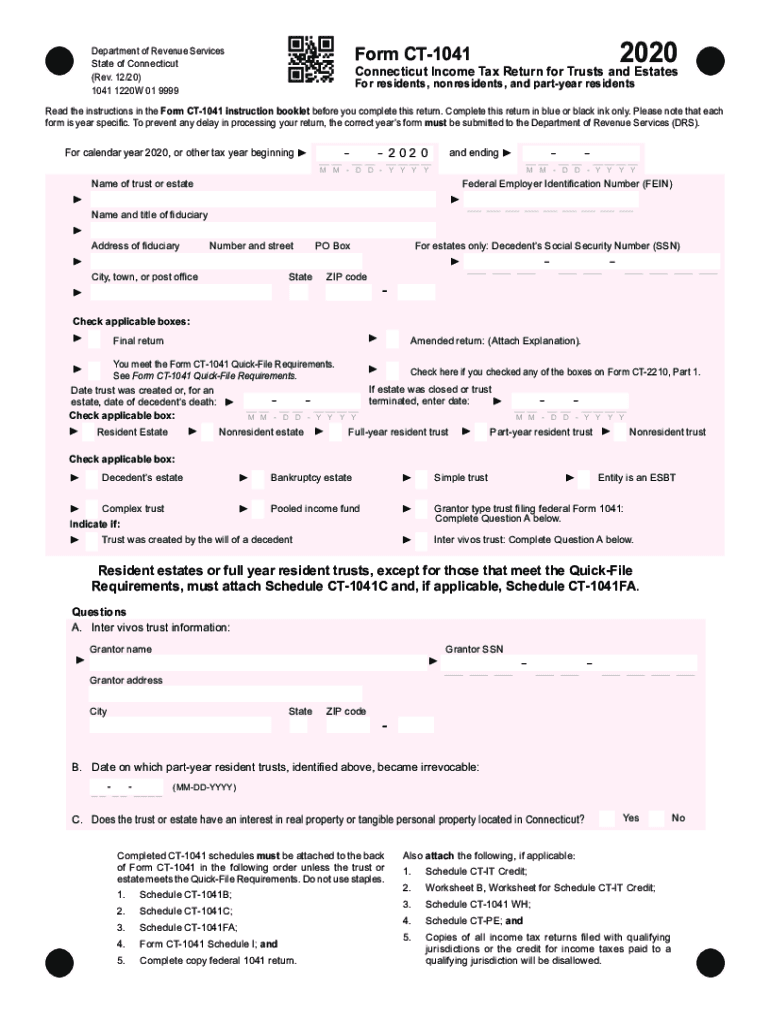
Form CT-1041, the Connecticut Income Tax Return for Trusts and Estates, is a document required for filing income taxes on behalf of trusts and estates within Connecticut. This form is utilized to report income, deductions, and other tax attributes specific to these entities, ensuring compliance with state tax laws. It captures aspects such as taxable income, reductions, credits, and any liabilities or refunds due.
Key Features
- Income Reporting: Tracks all sources of income applicable to trusts and estates.
- Deductions and Credits: Allows for reporting expenses and applying eligible credits to minimize tax liability.
- Tax Calculation: Determines the total taxes owed or refunds due from the state.
Steps to Complete the Form CT-1041 Tax Fillable
-
Gather Necessary Information: Prepare all financial documents, including income statements, deductions, and credit evidence for accurate reporting.
-
Complete Personal Information Section: Enter details about the trust or estate, including the name, federal employer identification number (FEIN), and the fiduciary's contact details.
-
Report Income and Deductions: Fill out the appropriate sections for income earned during the tax year as well as any deductions the entity might qualify for.
-
Calculate Tax Liability: Utilize the form to compute state income tax obligations based on the provided information, ensuring accurate calculations.
-
Attach Schedules and Statements: Include all schedules required for specific income sources or deductions and any additional statements for clarification.
-
Review and Submit: Carefully review the entire form for accuracy before submission. Mistakes could lead to delays in processing or penalties.
Who Typically Uses the Form CT-1041 Tax Fillable
Trustees or executors managing the financial affairs of trusts or estates in Connecticut typically use Form CT-1041. It is particularly relevant for:
- Fiduciaries: Handling financial record-keeping and tax obligations for trusts and estates.
- Financial Advisors: Assisting clients with complex financial portfolios requiring fiduciary taxation.
- Legal Professionals: Ensuring compliance with state tax laws for estate planning and administration.


State-Specific Rules for the Form CT-1041 Tax Fillable
Connecticut Regulations
-
Resident and Non-resident Filing: Trusts and estates with connections to Connecticut must file whether they are resident entities or generate income sourced from the state.
-
Year-Specific Forms: Always use the correct form version for the tax year being reported to ensure compliance.
-
Deduction Limitations: Certain deductions are capped or disallowed in Connecticut compared to federal rules.
Important Terms Related to Form CT-1041 Tax Fillable
-
Fiduciary: A legal entity tasked with managing the property owned by a trust or estate for the benefit of beneficiaries.
-
Estate: All the money and property owned by a deceased person at the time of death.
-
Trust: An entity created to hold and manage assets on behalf of beneficiaries according to predetermined terms.
Filing Deadlines / Important Dates
-
Annual Deadline: The deadline to file Form CT-1041 typically aligns with the federal tax filing deadline, April 15th, unless it falls on a weekend or holiday, in which case it may be adjusted.
-
Extensions: Extensions can be filed, usually granting an additional six months, providing more time to complete the return accurately.
Required Documents
Essential Documents for Filing
-
Income Statements: Documents reporting income from various sources such as investments, rental properties, or business operations.
-
Expense and Deduction Records: Proof of expenses and eligible deductions, including receipts and financial statements.
-
Prior Tax Returns: Copies of prior year's tax returns for reference and verification.
Digital vs. Paper Version
Filing Options
-
Digital Filing: The state of Connecticut encourages electronic filing, offering faster processing times and confirmations.
-
Paper Submission: Traditional paper filings are still accepted; however, they may result in longer processing periods.
Benefits of Each
-
Digital Filing: Offers convenience, reduces errors through built-in checks, and limits the need for physical storage of paperwork.
-
Paper Filing: Suitable for those who prefer handling physical documents or lack access to reliable internet services.
Penalties for Non-Compliance
Consequences of Late or Inaccurate Filing
-
Late Filing Penalties: Failure to file by the deadline can result in monetary penalties, accruing additional charges on top of owed taxes.
-
Underpayment Penalties: Insufficient payment of tax liabilities can incur fines based on the amount outstanding and the duration of the delay.
-
Interest on Overdue Taxes: Interest rates apply to taxes not paid by due dates, compounding until debts are settled.
Utilizing DocHub for handling fillable forms such as CT-1041 can streamline the filing process, ensuring compliance with Connecticut's specific tax requirements and minimizing potential errors or oversights.




