




Here's how it works

01. Edit your form online
Type text, add images, blackout confidential details, add comments, highlights and more.

02. Sign it in a few clicks
Draw your signature, type it, upload its image, or use your mobile device as a signature pad.

03. Share your form with others
Send it via email, link, or fax. You can also download it, export it or print it out.
How to use or fill out DV-150 Instructions for Requesting a Protective Order (4-12). Domestic Violence Forms - courts alaska with our platform

- Click ‘Get Form’ to open it in the editor.
- Begin by identifying who needs protection. If it's just you, select the DV-100 form; if you need protection for yourself and your children, use the same form but indicate that on the petition.
- In the 'PETITIONER' section, enter your name and birth date. Check the appropriate gender box. If filing for a child, include your details as well.
- For the 'RESPONDENT', provide their name and birth date, checking their gender box too. Leave 'CASE NO.' blank for court assignment.
- Select the type of order you are requesting: short-term (20 days), long-term (one year), or both. Provide reasons for your choice.
- Detail your relationship with the respondent in section 2 by checking all applicable boxes.
- If there are children involved, indicate this in section 3 and provide necessary details about them in section 7 if seeking custody.
- Describe incidents of domestic violence clearly in section 4, providing specific examples and context to support your request.
- Complete sections regarding protections requested and any other relevant information before finalizing your petition.
Start using our platform today to fill out your DV-150 form online for free!
Fill out DV-150 Instructions for Requesting a Protective Order (4-12). Domestic Violence Forms - courts alaska online
It's free
It's free
See more DV-150 Instructions for Requesting a Protective Order (4-12). Domestic Violence Forms - courts alaska versions
We've got more versions of the DV-150 Instructions for Requesting a Protective Order (4-12). Domestic Violence Forms - courts alaska form. Select the right DV-150 Instructions for Requesting a Protective Order (4-12). Domestic Violence Forms - courts alaska version from the list and start editing it straight away!
Got questions?
We have answers to the most popular questions from our customers. If you can't find an answer to your question, please contact us.
Contact us
What is a motion for protective order in Florida?
Protective orders in Florida are legal mechanisms used to protect individuals from harm, primarily in cases of domestic violence. If you or someone you know is experiencing domestic violence, a protective order can be a critical first step toward ensuring safety.
How to create a protective order?
Restraining Orders Step 1: Go to court and request a petition. Go to the courthouse in your county or the county where the abuser lives. Step 2: Fill out the petition. Carefully fill out the petition. Step 3: A judge will review your petition. Step 4: Service of process. Step 5: The hearing.
What are the grounds for denying a RO?
Insufficient Evidence Unfortunately, many petitions are denied because they lack the evidence required to meet this standard. Here are some examples of evidence that can help: Police reports detailing incidents of violence or harassment. Photos of injuries or property damage.
Is filing a restraining order worth it?
While a domestic violence restraining order cant end your marriage or domestic partnership, it can certainly offer you and your children protection and peace of mind. There are many good reasons for filing a domestic restraining order that can help keep you safe.
What is a protective motion?
Motion for Protective Order Generally, a party files a Motion for a Protective Order requesting the court prevent or limit discovery to protect any person subject to abusive practices.
Security and compliance
At DocHub, your data security is our priority. We follow HIPAA, SOC2, GDPR, and other standards, so you can work on your documents with confidence.
Learn more


Related forms

Sc dss form 3800 2015
The document is an application form from the South Carolina Department of Social Services for various assistance program ...
Alarm Permit ApplicationRenewal - Chandler Police Department
The document is an Alarm Permit Application/Renewal form for the City of Chandler Police Department. It outlines the pro ...

Sample of iipp programs
The document outlines sample procedures for California employers to prevent heat illness in outdoor workplaces, in compl ...
Wire transfer form pdf
The document is a Wire Transfer Request Form that requires detailed banking and payment information for processing wire ...
Application for Temporary Total Disability Benefits-Extraordinary - wyomingworkforce
The document is an application form for temporary total disability benefits from the Wyoming Workers' Compensation Divis ...

Lic8 do i
The document is an application form for Filing Representatives, requiring typewritten responses. It includes sections fo ...
Ct2412013pdf form
The document CT-241 is a form from the New York State Department of Taxation and Finance for claiming the Clean Heating ...
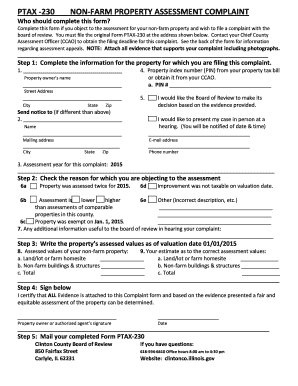
Ptax 230
The document PTAX-230 is a form for property owners to file a complaint regarding the assessment of their non-farm prope ...
People also ask
What does motion request for protective order mean?
In civil litigation, an order that prevents the disclosure of certain information. A party or person, such as a non-party recipient of a subpoena, may move for a protective order by showing good cause that the court should not permit the requested discovery because the discovery request is: Annoying.


