




01. Edit your form 8829 online
Type text, add images, blackout confidential details, add comments, highlights and more.

Type text, add images, blackout confidential details, add comments, highlights and more.

Draw your signature, type it, upload its image, or use your mobile device as a signature pad.

Send form 8829 worksheet via email, link, or fax. You can also download it, export it or print it out.
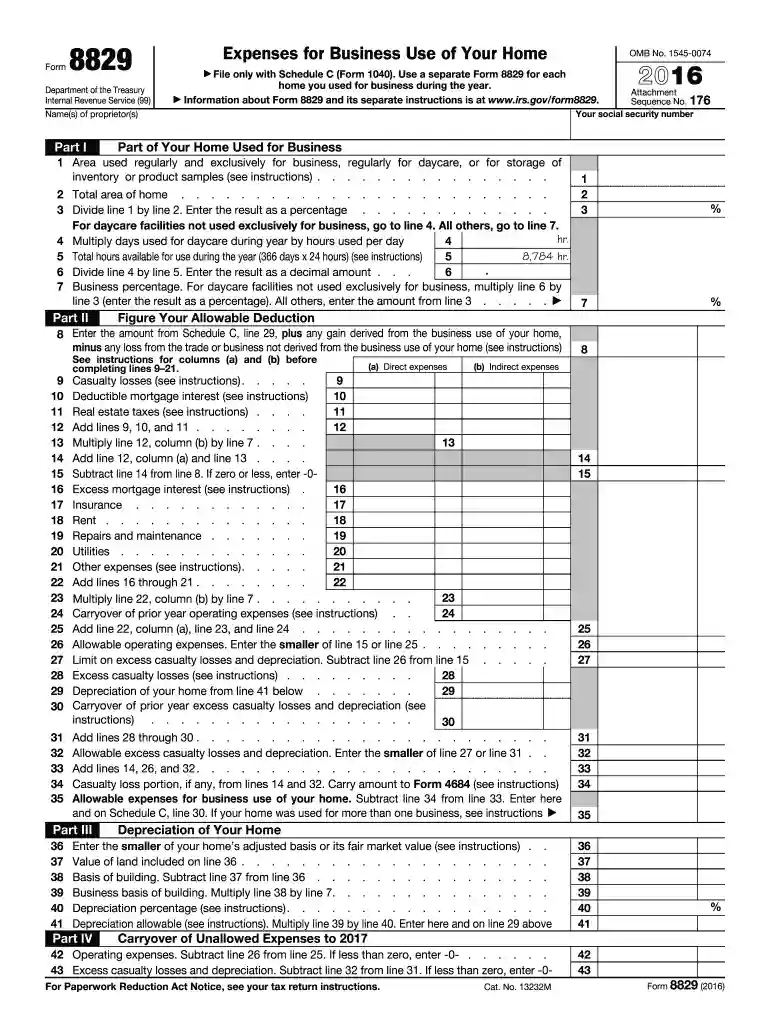
Form 8829, primarily used when filing Schedule C along with Form 1040, allows taxpayers to report expenses related to the business use of their home. This form calculates the deductible portion of office-related costs based on the percentage of your home used for business purposes. For 2016, it provided an essential tool for accurately distributing expenditures between personal and business use. Core elements included direct and indirect expenses, depreciation, and proportions of home spaces dedicated to business activities, ensuring compliance with IRS regulations.
Form 8829, 2016, provides detailed instructions to help you calculate and report home office expenses. To use this form:
Completing Form 8829, 2016, involves several key steps:
Form 8829, 2016, is primarily targeted at:
To be eligible to use Form 8829, 2016, taxpayers must:


Gathering necessary documentation is crucial when preparing Form 8829, 2016. These documents include:
Illustrating Form 8829, 2016 utilization includes:
Failing to comply with the reporting requirements when using Form 8829, 2016, can result in serious repercussions:
We've got more versions of the form 8829 form. Select the right form 8829 version from the list and start editing it straight away!
| Versions | Form popularity | Fillable & printable |
|---|---|---|
| 2025 | 4.4 Satisfied (44 Votes) | |
| 2024 | 4.8 Satisfied (59 Votes) | |
| 2023 | 4.6 Satisfied (39 Votes) | |
| 2022 | 4.5 Satisfied (50 Votes) | |
| 2021 | 4.8 Satisfied (155 Votes) | |
| 2020 | 4.4 Satisfied (131 Votes) | |
| 2019 | 4.1 Satisfied (44 Votes) | |
| 2018 | 4.3 Satisfied (96 Votes) | |
| 2017 | 4.3 Satisfied (124 Votes) | |
| 2016 | 4.3 Satisfied (51 Votes) | |
| 2015 | 4 Satisfied (53 Votes) | |
| 2014 | 4 Satisfied (47 Votes) | |
| 2013 | 4.4 Satisfied (51 Votes) | |
| 2012 | 4 Satisfied (30 Votes) | |
| 2011 | 4.1 Satisfied (65 Votes) |
At DocHub, your data security is our priority. We follow HIPAA, SOC2, GDPR, and other standards, so you can work on your documents with confidence.
Dec 31, 2019 Our annual report on Form 10-K, quarterly reports on Form 10-Q, current reports on Form 8-K, and amendments to those reports are availableRead more
Form 8829: How to Deduct Expenses for Home Business Uses Form. 8829 is used to claim the home office deduction by calculating the business-related.
Part I. Part of Your Home Used for Business. 1 Area used regularly and exclusively for business, regularly for daycare, or for storage of.Read more


