






Definition and Meaning of Form 8829
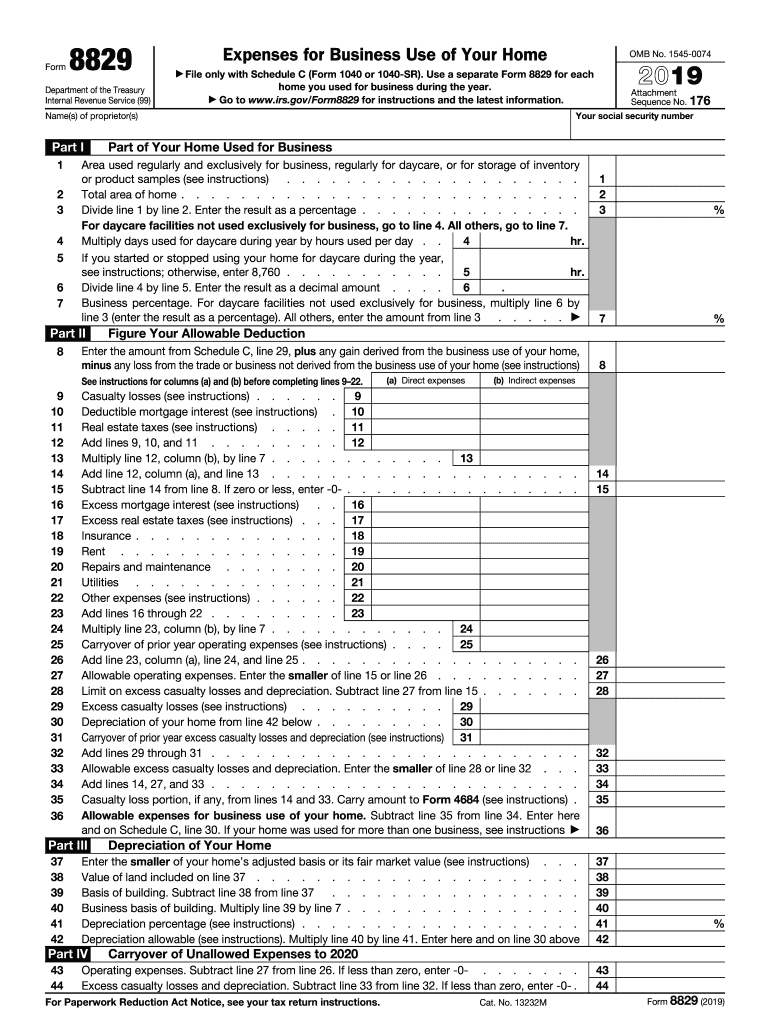
Form 8829 is a document used by taxpayers to calculate and report expenses related to the business use of their home. It is instrumental in determining which portion of home expenses can be deducted from the business income. The form includes sections dedicated to calculating allowable deductions for direct and indirect expenses, evaluating the depreciation of home-office assets, and ensuring compliance with tax regulations. By using Form 8829, taxpayers can optimize their tax filings by accurately reporting home office expenses according to IRS guidelines.
How to Use Form 8829
To effectively use Form 8829, one must follow a detailed process involving calculation and documentation of eligible expenses. Initially, determine the percentage of your home used exclusively for business by dividing the area of the home office by the total house area. This percentage will then be applied to indirect expenses like utilities and mortgage interest, which are shared between personal and business use. Box 1 of the form starts with this calculation, leading into further sections for itemizing and summing different types of expenses that qualify for business use deductions.
Steps to Complete Form 8829
- Calculate Office Space Percentage: Measure the square footage of your business space and divide it by the total square footage of your home.
- List Direct Expenses: Enter expenses directly related to the business space. These could include repairs and maintenance specific to the office area.
- List Indirect Expenses: Determine expenses that apply to the whole house and apply the office space percentage calculated previously.
- Depreciation: Use the form to calculate depreciation based on the business portion of the home’s value.
- Completing the Form: Fill out each section, ensuring all amounts are accurately represented and correctly calculated.
- Review and Submit: Ensure all numbers are correct before including Form 8829 with your tax return to the IRS.
Important Terms Related to Form 8829
- Business Use Percentage: A key metric in determining deductible expenses, derived from the proportion of your home used for business.
- Direct Expenses: Costs that pertain exclusively to the business portion of your home, such as office renovations.
- Indirect Expenses: Costs affecting the entire home; a prorated portion can be deducted, including utilities and property taxes.
- Depreciation: An accounting method to allocate the cost of tangible property over its useful life, relevant to the business part of your home.
Key Elements of Form 8829
Form 8829 comprises several essential components:
- Calculation of Business Use: Critical for determining the deductible portion of household expenses.
- Expense Categories: Segmentation into direct versus indirect expenses, allowing for systematic tracking and deduction.
- Depreciation Measures: Instructing users on computing and applying depreciation to their benefit for tax reduction.
- Carryover of Unused Deduction: Allows for qualifying expenses that exceed business income limits to be carried forward to subsequent tax years.
IRS Guidelines for Form 8829
The IRS provides specific rules regarding the deductibility of home office expenses. Only areas used exclusively and regularly for business qualify. Qualifications extend to certain self-employed individuals, allowing them to claim deductions using Form 8829. Adherence to IRS instructions ensures compliance and maximizes potential deductions effectively. The guidelines also include definitions, limitations, and examples to help taxpayers accurately fill out the form.
Examples of Using Form 8829
Consider a freelance graphic designer who works out of a spare room in their home. Suppose this room constitutes 10% of the total house space. The designer can deduct corresponding percentages of the utility bills, rent, and even certain types of insurance. Another scenario might involve a small business owner utilizing a garage as a workshop, calculating a similar percentage of total home expenses for deduction purposes. These examples highlight the practical application and potential savings when the form is correctly used.
Required Documents for Form 8829
To properly complete Form 8829, taxpayers must gather:
- Proof of Homeownership or Lease Agreements: To verify occupancy as a basis for claims.
- Utility and Mortgage Statements: For calculating deductibles applicable to both business and non-business parts of the home.
- Receipts for Repairs and Maintenance: Especially those applicable directly to the office space.
- Records of Property Acquisition Costs: Needed to assess the basis for depreciation calculations.
Ensuring these documents are organized and readily accessible simplifies the completion of the form and supports claim legitimacy during an audit.