
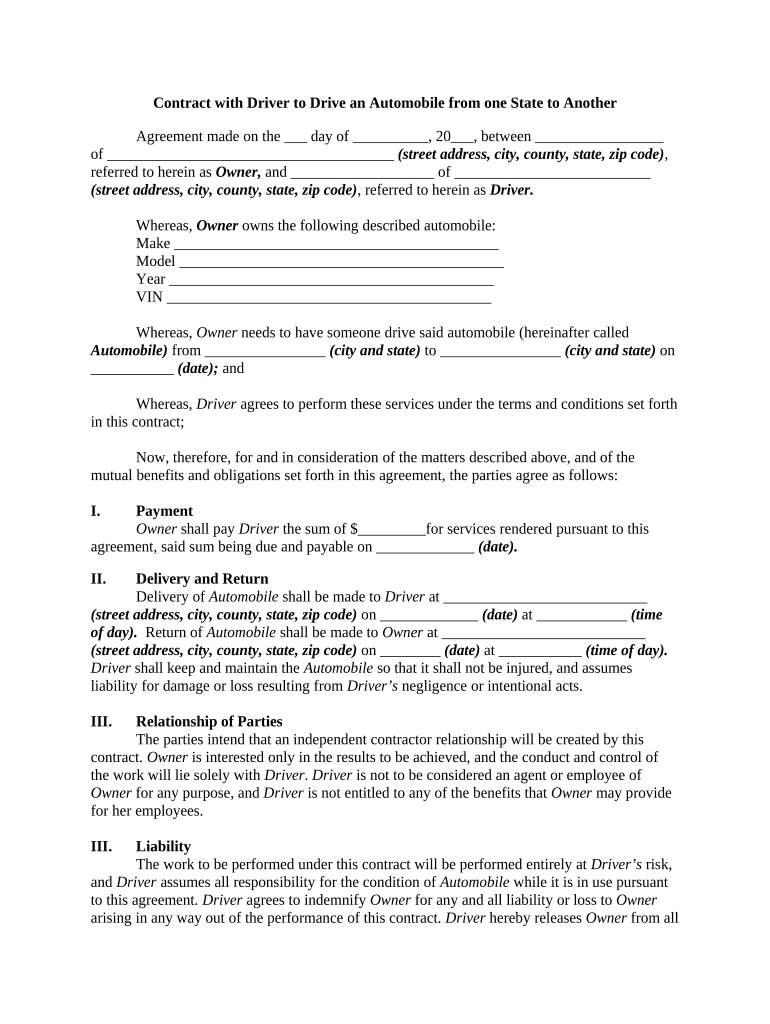







Definition of the Contract Driver Form
The contract driver form is a legal document that formalizes the relationship between a vehicle owner and a driver. It contains essential details about the transportation services to be provided, including the terms of payment, delivery specifics, and responsibilities of both parties. This form establishes an independent contractor relationship, delineating the liabilities and obligations of the involved parties to ensure clarity and protect their rights.
Key Components of the Contract Driver Form
- Payment Terms: Specifies the amount to be paid for services and the payment schedule.
- Delivery and Return Details: Outlines when and where the vehicle will be picked up and dropped off, including any conditions related to these actions.
- Liability Responsibilities: Defines who is responsible in case of accidents or damages during the transportation process.
- Arbitration Procedures: Establishes a method for resolving disputes that may arise from the agreement without going to court.
Having these elements clearly defined helps to minimize misunderstandings and provides a reference point in case conflicts occur.
How to Use the Contract Driver Form
Using the contract driver form involves several steps, starting with understanding its purpose and guidelines for filling it out correctly. The form serves as a protective measure for both driver and vehicle owner, ensuring both parties are aligned on expectations and responsibilities.
Steps to Utilize the Contract Driver Form
- Fill Out the Form: Complete all necessary fields, including the names and contact information of both the driver and vehicle owner, specific details about the vehicle, and the scope of the service.
- Review Terms of Agreement: Go over the payment, delivery, and liability details to ensure comfort and transparency with the contracts' terms.
- Sign the Document: Both parties must sign to indicate their acceptance of the terms laid out in the contract driver form.
- Distribute Copies: Each party should retain a signed copy for their records, ensuring accountability.
Following these steps helps to maintain professionalism and legality within the agreement.
Steps to Complete the Contract Driver Form
Completing the contract driver form can be straightforward if one follows a structured approach. Here are the detailed steps to fill out the form accurately.
Detailed Instructions for Completing the Form
- Identify the Parties: Clearly print or type the names and addresses of both the vehicle owner and the driver at the top of the document.
- Describe the Vehicle: Include vital details such as the make, model, year, and VIN (Vehicle Identification Number) to uniquely identify the vehicle being transported.
- Outline Service Details: Specify the terms of the transportation service, including pickup and delivery dates, route, and any special instructions related to the transport.
- Establish Payment Terms: Clearly articulate how much will be paid for the service, when payments are due, and the method of payment (e.g., cash, check, digital transfer).
- Set Liability and Dispute Terms: Include clauses regarding liability for damage to the vehicle and outline the agreed-upon method for resolving disputes.
Taking meticulous care in completing these steps ensures that the document will accurately reflect the intentions of both parties.
Important Terms Related to the Contract Driver Form
Understanding key terms related to the contract driver form is crucial for both parties to communicate clearly and uphold their respective rights. Here are some significant terms that often appear in such agreements.
Commonly Used Terms
- Independent Contractor: This indicates that the driver operates as a separate entity from the vehicle owner, responsible for his or her own taxes and insurance.
- Liability: Refers to the legal responsibility of each party in terms of damages or losses that may occur during the transportation process.
- Indemnification: A clause that protects one party from loss or damage that may arise from the actions of another party.
- Forbearance: A temporary delaying of enforcement of a right or claim, often related to payment terms.
- Force Majeure: A clause that releases both parties from liability in the event that an unforeseen event prevents one of them from fulfilling their obligations.
These terms are foundational in protecting both the vehicle owner and driver, fostering an environment of trust and transparency.
Legal Use of the Contract Driver Form
The legal usage of the contract driver form is critical to enforceability and compliance with local laws. Understanding its legal implications can protect both the driver and the owner from potential disputes.
Legal Framework Surrounding the Contract Driver Form
- Enforceability: For the contract to be legally binding, it must contain specific essential elements such as mutual consent, capacity, and lawful consideration.
- Regulatory Compliance: Depending on the state, additional regulations may apply to vehicle transport, including those concerning insurance coverage and vehicle condition requirements.
- Record Keeping: Both parties should keep a copy of the signed contract for their records, as it may be required for legal or tax purposes in the future.
Awareness of these legal aspects can aid in maintaining a professional relationship while also ensuring compliance with relevant laws and regulations.




