
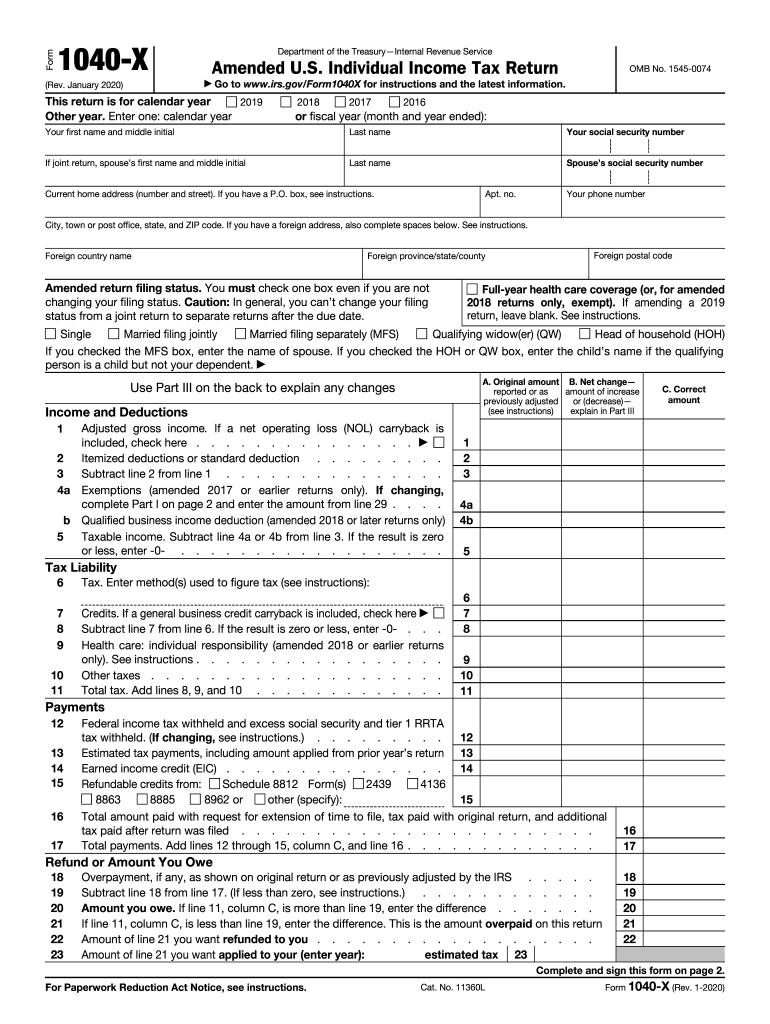







Definition and Purpose of Form 1040-X
Form 1040-X, the Amended U.S. Individual Income Tax Return, is used by taxpayers to amend a previously filed tax return. This form allows individuals to correct errors such as income misreporting, overlooked deductions or credits, and changes in filing status. Filling out the 1040-X correctly ensures that taxpayers meet their tax obligations accurately, helping avoid penalties and interest due to reporting mistakes. The 1040-X becomes essential when new information impacts your tax return or when rectifying clerical mistakes is necessary.
How to Obtain Form 1040-X
The IRS provides access to Form 1040-X online through its official website, facilitating easy downloading. Additionally, physical copies can be requested from the IRS by mail or obtained at IRS offices and certain libraries. It is crucial to use the form that corresponds to the correct tax year, as tax laws and stipulations can vary annually. Tax assistance software like TurboTax and QuickBooks often feature Form 1040-X, allowing users to generate amended returns digitally.
Steps to Complete Form 1040-X
-
Gather Original Tax Documents:
- Retrieve copies of your original tax return, W-2s, 1099s, and any relevant documentation.
-
Fill Out Personal Information:
- Ensure accuracy in entering your details like social security number, name, and address, which must match the original submission.
-
Explain the Amendments:
- In Part III, clearly articulate the reasons for changes, supported by documentation if possible.
-
Adjust Income, Deductions, and Credits:
- Compare the original entries with intended corrections and include amended figures where necessary.
-
Calculate Tax Liabilities:
- Reassess liability, comparing previous calculations with revised sums to determine additional payments or refunds owed.
-
Submit the Form:
- File using mail as required by the IRS, sending the form to the appropriate IRS location listed in the form instructions. Consider using certified mail for tracking purposes.
Why Use Form 1040-X
Amending a tax return with Form 1040-X is essential for rectifying misreported financial information that could affect a taxpayer’s liability. Utilizing this form can lead to significant benefits, such as claiming previously missed deductions or credits that may result in tax refunds. Additionally, taxpayers may find themselves in better standing by addressing discrepancies before they draw the attention of the IRS, thus avoiding potential audits or fines.
Typical Users of Form 1040-X
Various individuals may find it necessary to file Form 1040-X, including:
- Self-employed Individuals: Adjusting reported income or expenses after a tax year has closed.
- Retirees: Addressing errors related to retirement benefits or social security income.
- Students: Revisiting educational credits or income reporting from part-time work.
- Expats: Correcting foreign income exclusions or credits.
Key Elements of Form 1040-X
- Filing Status: Essential for calculating correct tax liability, potential changes could significantly influence taxes due.
- Income Adjustments: Rectifications for misreported wages, dividends, and credits, ensuring calculations accurately reflect financial reality.
- Deductions: Updates or corrections to itemized or standard deductions, potentially lowering taxable income.
- Explanation of Changes: Critical for the IRS to understand adjustments, this section should be comprehensive and well-documented.
Filing Deadlines and Important Dates
While typically three years from the original filing date, the deadline for submitting Form 1040-X can vary based on specific circumstances. For example, if a tax payment was originally made, the time frame to amend becomes two years from the payment date. Understanding these deadlines is vital for successfully securing refunds and avoiding unequal tax burdens.
Penalties for Non-Compliance
Failing to correct mistakes that impact tax returns can result in IRS penalties. If taxes owed increase following a correction, interest will accrue from the original due date. Proactively using Form 1040-X shields taxpayers from these costly fines, reducing future liabilities. Ignoring necessary adjustments, especially when obvious errors exist, may lead to audits or further IRS scrutiny.
By following these guidelines and utilizing Form 1040-X when necessary, individuals can safeguard financial integrity while ensuring compliance with tax obligations.




