






Definition & Meaning
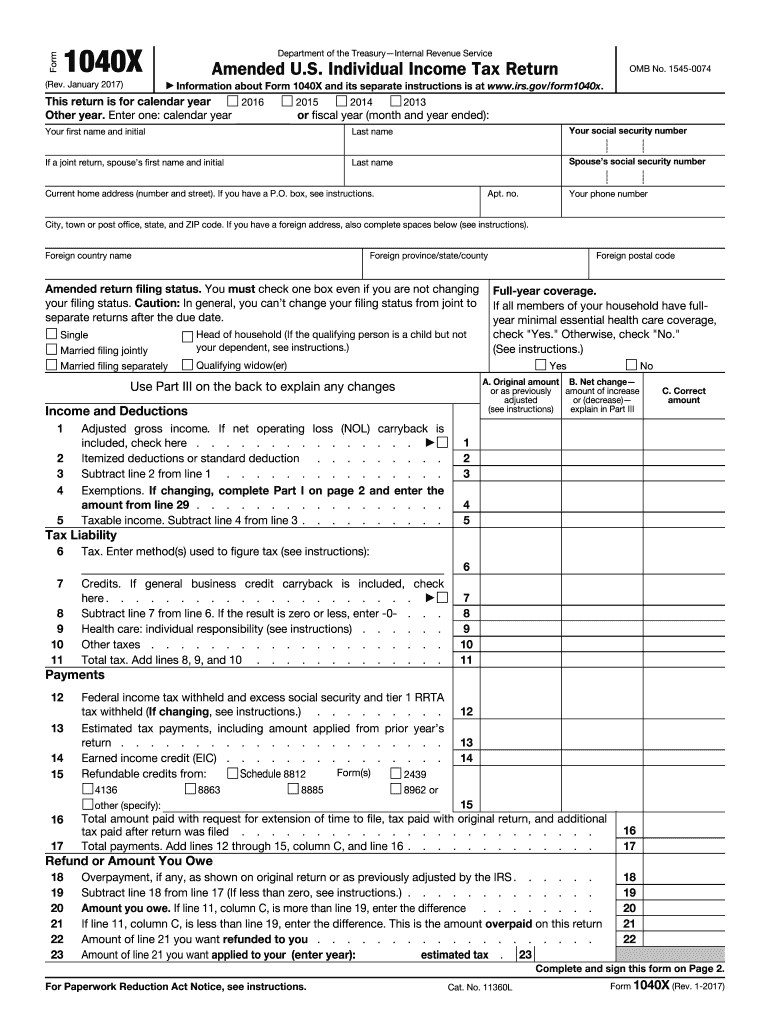
The 1040X form for 2017 is essential for taxpayers who need to correct errors on their initial tax returns filed for the 2017 tax year. This form, titled "Amended U.S. Individual Income Tax Return," is issued by the IRS and is used to update previously filed Form 1040, 1040A, or 1040EZ. It enables taxpayers to make amendments related to income, deductions, credits, or any discrepancies discovered post-filing. Understand that an amendment through the 1040X form can affect the tax liability, either increasing or decreasing the total taxes owed or the refund due.
How to Use the 1040X 2017 Form
To effectively utilize the 1040X 2017 form, follow these guidelines:
- Identify Errors or Changes: First, determine what specific changes are required in your original return—these could be related to income, adjustments, or credit claims.
- Obtain Form 1040X: Ensure you have the 2017 version of Form 1040X. The IRS website offers downloadable forms, or you can request a print copy by mail.
- Complete the Form: Fill in Part I using your original amounts, the net changes, and the corrected amounts. Detailed explanations should accompany each change.
- Attach Documentation: Include necessary schedules or forms that relate to the changes made. For instance, if correcting a reported income figure, attach a revised W-2 or 1099 form.
- Submit the Form: Depending upon your preference, submit your amended return electronically if supported, or mail it to the IRS. Verify submission instructions as they might differ from those for the original return.
Steps to Complete the 1040X 2017 Form
Successfully completing the 1040X 2017 form involves the following steps:
- Section A - Original Data: Enter data exactly as reported on the originally filed return.
- Section B - Net Changes: Enter the modifications made to the original information.
- Section C - Corrected Figures: Provide the new totals after applying changes.
- Supporting Documents: Attach all relevant forms and schedules.
- Explanation: Offer a clear written statement justifying each correction and include any necessary legal references or identified mistakes.
IRS Guidelines for the 1040X 2017 Form
The IRS outlines specific instructions for when and how to file an amended return using Form 1040X:
- Amend Within Limitations: Typically, you have up to three years from the date you filed the original return or two years from when you paid the tax, whichever is later.
- Multiple Amendments: If additional changes occur after submitting a 1040X form, a new 1040X form must be filed, reflecting cumulative changes and different years separately.
Filing Deadlines / Important Dates
Adhering to critical deadlines is crucial when filing amendments:
- Amendment Window: The IRS allows amendments to be filed within the statute of limitations, generally three years from the original filing date.
- State Deadlines: These may differ from federal timelines, requiring additional attention to both state and IRS requirements.
Legal Use of the 1040X 2017 Form
Legally speaking, the Form 1040X is used to amend tax returns under given federal laws:
- Mandatory Accuracy: By law, the information provided on the 1040X form must be accurate and complete.
- Legal Consequences: Fraud or intentional errors on an amended return can lead to legal penalties, interest, and possible audits.
Penalties for Non-Compliance
Failure to file or improperly filing an amended return can result in penalties:
- Underpayment Sanctions: If modifications lead to increased taxes owed, failing to pay can incur interest and late payment penalties.
- Audit Risks: Submitting inaccurate or incomplete amended returns may trigger IRS audits, leading to further scrutiny of your financial records.
Software Compatibility
Platforms like TurboTax and QuickBooks provide integrated options for managing amendments:
- Ease of Use: These programs can streamline the amendment process by guiding users through required updates and automatically generating Form 1040X.
- E-Filing: Some software solutions offer electronic filing, though availability can vary based on the amendment type and IRS e-file rules.
Digital vs. Paper Version
Choose between paper and digital formats when filing:
- Electronic Submissions: A more efficient option, available for certain types of amendments under IRS guidelines.
- Traditional Mailing: An alternative for those without access to digital filing methods or when e-file is unsupported, typically slower and requires extra postage and timely submission.