




01. Edit your 1040x 2013 online
Type text, add images, blackout confidential details, add comments, highlights and more.

Type text, add images, blackout confidential details, add comments, highlights and more.

Draw your signature, type it, upload its image, or use your mobile device as a signature pad.

Send 2013 amended tax return via email, link, or fax. You can also download it, export it or print it out.
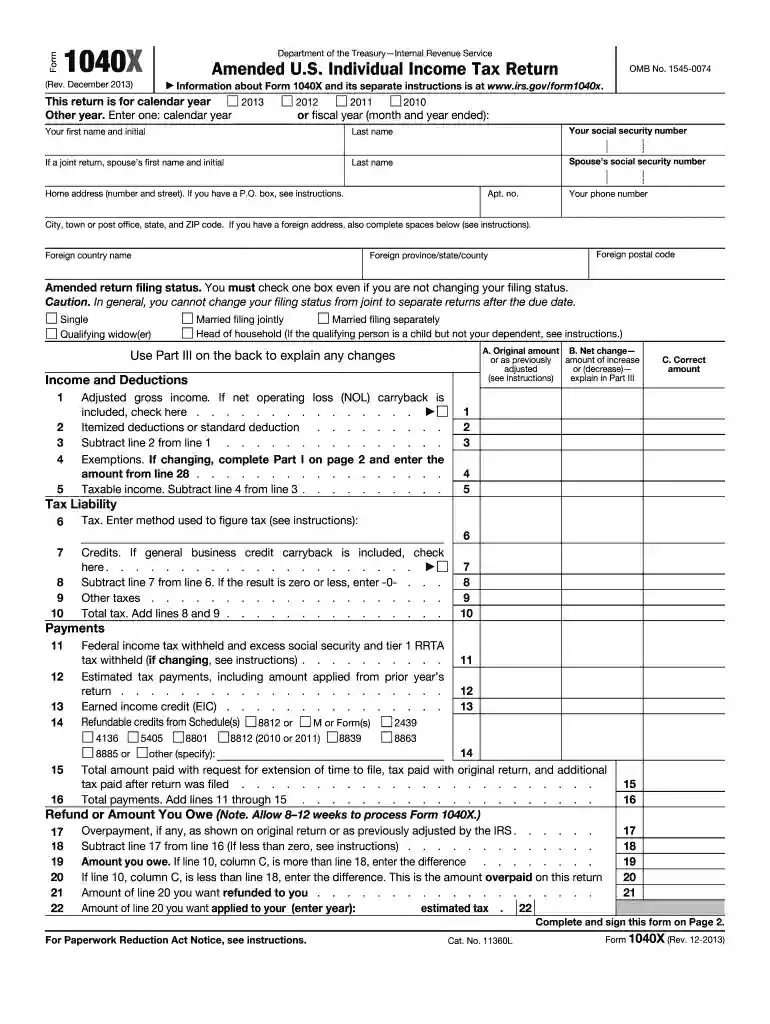
Form 1040X, the Amended U.S. Individual Income Tax Return for 2013, is a document issued by the IRS, primarily used by taxpayers to correct errors on their original tax returns. These errors might include mistakes in income, deductions, exemptions, or filing status. This form provides an opportunity to amend previous mistakes or changes in financial situations that were not accounted for in the original filing.
Filing a 2013 Form 1040X is crucial for several reasons:
Gather Original Documents: Before starting, have a copy of your original 2013 tax return and all related documents, such as W-2s, 1099s, and receipts.
Obtain IRS Form 1040X: The form is available on the IRS website or through tax preparation software.
Complete Part I and Part II: Provide personal information such as your name, Social Security number, and address.
Detail Changes in Part III: Clearly explain the changes you are making and why. This section is crucial for understanding adjustments.
Calculate Totals: Enter any adjustments to income, credits, and payments on the amended form.
Check and Double-Check: Ensure all calculations and changes are correct before submitting the form.
File the Amended Return: Submit the completed form as outlined in the IRS instructions, either online or via mail.
The IRS provides specific guidelines for using Form 1040X:
Not every taxpayer needs to file an amended return. Eligibility typically includes:


Failing to amend when necessary can result in:
By understanding and adhering to these guidelines, taxpayers can ensure they use the 2013 Form 1040X correctly to manage amendments to their tax returns effectively.
We've got more versions of the 1040x 2013 form. Select the right 1040x 2013 version from the list and start editing it straight away!
| Versions | Form popularity | Fillable & printable |
|---|---|---|
| 2024 | 4.1 Satisfied (58 Votes) | |
| 2021 | 4.8 Satisfied (77 Votes) | |
| 2020 | 4.3 Satisfied (263 Votes) | |
| 2019 | 4.2 Satisfied (80 Votes) | |
| 2018 | 4.3 Satisfied (159 Votes) | |
| 2017 | 4.3 Satisfied (139 Votes) | |
| 2016 | 4.3 Satisfied (111 Votes) | |
| 2014 | 4.2 Satisfied (46 Votes) | |
| 2013 | 4 Satisfied (60 Votes) | |
| 2012 | 4.4 Satisfied (50 Votes) | |
| 2011 | 4 Satisfied (40 Votes) | |
| 2010 | 4 Satisfied (32 Votes) | |
| 2009 | 4 Satisfied (51 Votes) | |
| 2007 | 4 Satisfied (29 Votes) | |
| 2005 | 4 Satisfied (56 Votes) |
At DocHub, your data security is our priority. We follow HIPAA, SOC2, GDPR, and other standards, so you can work on your documents with confidence.




In general, you cannot change your filing status from joint to separate returns after the due date. Single. Qualifying widow(er). Married filing jointly.Read more
Apr 15, 2015 File Form 1040X to change a return you already filed. Also use Form. 1040X if you filed Form 1040NR and you should have filed Form 1040,.Read more
A Form 1040X to claim or change a foreign tax credit or deduction for foreign taxes generally must be filed within 10 years from the due date for filing theRead more


