







Definition & Meaning
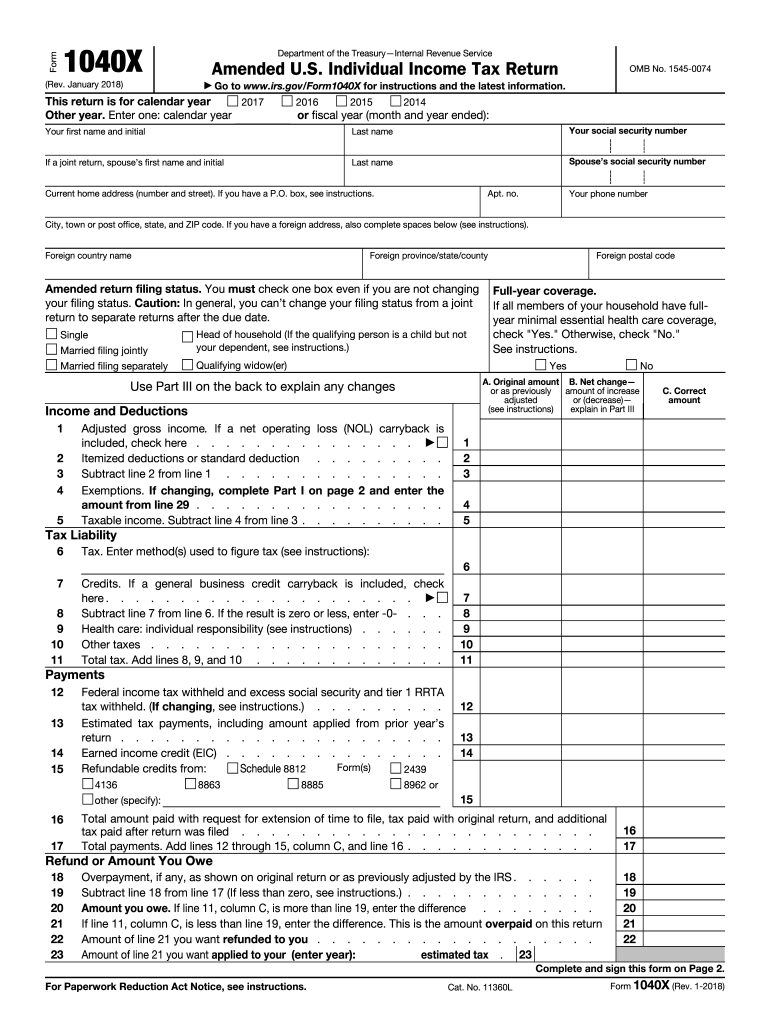
The 1040X form, formally known as the Amended U.S. Individual Income Tax Return, is used by taxpayers to correct errors on previously filed IRS tax returns. It is applicable for changes to filing status, income, deductions, or credits introduced after the original filing. This form is crucial for ensuring that personal tax filings are accurate, reflecting all necessary adjustments to support compliance with tax regulations.
Steps to Complete the 1040X 2011 Form
-
Gather Required Documents: Before starting, collect your original tax return and any new documents that support changes—such as corrected W-2s or amended 1099s.
-
Fill Out Personal Information: Enter your name, address, and Social Security Number at the top of the form.
-
Indicate the Year to Amend: Ensure to select or specify the tax year 2011 clearly in the space provided.
-
Explain Changes on Form 1040X: Use Part III of the form to provide a detailed explanation of the reason for each change. Clearly outline what was originally reported, what the correct figure is, and why the correction is necessary.
-
Compute Adjusted Tax: In Section C, calculate the corrected amounts based on your changes. Sections A and B will reflect the original figures and the net change resulting from the amendments, respectively.
-
Update Credits and Payments: Adjust any tax credits and payments based on the new information, ensuring all figures reflect these amendments.
-
Recalculate Refund or Amount Owed: Determine if you are owed a refund or if additional payment is required. Ensure that the amounts are accurate and justified by the documentation.
-
Sign and Submit: Sign the form after review and attach supplementary documents. Submit either through mail or electronically, following IRS guidelines.
Important Terms Related to 1040X 2011 Form
- Amended Return: A submission correcting previously filed tax information.
- Filing Status: Category under which a taxpayer files, which affects tax rates and deductions—e.g., single, married filing jointly.
- Net Tax Change: The difference in tax liability resulting from amendments.
IRS Guidelines
The IRS requires that Form 1040X be submitted in cases where changes to personal tax filings are necessary. The form should be filed within three years from the date of the original return or within two years after the tax was paid. Taxpayers should ensure accuracy and include all relevant documentation as the IRS may process these amendments through manual review, possibly resulting in additional questioning.
Filing Deadlines / Important Dates
- Standard Filing Window: File the amended return by April 15th of the third year following the tax year being amended.
- Refunds and Adjustments: Submitting before the deadlines facilitates timely processing for any refunds or adjustments in tax liability.
Required Documents
- Original Tax Return Copy: Essential for reference and comparison.
- Supporting Forms & Worksheets: Includes corrected W-2s, 1099s, or any other documentation proving changes made.
Legal Use of the 1040X 2011 Form
The 1040X form is legally authoritative, altering the taxpayer's liability when properly filed. Taxpayers must use the form to correct genuine discrepancies, ensuring all amendments are backed by legitimate proof to avoid legal ramifications.
Examples of Using the 1040X 2011 Form
- Income Adjustment: A taxpayer discovers an unreported freelance income after paying taxes and submits Form 1040X to account for it.
- Error Correction: A taxpayer amends their filing status from "single" to "married filing jointly" after realizing an error, requiring a revisited calculation of tax obligations.
Penalties for Non-Compliance
Failure to file an amended return or inaccurately reporting changes without Form 1040X can result in penalties. Interest may accrue on any additional taxes owed, and deliberate non-disclosure or falsification can lead to further legal consequences.
Digital vs. Paper Version
Form 1040X can be submitted both digitally and in paper format. Free e-filing may not be available for all circumstances, and certain amendments might require filing via mail. Taxpayers should evaluate their options in line with convenience and IRS stipulations for the specific amendment year.




