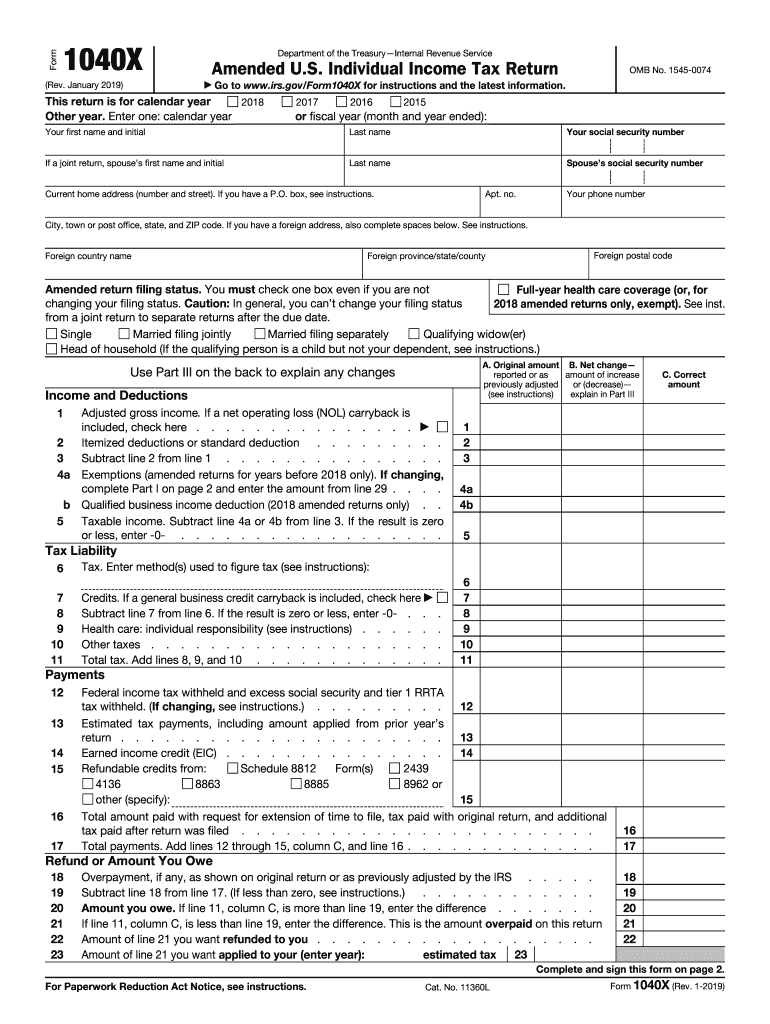







Definition & Meaning of Form 1040X
Form 1040X, known officially as the Amended U.S. Individual Income Tax Return, is designed for taxpayers who need to make corrections to a previously filed tax return. This adjustment can involve reporting previously omitted income, correcting misreported deductions, or addressing errors in personal information. Unlike filing an original return, the 1040X serves as a corrective mechanism to ensure that tax filings accurately reflect a taxpayer’s financial situation for the specified tax year.
How to Use the 1040X Correctly
Using Form 1040X requires careful attention to detail. Primarily, it involves:
-
Identifying Errors: Before completing the form, determine the nature of the error or omission on the original return. This could include mathematical errors, inaccurate income reporting, or changes in filing status.
-
Gathering Necessary Information: Have on hand all relevant documents, such as W-2s, 1099s, and any additional schedules that were part of the original filing.
-
Filling Out the Form:
- Use the first column to report figures from the original return.
- The second column should reflect changes being made.
- The third column presents the corrected amounts.
-
Explanations: Provide detailed explanations for each change using the space provided on the form.
Steps to Complete the 1040X
When completing Form 1040X, follow these steps diligently:
-
Enter Personal Information: Fill in your name, current address, and Social Security number.
-
Amend the Return:
- In Part I, adjust for income and deductions.
- Use Part II for tax liability changes.
- Complete Part III to explain the changes, detailing why amendments are necessary.
-
Calculate Adjustments: Update calculations based on your changes and note these adjustments in the corresponding sections of the form.
-
Transfer Adjusted Figures: Ensure that adjusted figures are reflected accurately on supplemental schedules or forms.
Important Terms Related to the 1040X
Understanding certain terms can clarify the process of amending a return:
- Tax Year: The year for which you initially filed the original tax return.
- Overpayment: If initial calculations resulted in overpayment, the 1040X can correct this for a refund.
- Underpayment: Conversely, any underpayment discovered via the 1040X must be repaid with possible interest.
Filing Deadlines and Important Dates
Timely filing of Form 1040X is crucial:
- The form must be filed within three years from the original filing date or within two years of paying the tax, whichever is later.
- Amendments that alter refund claims must adhere to these limits to remain eligible for reimbursement.
Required Documents for Filing
To complete the 1040X effectively, gather:
- Original Tax Return: A copy of the original 1040 form provides a baseline for amendments.
- Supporting Documents: Include W-2s, 1099s, updated schedules, and any IRS correspondence related to the original return.
- Proof of Changes: Attach substantiating documents that validate the corrections made.
Submission Methods for Form 1040X
Form 1040X can be submitted through various channels:
- Mail: Traditionally, the 1040X must be mailed directly to the IRS. Ensure all documents are included and the envelope is addressed to the correct IRS office.
- Online Methods: Some amendments, especially for recent tax years, can be filed electronically through authorized e-file providers or tax software.
IRS Guidelines for Filing
The IRS outlines specific guidelines to be followed when filing the 1040X:
- Specific Instructions: Each amended item must include a precise explanation of the change and its purpose.
- Amend One Tax Year at a Time: Separate Form 1040X must be completed for each tax year being amended.
- Tax Payment: If the amendment results in additional tax, submit payment along with the form to avoid penalties.
Penalties for Non-Compliance
Failing to file the 1040X when necessary can lead to penalties:
- Accuracy-Related Penalties: If the original return contained substantial errors, non-amendment could result in penalties.
- Interest Charges: Failure to pay additional tax indicated by a 1040X can accrue interest until settled.
Taxpayer Scenarios for Form 1040X
Various types of taxpayers benefit from using the 1040X, including:
- Self-Employed Individuals: Often need amendments due to income at different stages of the fiscal year.
- Property Owners: Changes in deductible expenses can necessitate alterations post-original filing.
- Students and Retirees: Recurring changes in income sources, such as scholarships or retirement benefits, can cause initial reporting errors.
By deeply exploring these aspects, taxpayers can effectively navigate the process of submitting an amended return using Form 1040X, ensuring compliance and accuracy in their tax records.