
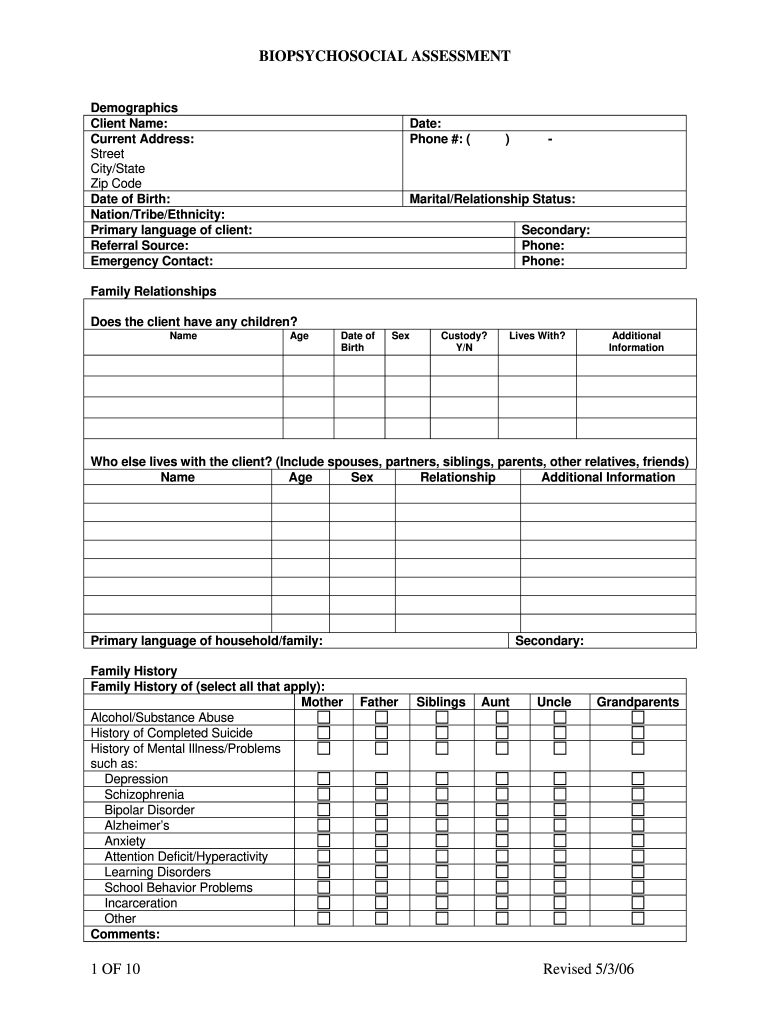







Definition & Meaning of the Biopsychosocial Assessment Template
The biopsychosocial assessment template is a structured tool used to gather comprehensive information about an individual's psychological, biological, and social factors that influence their overall well-being. This template typically involves sections that cover:
- Demographics: Personal details such as age, gender, family status, and background information.
- Medical History: Records of past and current health issues, medications, surgeries, and family medical history.
- Psychological Status: Assessment of mental health conditions, emotional stability, coping mechanisms, and previous psychiatric treatments.
- Social Support: Identification of support systems, including family, friends, and community resources.
- Legal and Financial Information: Insight into any legal issues, financial stability, and employment status.
The goal of this template is to provide a holistic view of the person being assessed, aiding professionals in tailored treatment plans.
Key Elements of the Biopsychosocial Assessment Template
A comprehensive biopsychosocial assessment template typically includes several key elements that are crucial for a thorough evaluation. Understanding these components enhances the efficacy of the assessment process.
- Physical Functioning: Examination of the client's physical health, mobility issues, and limitations.
- Mental Health History: Documentation of any previous mental health diagnoses, treatments, and hospitalizations.
- Substance Use: Inquiry into the use of alcohol, prescription medications, or illicit drugs, and their impact on daily functioning.
- Risk Factors: Assessment of any potential risks to the client’s safety or well-being, including self-harm or harm to others.
- Treatment Planning: Preliminary thoughts on treatment modalities based on the gathered information, such as therapy, medication, or community support services.
These elements are integral in shaping a multidimensional understanding of the individual's needs, ensuring comprehensive care.
Steps to Complete the Biopsychosocial Assessment Template
Completing a biopsychosocial assessment template involves structured steps to ensure all relevant information is captured effectively. Here are the steps to follow:
- Gather Necessary Information: Collect background details such as personal identification, medical records, and previously completed assessments.
- Engage the Client: Conduct an initial interview to prompt discussion about various aspects of the individual's life, focusing on the biopsychosocial factors.
- Document Findings: As information is disclosed, meticulously fill out each section of the template. Use clear and precise language to note observations and insights.
- Analyze Data: Review the completed template to identify patterns, challenges, and strengths that may inform a treatment plan.
- Develop a Preliminary Treatment Plan: Based on the insights derived from the assessment, begin formulating strategies for support and intervention tailored to the client’s unique situation.
These steps create a structured approach to ensure that the assessment is both thorough and useful for forming a treatment strategy.
Why You Should Use the Biopsychosocial Assessment Template
Utilizing a biopsychosocial assessment template is vital for various reasons:
- Holistic Approach: This template encourages a balanced view by examining not just psychological issues but also the biological and social influences on a person’s health.
- Informed Decision-Making: It provides practitioners with the information necessary to make evidence-based decisions regarding treatment options.
- Streamlining Communication: A standardized template ensures consistent communication among different professionals and between clients and providers, reducing misinterpretations.
- Customization of Care: By understanding the complexities of individual circumstances, tailored support can be developed, making treatment more effective and relevant to clients' lives.
This comprehensive approach enhances the quality of care provided to individuals facing various difficulties.
Examples of Using the Biopsychosocial Assessment Template
The application of the biopsychosocial assessment template can be illustrated through various real-life scenarios:
- Mental Health Clinics: Therapists may use the template to evaluate a new client’s overall mental health profile before developing a treatment plan.
- Substance Abuse Programs: Counselors can gather crucial information regarding a client’s substance use history and related psychosocial factors before initiating intervention strategies.
- Community Health Initiatives: Social workers utilize the template to assess individuals in vulnerable populations, identifying social supports and needs for enhancing community services.
- Primary Care Settings: Physicians can incorporate the assessment into routine evaluations to address physical health concerns alongside mental and social factors impacting health outcomes.
These examples highlight the versatility of the biopsychosocial assessment template and its integral role in diverse clinical settings.




