






Definition and Meaning of the 258 Form
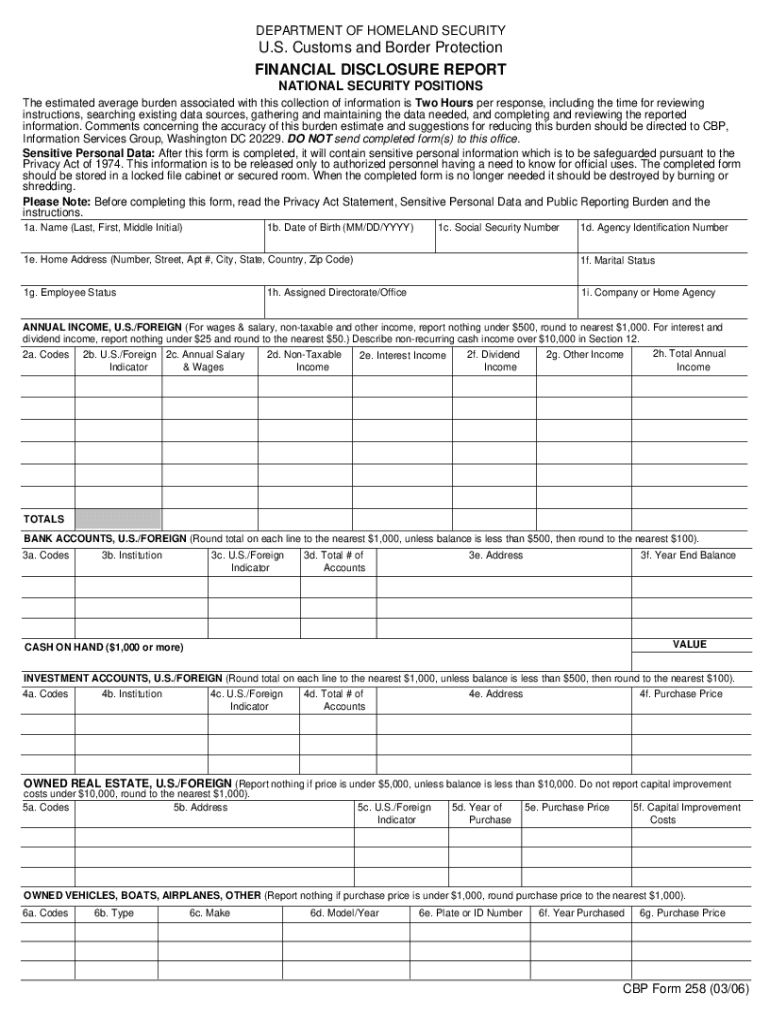
The 258 form is a critical document used primarily for financial disclosure reporting within U.S. national security positions. It serves the purpose of collecting pertinent financial information from individuals to assess their suitability for employment and security clearance. Ensuring the accuracy and completeness of this form is crucial in determining the potential conflicts of interest and safeguarding sensitive national interests.
The form outlines necessary information requirements, confidentiality assurances, and repercussions for providing false information. Each section of the document is designed to capture comprehensive financial details, including assets, liabilities, and sources of income, which are reviewed to ensure candidates or employees meet the ethical and loyalty standards of their positions.
How to Use the 258 Form
Filling out the 258 form requires careful attention to detail. Begin by reviewing each section to understand which financial attributes and disclosures are needed. Commonly required items include:
- Asset declarations
- Liability listings
- Income sources
- Potential conflicts of interest
After gathering necessary financial documents, sequentially fill each part of the form. Double-check entries for accuracy to avoid misrepresentations that could affect your employment status or security clearance.
How to Obtain the 258 Form
Obtaining a 258 form can be accomplished through several avenues:
- Direct Access: Government websites related to the Department of Homeland Security offer downloadable versions of the form.
- Human Resources: For those already positioned within a security-related role, the HR department typically disseminates the form as part of the onboarding or clearance renewal process.
- Consultation: Potential applicants might consult with legal or financial advisors who possess access to such documents due to their clientele-base affiliations.
Consider confirming the latest version of the form and associated guidelines to ensure compliance with the most current requirements.
Steps to Complete the 258 Form
To complete the 258 form, follow these steps:
- Review Instructions: Thoroughly read all accompanying instructions to understand each section's specific requirements and objectives.
- Collect Financial Information: Gather all necessary financial documentation, such as bank statements, investment records, tax returns, and other relevant financial data.
- Accurate Data Entry: Fill in each section carefully, ensuring all numbers and descriptions are precise to prevent conflicts or questions regarding accuracy.
- Double-Check Information: Before submission, review the form for any errors or omissions that could undermine its validity.
- Submit the Form: Follow the appropriate procedure for submission, which may involve direct upload to a secure server or delivering physical copies to an authorized person or department.
Who Typically Uses the 258 Form
The 258 form is predominantly used by individuals in national security roles within the United States. This includes:
- Federal employees within the Department of Homeland Security
- Contractors working on national security assignments
- Applicants seeking positions that require strict security clearances
Each group must comply with the financial disclosure requirements to ensure they meet the standards and ethical guidelines necessary for their roles.


Key Elements of the 258 Form
Key elements included in the 258 form account for comprehensive financial reporting. These elements generally encompass:
- Asset Declaration: Listing of owned properties, bank accounts, investment holdings, etc.
- Liabilities: Detailed report on debts, loans, or financial obligations.
- Income Sources: Comprehensive documentation of income, including employment wages, rental income, or business earnings.
- Potential Conflicts: Any business interests or affiliations that might pose a conflict of interest.
Each section should be filled with clarity to present an accurate representation of one's financial standing, which aids in ethical decision-making regarding security clearances.
Legal Use of the 258 Form
The 258 form operates under strict legal guidelines to ensure confidentiality and proper use. Adherence to the U.S. Privacy Act is critical:
- Data Protection: Information provided is secured under privacy laws to prevent unauthorized access or disclosure.
- Non-Disclosure Consequences: Failure to fully disclose required information can result in repercussions, like employment denial or security clearance revocation.
- Truthfulness Requirement: Intentional falsification is a legal offense and can lead to disciplinary actions and criminal charges.
State-Specific Rules for the 258 Form
While the 258 form adheres to federal guidelines, particular states or jurisdictions may impose additional rules:
- Supplementary Disclosure: Some states require supplemental information specific to their jurisdiction.
- Filing Procedures: Certain states might dictate distinct filing procedures or additional steps.
- Variations in Deadlines: Be aware of local filing deadlines which can alter due to state legislation or administrative requirements.
Staying informed about these variations is crucial to maintain compliance across jurisdictions.
Examples of Using the 258 Form
Real-world scenarios demonstrate the form's criticality. For instance:
- National Security Applicant: A candidate for a National Security Agency position uses the 258 form to disclose all financial assets and potential conflicts before receiving security clearance.
- Security Clearance Renewal: An employee undergoing periodic clearance reviews re-submits an updated form reflecting current financial status over the previous reporting period.
Form Submission Methods
Submissions can occur through various channels:
- Online: Secure portals are provided for digital submissions, ensuring data protection and timely receipt.
- Mail: Hard copies might be accepted, provided they are duly signed and delivered to the appropriate department.
- In-Person: Some cases may necessitate direct handover of forms to a designated officer.
Each method has its own advantages, suited to different security levels and personal preferences.