




Definition and Meaning of the Immunization Certificate
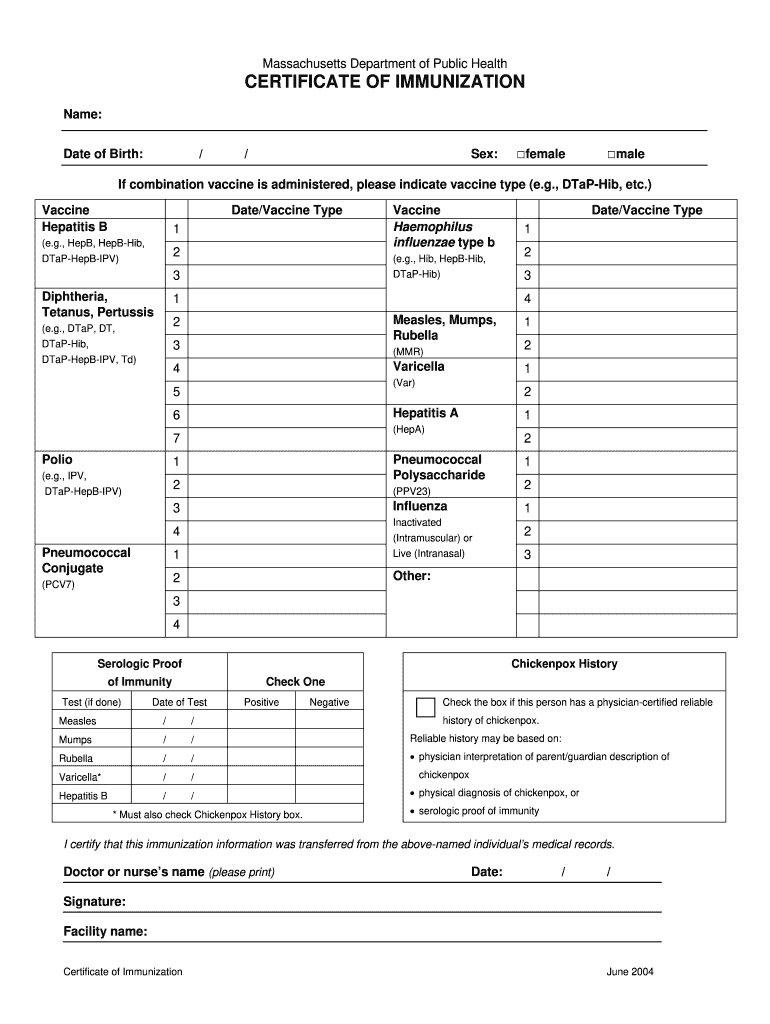
An immunization certificate is an official document that verifies an individual's vaccination history. This form is often required for school enrollment, medical treatments, and travel. In the context of Quincy Public Schools, the Certificate of Immunization is a crucial requirement that outlines the vaccines a student has received, including specific details about each immunization.
-
Purpose: The Certificate of Immunization serves several purposes:
- Ensures public health safety by confirming vaccinated individuals.
- Facilitates school admissions, particularly for children under the age of eighteen.
- Is often mandated for participation in certain activities or programs that could involve health risks.
-
Contents of the Form: The document typically includes:
- Personal information such as name, date of birth, and contact details.
- A record of vaccinations received, including dates and types of vaccines.
- Certification from a licensed healthcare provider or institution confirming the accuracy of the information.
How to Obtain the Immunization Certificate
Obtaining the Certificate of Immunization involves a few clear steps. This certificate can typically be acquired from healthcare providers, clinics, or school districts. Understanding the procedure can simplify the process greatly.
- Contact Healthcare Provider: Reach out to your child's pediatrician or the healthcare provider who administered the vaccinations. This step is essential because they maintain detailed immunization records.
- Request Records: Formally request the immunization records or a copy of the certificate. This may involve filling out a release form depending on the facility’s policies.
- Receive Certificate: Once the request is processed, you will receive the Certificate of Immunization, which you should review for accuracy before submission.
Steps to Complete the Immunization Certificate
Completing the Certificate of Immunization requires gathering extensive details about the vaccinations. Below are steps to ensure your immunization certificate is fully prepared.
-
Gather Required Information:
- Obtain your child’s vaccination history from their healthcare provider.
- Ensure the dates of each vaccination and the types of vaccines are accurate.
-
Fill Out the Form:
- Input personal information as directed on the form.
- Another essential aspect is to include the healthcare provider's contact information for verification purposes.
-
Review for Accuracy:
- Check that all the details match the records provided by the healthcare provider. Accuracy is paramount to avoid delays in school enrollment.
-
Obtain Signature:
- The form should be signed and dated by a healthcare provider to certify its legitimacy.
Importance of the Immunization Certificate
The Certificate of Immunization plays a vital role in public health and safety, especially in school settings. Schools require this documentation to ensure that students are protected against preventable diseases.
- Public Health Safeguarding: By maintaining high vaccination rates among school children, the risk of outbreaks is reduced, promoting a healthier community overall.
- Compliance with State Regulations: Many states have requirements in place for vaccinations before admission to public schools, making this certificate necessary for compliance.
Key Elements of the Immunization Certificate
Understanding the critical components that comprise the immunization certificate helps in effectively completing and utilizing it.
- Personal Information: This usually includes the student’s full name, date of birth, and address.
- Vaccination Details:
- Types of Vaccines: Vaccines such as Measles, Mumps, Rubella (MMR), Diphtheria, Tetanus, and Pertussis (DTaP), among others, should be documented.
- Vaccination Dates: The exact dates of each vaccine are crucial, as they dictate compliance with school health policies.
- Provider Information: The name, address, and signature of the healthcare provider giving the vaccines must be included.
Variants of the Immunization Certificate
Depending on the location and specific requirements of the educational institution, there may be variants of the standard immunization certificate.
- State-Specific Variations: Different states might have unique forms or additional immunization requirements based on local public health statutes.
- School District Requirements: Some school districts may adopt their own versions of the certificate, necessitating validation against district-specific guidelines.
Legal Compliance and Confidentiality
The issuance and submission of the Certificate of Immunization must comply with legal standards, ensuring the confidentiality of personal health information.
- Health Information Privacy: The Health Insurance Portability and Accountability Act (HIPAA) safeguards personal health records, so ensure any documentation submitted follows these regulations.
- Data Verification: Schools and healthcare providers must verify the authenticity of the certificate while adhering to legal standards regarding the handling of sensitive information.