







Understanding the Prescription for Physical and/or Occupational Therapy
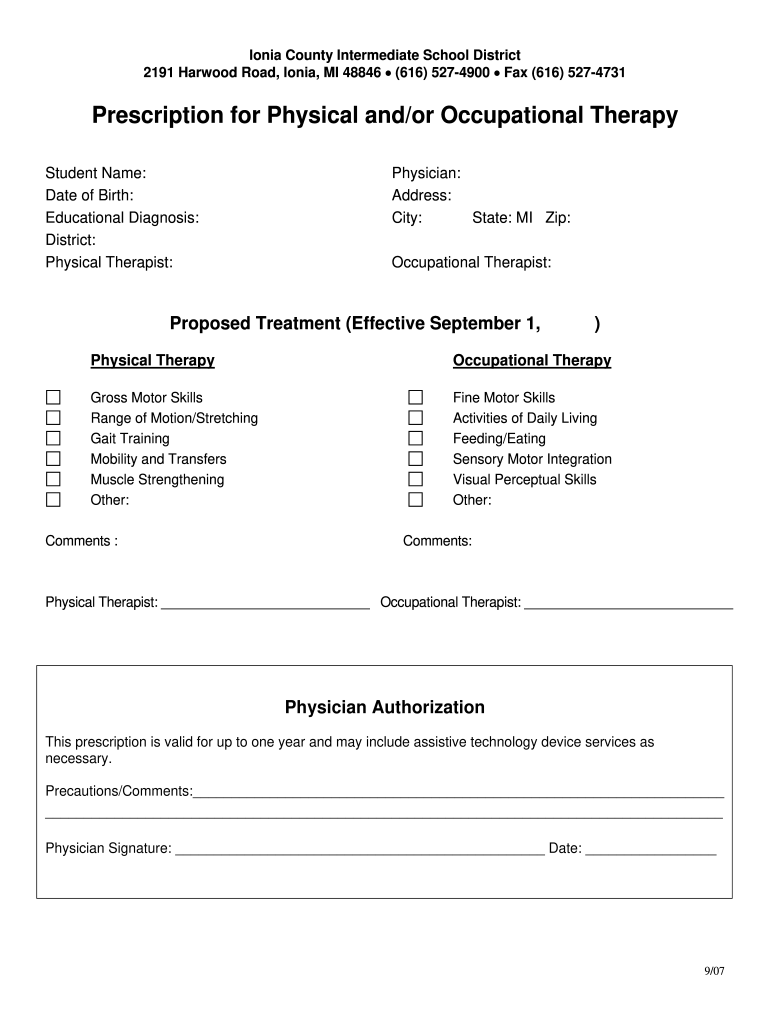
The Prescription for Physical and/or Occupational Therapy, particularly from the Ionia County Intermediate School District, serves as an essential document for students needing therapy services. It is crafted to delineate the therapeutic goals and the specific programs recommended by healthcare professionals to enhance students' physical, emotional, and cognitive development.
Key Elements of the Prescription Document
The prescription form comprises several critical sections, each contributing to its overarching purpose:
-
Student Information: This section requires basic identifying details such as the child's name, date of birth, and school attended. Accurate information ensures that the prescribed therapy aligns with the specific needs of the student.
-
Proposed Treatments: Here, healthcare providers outline the type of therapy recommended, which may include physical or occupational therapy. Each proposed treatment will detail therapy goals such as enhancing gross and fine motor skills, improving daily living activities, or addressing specific educational needs.
-
Physician Authorization: The form must be signed by a licensed healthcare provider. This section not only legitimizes the prescription but also indicates that the suggested therapies are appropriate based on a medical evaluation.
Steps to Complete the Prescription Form
To ensure a smooth completion process, the following steps can be beneficial:
-
Gather Necessary Information: Collect all relevant details about the student, including any previous therapy experiences and specific areas of concern.
-
Consult with Healthcare Providers: Schedule a meeting with a physician who can assess the student's needs and agree on the recommended therapies.
-
Fill Out the Form: Complete each section of the prescription form accurately. Emphasize clarity in documenting therapy goals and services needed.
-
Obtain Necessary Signatures: Secure the required signatures from authorized healthcare providers before submitting the document.
-
Submit the Form: Provide the completed form to the relevant school service department to initiate therapy services.
Legal Use of the Prescription Form
The legal standing of the prescription form is significant, especially in educational settings. This document is legally binding, ensuring that the prescribed therapy must be provided and adhered to by the educational institution.
- Insurance and Medicaid Compliance: Proper completion of the form ensures that therapy services align with insurance requirements, which may be critical for securing funding through Medicaid or private insurance policies.
Who Uses the Prescription for Physical and/or Occupational Therapy
The primary users of the prescription form include:
-
Parents and Guardians: They typically initiate the process by discussing their child's needs with healthcare providers and schools.
-
Healthcare Providers: Physicians and therapists complete the form based on evaluations of the child's physical or developmental health.
-
School Administrators: Staff responsible for orchestrating therapy services rely on this form to coordinate with therapists and monitor student progress.
Important Terms Related to the Prescription
Familiarity with specific terminology is crucial for effectively navigating the prescription process:
-
Gross Motor Skills: These involve larger movements that engage larger muscle groups, such as walking or jumping.
-
Fine Motor Skills: These involve smaller movements, often utilizing the hands and fingers, such as writing or buttoning clothing.
-
Therapeutic Goals: These are objectives outlined in the prescription, guiding therapy sessions toward measurable improvements in a student's physical and occupational functionality.
Examples of Usage in Real-World Scenarios
Consider the following scenarios illustrating how the prescription form is utilized:
-
A child with developmental delays may receive a prescription for occupational therapy to improve self-care skills. The specified goals would focus on increasing independence in daily activities like dressing and hygiene.
-
A high school student recovering from a sports injury submits a physical therapy prescription. This document outlines specific exercises aimed to restore strength and mobility, facilitated by a school-appointed physical therapist.
State-Specific Differences and Variants
Different states may have unique regulations regarding the content and use of the prescription form, influencing how therapy is provided within school systems.
- Variations in Requirements: Some states may require additional documentation, or they may have differing protocols for healthcare provider qualifications.
Understanding these nuances ensures compliance and maximizes the effectiveness of therapy services, catering specifically to regional standards while adhering to the general principles set forth by educational authorities.
This thorough overview of the Prescription for Physical and/or Occupational Therapy from the Ionia County Intermediate School District highlights its essential role in facilitating appropriate therapeutic services for students, laying out a clear path from prescription to therapy implementation.




