



Supercharge your production with U.S. Civil Court Forms
Document administration occupies to half of your office hours. With DocHub, it is simple to reclaim your time and enhance your team's efficiency. Get U.S. Civil Court Forms collection and explore all document templates relevant to your day-to-day workflows.
Effortlessly use U.S. Civil Court Forms:
- Open U.S. Civil Court Forms and utilize Preview to get the relevant form.
- Click on Get Form to start working on it.
- Wait for your form to open in our online editor and start editing it.
- Add new fillable fields, symbols, and images, modify pages order, and many more.
- Complete your template or prepare it for other contributors.
- Download or deliver the form by link, email attachment, or invite.
Accelerate your day-to-day file administration with our U.S. Civil Court Forms. Get your free DocHub profile today to discover all templates.
Commonly Asked Questions about U.S. Civil Court Forms
What are the three most common types of civil cases?
The three most common civil cases are tort claims, contract bdocHubes and landlord/tenant issues. Tort Claim - An act committed by one person that causes harm to another. Tort cases can take many different forms, and can relate to a persons personal safety, safety of their property, and financial security.
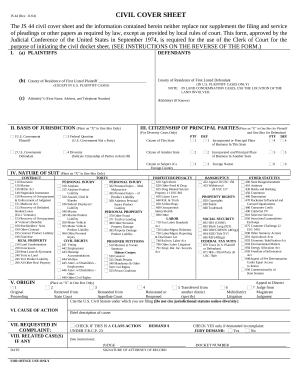
What is a civil case cover sheet?
Tells the court some basic information about a case being filed. Filed at the beginning of all civil cases except family law cases. Get form CM-010. Effective: January 1, 2024.
What is a civil case in USA?
Civil cases are the cases in which private citizens (or companies) sue each other in court. Civil cases are not about breaking a criminal law. There are many different kinds of cases in civil court.
What are the four most common types of civil law?
Four of the most important types of civil law deal with 1) contracts, 2) property, 3) family relations, and 4) civil wrongs causing physical injury or injury to property (tort).
What are civil proceedings in USA?
Broadly speaking, civil procedure consists of the rules by which courts conduct civil trials. Civil trials concern the judicial resolution of claims by one individual or class against another and are to be distinguished from criminal trials, in which the state prosecutes an individual for violation of criminal law.
What is the difference between a civil case and a criminal case?
Civil cases usually involve disputes between people or organizations while criminal cases allege a violation of a criminal law. information given constitutes a civil or criminal case.
How do I get US court documents?
Federal case files are maintained electronically and are available through the internet-based Public Access to Court Electronic Records (PACER) service. PACER allows anyone with an account to search and locate appellate, district, and bankruptcy court case and docket information. Register for a PACER account.
What is civil court in NY?
Civil Court: The New York City Civil Court hears civil cases involving amounts up to $25,000, as well as other civil matters that are referred to it by the Supreme Court. The Civil Court also hears small claims cases involving amounts up to $5,000 and housing-related civil cases.


