
Property Division Forms

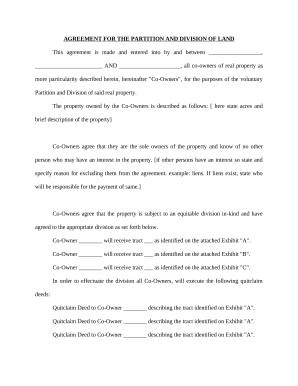
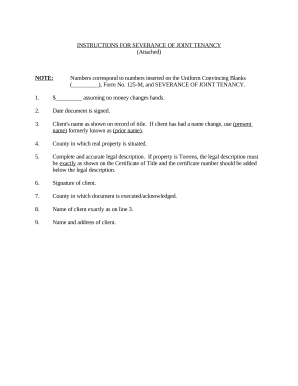
Transform your file administration with Property Division Forms
Your workflows always benefit when you can easily get all the forms and documents you will need on hand. DocHub supplies a a huge collection of forms to relieve your everyday pains. Get hold of Property Division Forms category and easily discover your form.
Start working with Property Division Forms in a few clicks:
- Browse Property Division Forms and discover the form you need.
- Click Get Form to open it in our editor.
- Begin adjusting your form: add more fillable fields, highlight paragraphs, or blackout sensitive data.
- The app saves your modifications automatically, and after you are all set, you are able to download or share your file with other contributors.
Enjoy seamless form management with DocHub. Check out our Property Division Forms online library and look for your form right now!
Commonly Asked Questions about Property Division Forms
How does adultery affect divorce in Kansas?
Since Kansas has adopted a hybrid fault approach, the issue of adultery is typically not relevant to financial issues, child custody decisions, or other matters unless special circumstances apply.
How is property divided in a divorce in Kansas?
State law determines property division during a divorce. In Kansas, courts use the equitable distribution rule. All property acquired during a marriage becomes marital property and is subject to equitable division. Judges divide property fairly but not always equally.
How is a 401k divided in divorce in Kansas?
Kansas is an equitable division state, meaning the judge is free to divide property in whatever manner he or she decides is fair and just under the circumstances. This may mean the judge awards more or less than 50 percent of the marital share of a retirement account to one spouse.
Is inheritance allowed in Kansas divorce?
Under Kansas law, property you inherit or receive as a gift, even if acquired during the marriage, is considered separate property not subject to division of assets with your spouse during a divorce. The same is true of any income you derive from that property.
Does it matter who files for divorce first in Kansas?
Does it matter who files for divorce first in Kansas? No, filing for divorce first does not give preference to either party in a divorce.
How is debt divided in a divorce in Kansas?
Typically, at the end of your divorce, the Court will consider both debts and assets and divide everything 50/50.
What is a spouse entitled to in a divorce in Kansas?
In Kansas, courts use the equitable distribution rule. All property acquired during a marriage becomes marital property and is subject to equitable division. Judges divide property fairly but not always equally. Nine states, such as California, are community property states.
Is Kansas a 50/50 divorce state?
Kansas is an Equitable Distribution State Kansas is an equitable distribution state where equitable does not necessarily mean equal. Instead of dividing property 50/50, the court divides property ing to what it considers fair given the couples circumstances.


