Enhance your template managing with Illinois Law Forms

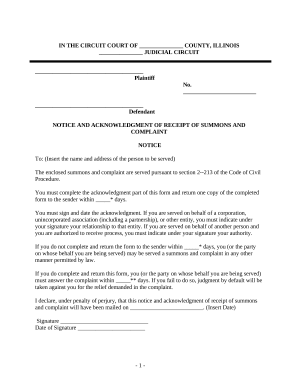
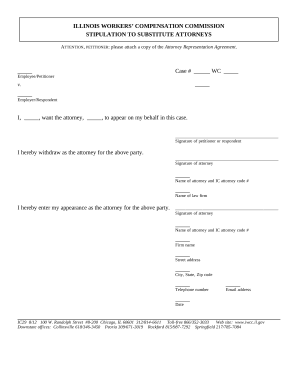
Your workflows always benefit when you can easily locate all of the forms and documents you will need at your fingertips. DocHub supplies a a huge collection of document templates to relieve your daily pains. Get hold of Illinois Law Forms category and quickly browse for your form.

Begin working with Illinois Law Forms in several clicks:

  1. Open Illinois Law Forms and get the form you need.
  2. Click on Get Form to open it in the editor.
  3. Start editing your form: add more fillable fields, highlight paragraphs, or blackout sensitive information.
  4. The application saves your adjustments automatically, and once you are all set, you can download or share your form with other contributors.

Enjoy smooth document managing with DocHub. Check out our Illinois Law Forms category and find your form today!


Video Guide on Illinois Law Forms management

video background

Commonly Asked Questions about Illinois Law Forms

Chief Justice Anne M. Burke and the Illinois Supreme Court announced the amendment of Rule 23, which will allow litigants to cite unpublished opinions from the Illinois Appellate Courts for persuasive purposes. Amended Rule 23 is effective Jan. 1, 2021.
After considering evidence concerning heirship, the Court declares that the following are the only heirs of the. decedent: Relationship. Name.
By this amendment, Rule 23 creates a presumption against disposing of Appellate Court cases by full, published opinions and authorizes a third type of disposition by summary order in select circumstances.
Illinois Law and Practice is an encyclopedia providing coverage of a broad range of legal topics, based on current Illinois case law, statutes, and rules.
Applicants to the Bar in Illinois must: 1) be at least 21 years of age; 2) have a high school diploma or the functional equivalent; 3) complete 90 semester hours in attendance at a qualified university; and 4) successfully attend and graduate from a law school accredited by the American Bar Association.
A petition for rule to show cause is a legal procedure in which one person, the petitioner, says that another person, the respondent, has not followed a court order or judgment. The petition is a document detailing which order or judgment was not followed and details of how the judgment or order was violated.
The court shall allocate parenting time ing to the childs best interests. (b) Allocation of parenting time. Unless the parents present a mutually agreed written parenting plan and that plan is approved by the court, the court shall allocate parenting time.
A bill becomes a law when it passes both houses of the General Assembly with a majority vote in each house and is signed by the governor. This process can take time with committee debates and caucuses, hearings and amendments being incorporated.