



Handle Florida Court Forms quickly online
Document managing can overpower you when you can’t locate all of the forms you require. Fortunately, with DocHub's extensive form categories, you can find everything you need and swiftly manage it without changing between apps. Get our Florida Court Forms and start utilizing them.
How to use our Florida Court Forms using these basic steps:
- Check Florida Court Forms and choose the form you require.
- Preview the template and click Get Form.
- Wait for it to open in the online editor.
- Adjust your form: add new information and pictures, and fillable fields or blackout some parts if needed.
- Prepare your form, save adjustments, and prepare it for delivering.
- When all set, download your form or share it with other contributors.
Try out DocHub and browse our Florida Court Forms category easily. Get a free profile right now!
Commonly Asked Questions about Florida Court Forms
How do I request a court document in Florida?
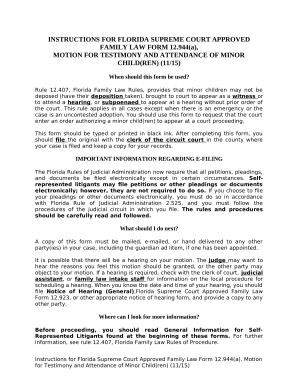
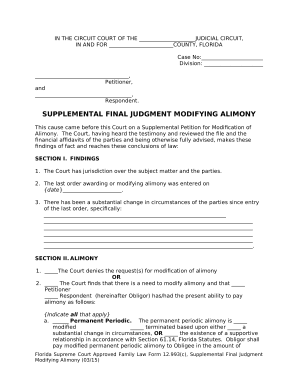
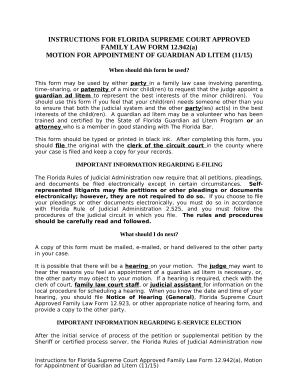
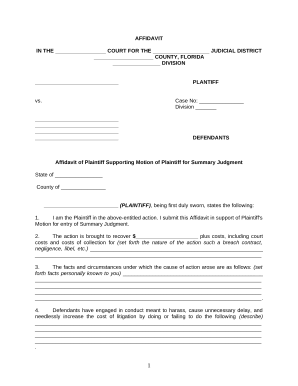
By Florida law, the Clerk of Courts in each county is the official custodian of court records. Click here to access the Clerks Online Services, including official records, civil/family/probate cases, criminal cases and traffic cases, or you may call the Clerks 24-hour voice response system at (305) 275-1155.
How much does it cost to file a petition for custody in Florida?
Petitions usually cost $300 to $500 each.
What are the three types of courts in Florida?
The Florida court system is made up of three federal district courts, a state supreme court, a state court of appeals, and trial courts. Each court has general and limited jurisdiction and serves a different purpose.
What is the Florida court E filing portal?
The Florida Courts E-Filing Portal is a single statewide website where users can file court documents in Floridas trial and appellate courts. E-filing is the electronic filing of documents to the clerks office.
What forms do I need to file for custody in Florida?
How to File for Custody in Florida Parenting Plan (Form 12.995(a)) For general cases. Supervised/Safety-Focused Parenting Plan (Form 12.995(b)) For cases involving supervised custody. Relocation/Long Distance Parenting Plan (Form 12.995(c)) For cases involving the relocation of one or more parents.
What do I need to get full custody of my child in Florida?
As of July 1st, 2023, there is a rebuttable presumption under Florida law that says equal timesharing is in the childs best interest, which means that a parent who wishes to pursue full custody has to legally prove by a preponderance of the evidence that equal timesharing is not in the best interest of the child and
What is the order to take into custody in Florida?
The order to take into custody shall: (1) be in writing and signed; (2) specify the name, address, and sex of the child or, if unknown, designate the child by any name or description by which he or she can be identified with reasonable certainty; (3) specify that the child is of an age subject to the jurisdiction of
Do I need a lawyer for child custody in Florida?
See Florida Statute 61.13. Florida custody law does not give any preference to mothers or fathers when deciding child custody matters. Instead, the custody arrangement will depend on the specific facts and circumstances of each case. An attorney is not required in Florida child custody cases but can be very helpful.


