
Construction Contractor Legal Forms

Create a new Construction Contractor Legal Form
Construction Contract Cost Plus or Fixed Fee - Massachusetts
Roofing Contractor Package - Iowa
Mo contract form
Subcontractor
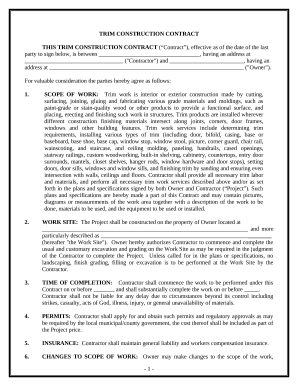
Trim Carpenter Contract for Contractor - Washington
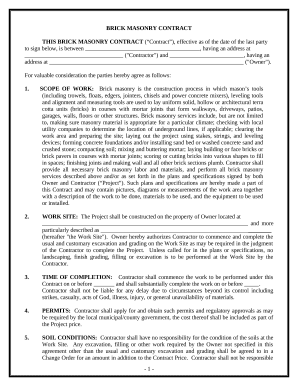
Brick Mason Contract for Contractor - Washington
Demolition Contractor Package - Wyoming
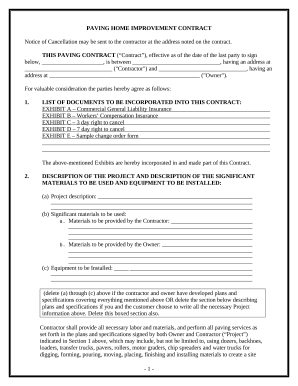
Paving Contract for Contractor - California

Refrigeration Contract for Contractor - Alaska
Pennsylvania work contractor
Roofing Contractor Package - New Mexico
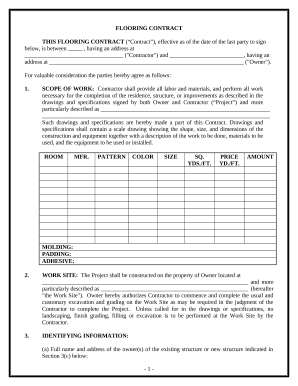
Flooring contract template
Trim Carpentry Contractor Package - Maine
Handle Construction Contractor Legal Forms quickly online
Document managing can stress you when you can’t find all of the documents you require. Luckily, with DocHub's substantial form library, you can discover all you need and promptly manage it without the need of changing among apps. Get our Construction Contractor Legal Forms and begin utilizing them.
How to use our Construction Contractor Legal Forms using these basic steps:
- Check Construction Contractor Legal Forms and choose the form you require.
- Review the template and then click Get Form.
- Wait for it to upload in the online editor.
- Modify your template: include new information and pictures, and fillable fields or blackout some parts if needed.
- Fill out your template, save adjustments, and prepare it for delivering.
- When ready, download your form or share it with your contributors.
Try out DocHub and browse our Construction Contractor Legal Forms category easily. Get your free profile today!
Video Guide on Construction Contractor Legal Forms management

Commonly Asked Questions about Construction Contractor Legal Forms
What are contracting forms?
Formwork, also known as concrete forms, is a temporary or permanent mould used to create concrete slabs and structures. Its a barrier that holds the fresh concrete in place and helps with shaping the concrete until the concrete is strong enough to hold its own weight and shape.
Which documents are the most important for the construction process and why?
These are some of the most common and important construction documents for building projects of all kinds. 1: Construction Agreement. 2: General Conditions. 3: Special Conditions. 4: Scope of Work (SOW) 5: Drawings. 7: Bill of Quantities. 9: Schedule of Values. 10: Cost Estimate.
What are contract documents in construction?
Construction Contract Documents are the written documents that define the roles, responsibilities, and Work under the construction Contract, and are legally-binding on the parties (Owner and Contractor).
What are the 3 elements of a construction contract?
These five essential elements of a construction contract can result in major vulnerabilities if overlooked: Full Name, Address, and Signatures of Both Parties. Scope of Work. Project Cost and Payment Terms. Schedule of Work. Authority.
What are the three main contract types used in construction?
3 Types of Construction Contracts: Their Pros and Cons for Owners and Contractors Fixed Price. The most common type of contract is the fixed price contract, also known as the lump sum or stipulated sum contract. Cost-Plus Fee. Unit Price.
What are the three basic types of documents used in construction contracts?
What is the most commonly used construction contract? Lump sum contracts (also sometimes known as fixed price contracts) are usually considered the most popular type of contract when it comes to building and engineering agreements, however they do have minor differences.


