






Understanding the Urine Initial Drug Screen Result Form
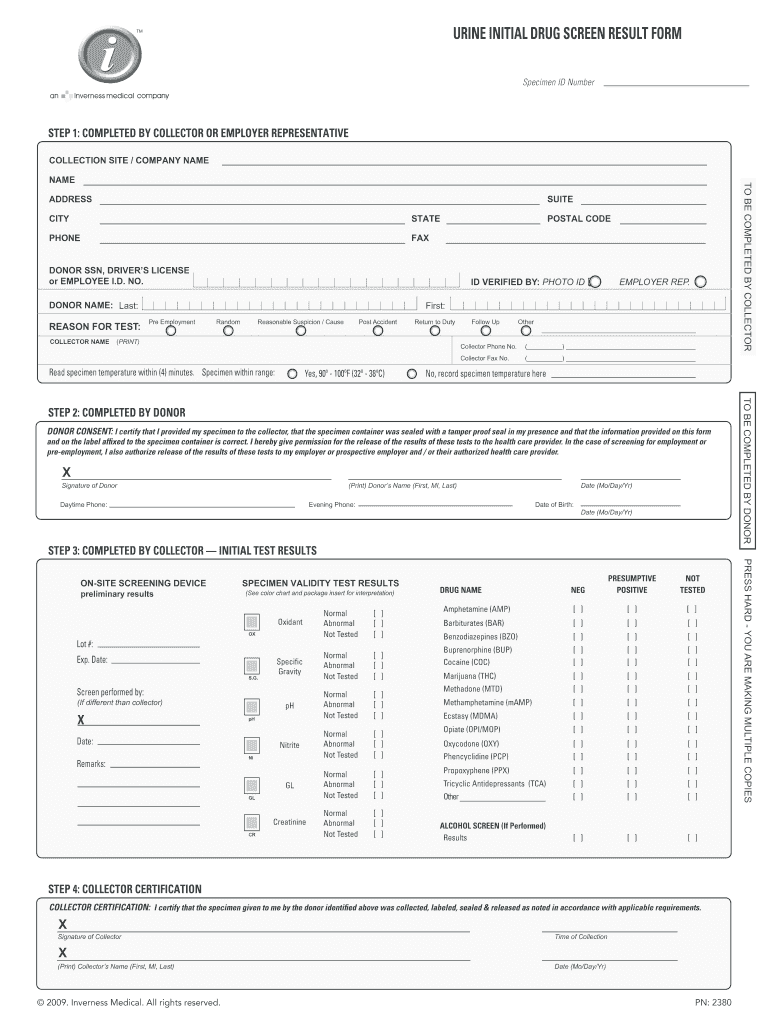
The Urine Initial Drug Screen Result Form is a critical document used in the drug testing process for various purposes, including employment screening, legal compliance, or medical assessments. This form is essential for collecting and documenting the results of urine drug tests accurately. It typically includes detailed sections for donor information, collection site details, reasons for testing, specimen validity tests, preliminary drug test results, and collector certification.
Key Elements of the Urine Initial Drug Screen Result Form
Several key elements are typically included in the Urine Initial Drug Screen Result Form:
- Donor Information: This section requires the full name, address, and identification of the individual providing the specimen.
- Collection Site Details: Information regarding the location where the sample was collected, including the address and name of the collector.
- Reason for Testing: The specific purpose of the drug test, which may include pre-employment, random testing, or post-incident assessment.
- Specimen Validity Tests: Indicators used to ensure that the urine specimen is valid, such as temperature checks or specific gravity tests.
- Preliminary Drug Test Results: Results related to the initial screening for specific substances; this often identifies the presence of drugs such as amphetamines, cannabis, cocaine, opiates, and PCP.
- Collector Certification: A section for the collector to sign, affirming that the test was conducted in compliance with relevant protocols and regulations.
Steps to Complete the Urine Initial Drug Screen Result Form
Completing the Urine Initial Drug Screen Result Form requires a systematic approach to ensure all necessary information is captured accurately:
- Gather Information: Collect all relevant details about the donor, including their identification and reason for testing.
- Fill Out Donor Information: Accurately record the donor's name, contact details, and any unique identifiers, such as a social security number or employee ID.
- Include Collection Site Details: Document the name and address of the collection site, ensuring all details are current and correct.
- Indicate Reason for Testing: Clearly state the reason for the drug test to provide context for the results.
- Conduct Specimen Validity Tests: Perform any required preliminary tests on the urine sample and record the findings on the form.
- Document Preliminary Drug Test Results: Enter the results of the drug screen, specifying any substances detected.
- Certification by Collector: The collector should sign the form, indicating that the specimen was collected according to the established procedures.
Legal Use of the Urine Initial Drug Screen Result Form
The Urine Initial Drug Screen Result Form serves various legal purposes, particularly when used in employment settings or regulated industries. It must be compliant with local and federal laws concerning privacy and drug testing protocols.
- Confidentiality: Ensure all information on the form is handled confidentially to comply with the Health Insurance Portability and Accountability Act (HIPAA) and other privacy laws.
- Compliance with Regulations: The collection and testing procedures must meet the standards set by the Department of Transportation (DOT) if applicable, which regulates drug testing for transportation personnel.
Who Typically Uses the Urine Initial Drug Screen Result Form
Various stakeholders utilize the Urine Initial Drug Screen Result Form, including:
- Employers: Companies that require drug testing as part of their hiring process or workplace policies.
- Healthcare Providers: Medical professionals who may perform drug tests for clinical assessment or legal reasons.
- Testing Facilities: Laboratories and collection sites that conduct urine drug testing and require documentation for their records.
- Legal Entities: Courts or legal representatives may mandate drug testing forms in specific circumstances, such as custody disputes or probation requirements.


Examples of Using the Urine Initial Drug Screen Result Form
Practical applications of the Urine Initial Drug Screen Result Form may include:
- Pre-Employment Screening: An organization may require a candidate to pass a urine drug test, and the results are documented using this form.
- Random Drug Testing in the Workplace: Companies can maintain compliance with safety regulations by conducting random drug tests, properly documenting each test with the form.
- Post-Accident Testing: Employers may require drug tests for employees involved in workplace accidents, using the form to document the process and results for legal and insurance purposes.
Important Terms Related to the Urine Initial Drug Screen Result Form
Familiarizing oneself with specific terms relevant to the Urine Initial Drug Screen Result Form will enhance understanding and compliance:
- Chain of Custody: The process of maintaining and documenting the handling of the urine sample from collection to testing to ensure integrity and validity of the testing process.
- Preliminary Drug Test: An initial test to screen for the presence of specific drugs in the urine. Positive results generally require confirmatory testing.
- Confirmatory Testing: A secondary test conducted to verify the presence of drugs after an initial positive result; this typically uses more specific methods like gas chromatography-mass spectrometry (GC-MS).
This comprehensive analysis of the Urine Initial Drug Screen Result Form highlights its critical elements and processes involved in its effective use within various contexts.