




Definition and Meaning of NOTICE TO EMPLOYEE - dir ca
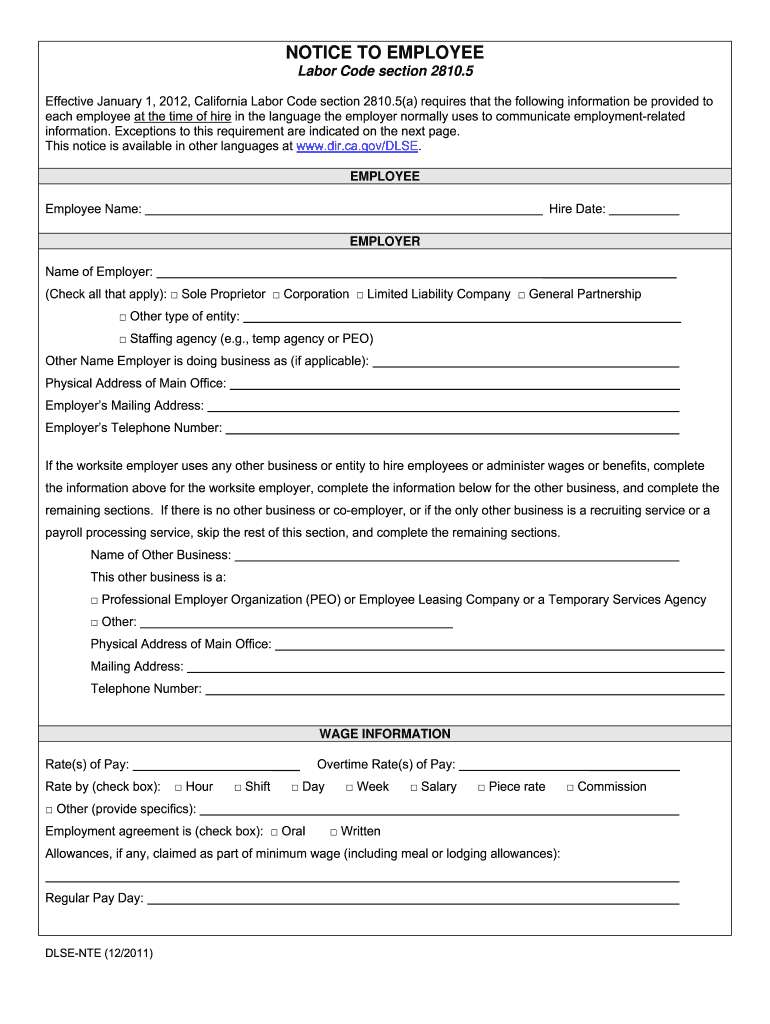
The NOTICE TO EMPLOYEE form, in accordance with California Labor Code section 2810.5, serves as an official document that employers must provide to their employees at the time of hiring. This crucial form is designed to furnish employees with key employment-related information that outlines their rights and responsibilities.
It includes multiple essential components:
- Employee Information: This section requires the employee’s name, address, and other identifying details.
- Employer Information: Employers must indicate their business name, address, and the contact details for the individual responsible for handling employee-related inquiries.
- Wage Information: This involves specifying the rate of pay, pay periods, and any overtime compensation applicable. For example, if an employee is paid hourly, the form must accurately state the hourly wage agreed upon.
- Workers' Compensation Insurance: The form must outline the insurance details that cover workplace injuries, thus ensuring employee safety and compliance with state regulations.
Employers must ensure that this form is current and includes accurate information, reflecting any changes in hiring practices or employment laws. The necessity of maintaining this accuracy is vital, as it directly impacts employee rights and employer liabilities.
How to Obtain the NOTICE TO EMPLOYEE - dir ca
Employers can easily obtain the NOTICE TO EMPLOYEE - dir ca through several means, ensuring compliance with California labor regulations. It is available via the California Department of Industrial Relations (DIR) website, which provides a downloadable version of the form. Additionally, employers can access various human resources and compliance software that may include the template as part of their offerings.
Steps to access the form include:
- Visit the DIR Website: Navigate to the California Department of Industrial Relations’ official web page.
- Search for the Form: Use the search function to locate the NOTICE TO EMPLOYEE - dir ca.
- Download the Form: Choose the appropriate file format (PDF or DOC) for easy editing.
- Ensure Up-to-Date Information: Verify that you are using the most current version of the form to adhere to any recent legal updates.
By following these steps, employers can ensure that they fulfill their obligation to provide this important information to new hires.
Key Elements of the NOTICE TO EMPLOYEE - dir ca
Understanding the key elements of the NOTICE TO EMPLOYEE form is essential for both employers and employees to safeguard their rights and responsibilities. The following components are crucial:
-
Identification Details: Both the employee and employer must be properly identified, including legal names and business addresses, to ensure clarity and accountability.
-
Pay Structure Description: Clear descriptions of wage rates, pay periods, and overtime policies should be included. For instance, if an employee is on a salary basis, the specific salary amount and payment frequency must be detailed.
-
State Compliance: The form must reflect relevant California labor laws, ensuring legal compliance and helping to avoid penalties.
-
Workers' Compensation Policy Details: Providing specifics about the workers' compensation policy is vital for informing employees about their coverage in case of workplace injuries or illnesses.
-
Acknowledgment Section: An area where employees can acknowledge receipt of the form ensures that both parties are aware of the employment conditions and responsibilities.
Having a comprehensive understanding of each of these sections allows for a smoother onboarding process and fosters a transparent employer-employee relationship.
Steps to Complete the NOTICE TO EMPLOYEE - dir ca
Completing the NOTICE TO EMPLOYEE form requires careful attention to detail to ensure compliance with California regulations. Follow these steps for accurate completion:
- Download the Form: Ensure you have the most recent version of the form from a reliable source.
- Fill in Employee Information: Begin by entering the appropriate employee details, including name, address, and hire date.
- Provide Employer Information: Enter the legal business name, contact details, and additional information about the employer.
- Specify Wage Agreements: Clearly indicate the employee's rate of pay and frequency of payment (weekly, bi-weekly, etc.).
- Detail Workers' Compensation Insurance: Include the name of the insurance provider and policy number to inform the employee adequately.
- Review for Accuracy: Double-check all entries to ensure all information is accurate, complete, and complies with California labor laws.
- Finalize and Distribute: Once completed, present the form to the employee for their acknowledgment, and retain a copy for business records.
By following these steps, employers can ensure that their obligations under California labor law are met, and employees receive the necessary information regarding their employment.
Legal Use of the NOTICE TO EMPLOYEE - dir ca
The legal use of the NOTICE TO EMPLOYEE form is essential for both compliance and employee rights protection. Under California law, employers are mandated to deliver the form to employees at the time of hiring, and it must detail specific information relevant to both parties' rights and obligations.
The form’s legal implications include:
- Compliance with Labor Laws: Accurate completion and distribution of the form are required for compliance with California Labor Code section 2810.5. Failure to do so may result in penalties.
- Documentation in Legal Disputes: The form serves as a legal document that can be referenced in case of employment disputes regarding wages, working conditions, or other employment-related issues.
- Employee Acknowledgment: Obtaining a signed acknowledgment from the employee confirming receipt of the form reinforces legal documentation and can protect employers against claims of non-disclosure of essential employment details.
Employers must take the issuance of the NOTICE TO EMPLOYEE seriously, ensuring that it is distributed timely and accurately to mitigate legal risks.