




Key Elements of the Together for Life Form
The Together for Life Form is a critical document used primarily in the context of wedding preparations, assisting couples in communicating their preferences for various elements of their wedding ceremony. The form emphasizes clarity and comprehensiveness, ensuring all necessary details are captured effectively. Here are the essential components of the form:
-
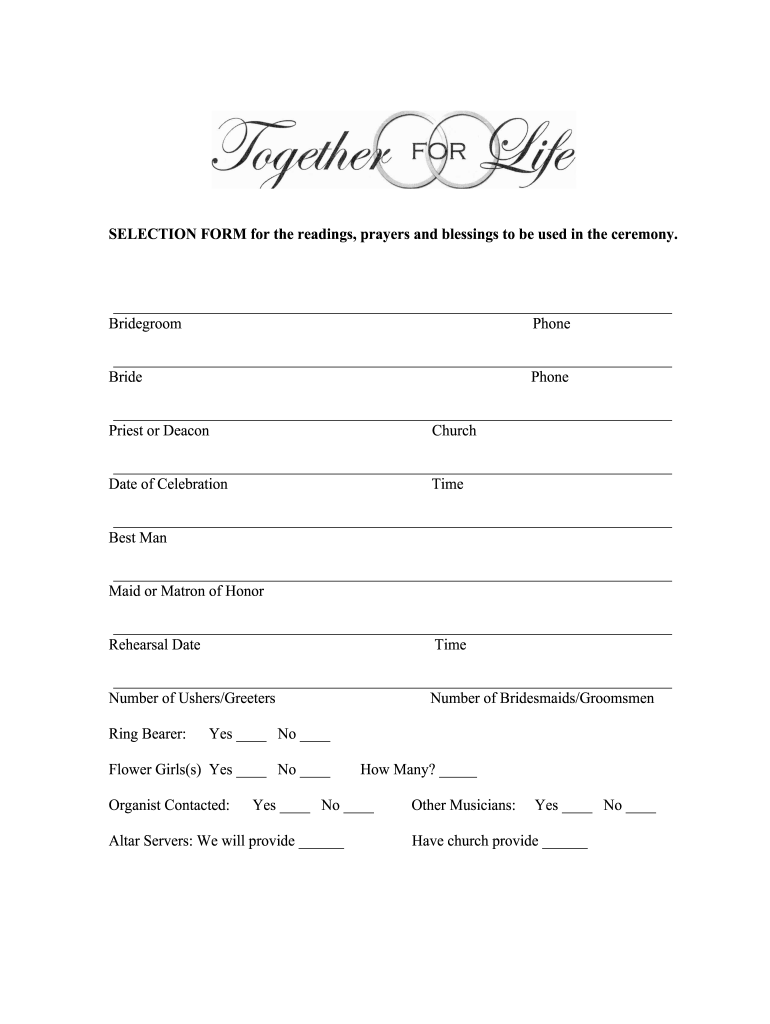
Couple's Information: The form begins with sections for personal details regarding the couple, including names, contact information, and ceremony date. This section lays the foundation for all subsequent choices and provides necessary context to the officiant.
-
Ceremony Preferences: Couples select specific elements that will be included in their wedding ceremony. This may encompass various readings, prayers, and music selections. By outlining these preferences, the couple ensures that their ceremony reflects their values and beliefs.
-
Participant Details: The form includes sections where the couple can indicate special roles they wish to designate, such as ushers, readers, or musicians. By specifying who will contribute to the ceremony, couples can communicate clearly with those involved, creating a more organized event.
-
Signature and Approval Section: An essential part of the form is the signature area, where both partners affirm that the information provided is accurate and that they are content with the selections made. This section holds significant importance as it meets legal requirements for some officiants.
-
Instructions for Submission: Clear guidelines on how and when to submit the form are provided, which ensures that couples can navigate the process easily and reduces the chance of delays in their wedding planning.
Steps to Complete the Together for Life Form
Completing the Together for Life Form is a structured process that involves a series of steps to ensure accuracy and completeness. Here’s how couples can effectively fill out the form:
-
Gather Information: Before beginning, collect all necessary information, including personal details for both partners and preferences for the ceremony. Review readings and music choices that resonate with both individuals.
-
Complete Couple's Information Section: Fill in names, contact details, and the date of the ceremony. Accuracy in this section is crucial for the officiant to facilitate communication.
-
Select Ceremony Elements: Choose readings, prayers, and music from the options provided or fill in personalized selections. Evaluating how these choices align with the couple's beliefs can enhance the ceremony's significance.
-
Designate Participants: Identify and confirm with individuals who will take on special roles in the ceremony. This includes reaching out to potential readers or musicians to secure their agreement.
-
Review and Sign: Carefully review all sections of the form for accuracy. Both partners should read through selections and confirm agreement before signing the document.
-
Submit the Form: Follow the provided guidelines to formally submit the completed form to the officiant or designated person.
Important Terms Related to the Together for Life Form
Understanding specific terminology related to the Together for Life Form can help couples better navigate the requirements and expectations surrounding their wedding ceremony. Some key terms include:
-
Event Officiant: The individual responsible for conducting the wedding ceremony. This can include priests, ministers, or civil officiants.
-
Readings: Selected texts that may be spiritual, literary, or personal, reflecting the couple's values.
-
Ceremony Program: A document distributed during the ceremony that outlines the order of events, including any readings or songs.
-
Witness: Someone who is present at the ceremony, often required to sign legal documents, verifying the marriage occurred.
-
Personalization: The act of adapting the ceremony to reflect the individuality of the couple, which could involve chosen readings, vows, and music.
Examples of Using the Together for Life Form in Real Scenarios
Real-life scenarios illustrate the practical application of the Together for Life Form, showcasing how it contributes to various wedding plans:
-
Couple A - Customized Ceremony: This couple wishes to integrate special readings from their heritage during the ceremony. They fill out the form with specific instructions for the officiant, ensuring their cultural backgrounds are honored.
-
Couple B - Community Involvement: Eager to involve family and friends, Couple B uses the form to assign roles to loved ones, appointing a sibling to read during the ceremony. Their proactive approach also helps strengthen familial bonds through active participation.
-
Couple C - Venue Coordination: After selecting specific music and readings that reflect their taste, Couple C presents the form to their wedding planner who uses it to align all vendors and participants with the couple's vision for their special day.
Additional Insights on Wedding Ceremony Planning
Utilizing the Together for Life Form is a significant step in orchestrating a seamless wedding ceremony. Here are further insights that couples may find advantageous:
-
Timeline Considerations: Complete the form as early as possible in the wedding planning process to avoid last-minute issues. This timely approach helps ensure that everyone involved has ample preparation time.
-
Consult with the Officiant: Engage in discussions with the officiant regarding the selections made on the form. This collaboration can lead to thoughtful suggestions and enhance the overall ceremony experience.
-
Flexible Options: The Together for Life Form allows for modifications, enabling couples to adapt their preferences as planning progresses. This flexibility is valued, particularly when planning a personalized ceremony.
-
Legal Compliance: Being aware of legal requirements surrounding marriage in one's state can ensure that the information captured on the Together for Life Form fulfills necessary legal criteria, rendering the marriage valid.
Through careful attention to detail and thoughtful collaboration, the Together for Life Form serves as a foundational tool that supports couples as they navigate their wedding planning journey.