



01. Edit your 1040 pr online
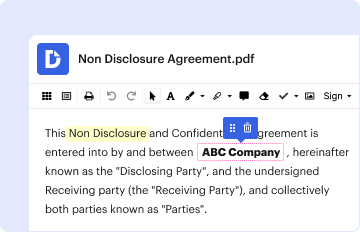
Type text, add images, blackout confidential details, add comments, highlights and more.

Type text, add images, blackout confidential details, add comments, highlights and more.
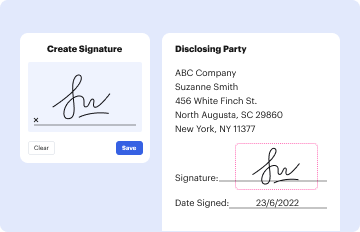
Draw your signature, type it, upload its image, or use your mobile device as a signature pad.

Send formulario 1040 en español via email, link, or fax. You can also download it, export it or print it out.
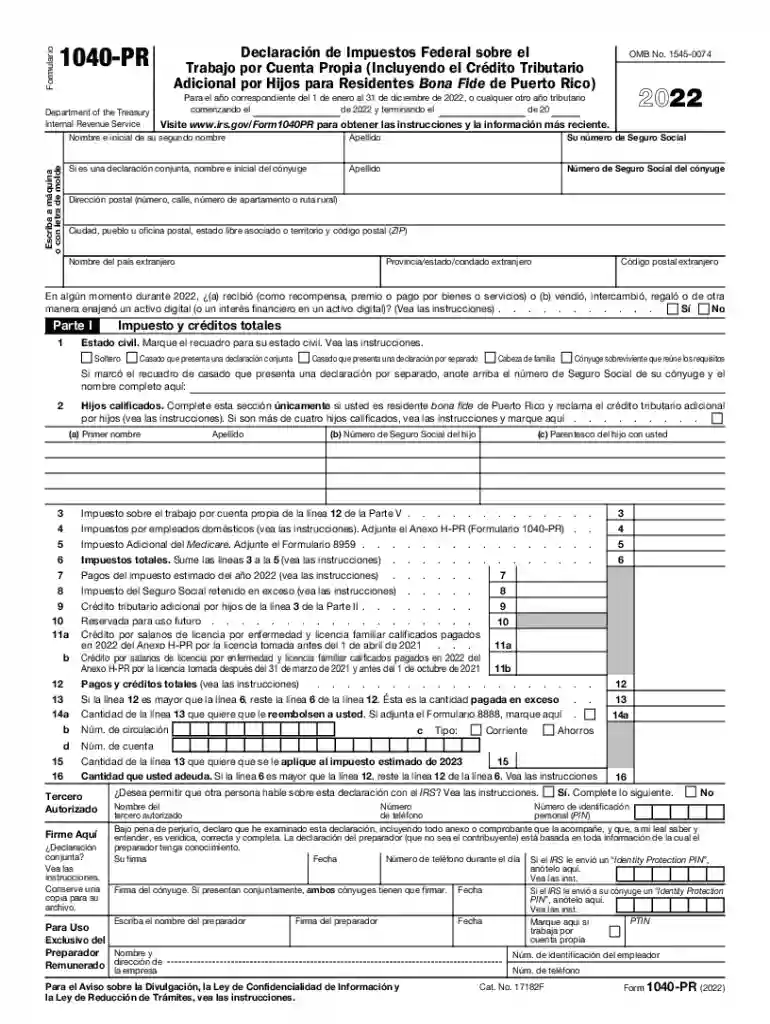
Form 1040-ES (PR) is a federal tax form specifically intended for self-employed individuals residing in Puerto Rico. It serves to estimate the individual’s federal tax obligations related to self-employment income. Unlike standard employment taxes deducted through payroll by employers, self-employed individuals, freelancers, and business owners must calculate and remit their estimated tax payments to the IRS quarterly. This form addresses the unique tax situation of Puerto Rican residents, incorporating island-specific credits, deductions, and income classifications.
To successfully utilize Form 1040-ES (PR), start with a thorough evaluation of your financial situation, including both personal and business income and expenses. Follow the form’s worksheet to estimate your annual tax liability, then divide this into four equal payments to be remitted quarterly. This proactive approach ensures compliance and avoids penalties for underpayment.
Completing the Form 1040-ES (PR) involves several detailed steps to ensure accuracy in estimating and paying your taxes:
Form 1040-ES (PR) is primarily used by self-employed individuals who live and work in Puerto Rico, including:
Paying estimated taxes is guided by IRS regulations, which specify deadlines and methodologies for individuals using Form 1040-ES (PR):
Failure to file Form 1040-ES (PR) or remit sufficient payments may lead to penalties and interest charges imposed by the IRS:
Different taxpayer scenarios illustrate the versatility of Form 1040-ES (PR) in addressing diverse economic contexts:


Ensure all necessary documents are at hand when preparing to submit Form 1040-ES (PR), and know your options for submission:
Essential Documents Needed:
Submission Methods:
We've got more versions of the 1040 pr form. Select the right 1040 pr version from the list and start editing it straight away!
| Versions | Form popularity | Fillable & printable |
|---|---|---|
| 2022 | 4.4 Satisfied (40 Votes) | |
| 2021 | 4.7 Satisfied (33 Votes) | |
| 2020 | 4.8 Satisfied (179 Votes) | |
| 2019 | 4.4 Satisfied (70 Votes) | |
| 2018 | 4.4 Satisfied (72 Votes) | |
| 2017 | 4.2 Satisfied (66 Votes) | |
| 2016 | 4.4 Satisfied (120 Votes) | |
| 2015 | 4 Satisfied (45 Votes) | |
| 2014 | 4 Satisfied (33 Votes) | |
| 2013 | 4 Satisfied (31 Votes) | |
| 2012 | 4 Satisfied (37 Votes) | |
| 2010 | 4.3 Satisfied (35 Votes) | |
| 2007 | 3.9 Satisfied (41 Votes) |
At DocHub, your data security is our priority. We follow HIPAA, SOC2, GDPR, and other standards, so you can work on your documents with confidence.
Forma 1040-ES (espanol), contribuciones federales estimadas del trabajo por cuenta propia y sobre el empleo de empleados domsticos-Puerto Rico.Read more
Page 1. 2022. Formulario 1040-ES(PR). Contribuciones Federales Estimadas del Trabajo por Cuenta Propia y sobre el Empleo de. Empleados Domsticos Puerto Rico.Read more


