




Definition and Purpose of the 1040-PR 2017 Form
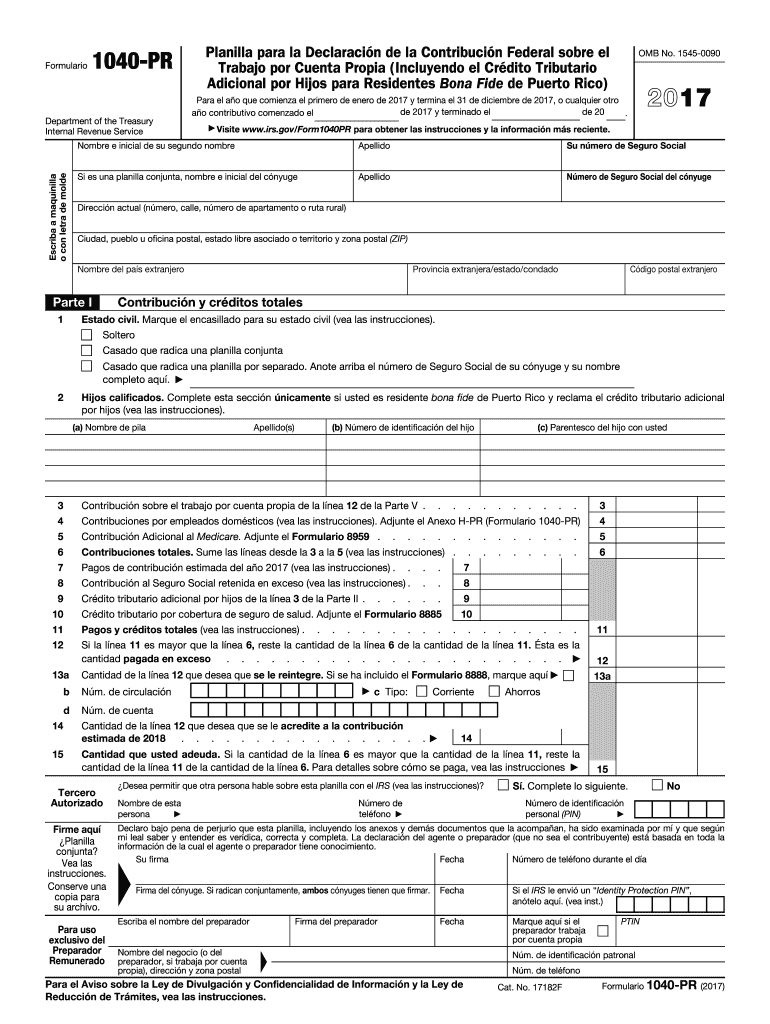
The 1040-PR 2017 form is a self-employment tax return document specifically designed for bona fide residents of Puerto Rico. This form is used to report self-employment income, calculate taxes owed, and claim applicable tax credits, such as the additional child tax credit, for the 2017 tax year. It includes sections for personal information, agricultural and non-agricultural business income, deductions, and tax calculations.
Key Elements of the 1040-PR 2017 Form
- Personal Information: Basic details, including the filer's name, address, and Social Security number, are required.
- Income Reporting: Sections for reporting income from both agricultural and non-agricultural self-employment activities.
- Tax Deductions: Opportunities to deduct eligible expenses to reduce taxable income.
- Tax Credits: Areas where filers can claim tax credits, potentially lowering the overall tax liability.
How to Obtain the 1040-PR 2017 Form
The 1040-PR 2017 form can be acquired through various methods:
- Online: Available for download in PDF format directly from the IRS website.
- Mail: Request a physical copy by contacting the IRS.
- Tax Software: Many tax software packages, such as TurboTax or QuickBooks, include the form for digital completion.
- Local IRS Offices: Physical copies can also be obtained at local IRS branches in Puerto Rico.
Steps to Complete the 1040-PR 2017 Form
Successfully completing the 1040-PR 2017 form involves the following steps:
- Gather Required Documents: Collect all necessary financial records such as income statements, previous tax returns, and receipts for deductible expenses.
- Complete Personal Information: Fill in the section requesting your name, address, and Social Security number.
- Report Income: Use the provided sections to accurately report income from all self-employed activities.
- Calculate Deductions and Credits: Enter eligible deductions and credits to determine your taxable income and potential tax benefits.
- Review and Sign: Double-check all entered information for accuracy, then sign and date the form.
IRS Guidelines and Compliance
To ensure compliance with IRS regulations when filing the 1040-PR 2017 form:
- Follow Instructions: Use the IRS-provided instructions for detailed guidance on filling out the form.
- Deadline Compliance: Submit the form by the standard IRS deadlines to avoid penalties.
- Check for Updates: Refer to the IRS website for any updates or changes in reporting requirements for the tax year in question.
Who Typically Uses the 1040-PR 2017 Form
The 1040-PR 2017 form is primarily utilized by:
- Self-Employed Residents of Puerto Rico: Individuals earning income through self-employment activities in both agricultural and non-agricultural sectors.
- Residents Claiming Tax Credits: Those eligible for specific credits like the additional child tax credit are required to use this form.

Penalties for Non-Compliance
Failure to accurately complete or timely submit the 1040-PR 2017 form can lead to several penalties:
- Late Filing Penalties: Incremental fines based on the delay duration.
- Late Payment Fees: Interest charges on any unpaid tax amount.
- Accuracy-Related Penalties: Fines for substantial underreporting or misstatement of income.
Form Submission Methods
Residents can file the 1040-PR 2017 form through:
- Mail: Send a completed form to the IRS address designated for Puerto Rico residents.
- Online Filing: E-filing is available through IRS-authorized tax filing software.
- In-Person: Submit directly at IRS local offices, though this may require an appointment.
Required Documents
To complete the 1040-PR 2017 form effectively, the following documents are necessary:
- Income Statements: Detailed records of all earnings.
- Expense Receipts: Proof of deductible business expenses.
- Previous Tax Returns: For continuity and cross-reference purposes.
Filing Deadlines and Important Dates
Key deadlines associated with the 1040-PR 2017 form include:
- General Filing Deadline: Aligns with the U.S. tax filing deadline, typically April 15.
- Extension Requests: If more time is needed, file Form 4868 to request an extension, potentially extending the deadline to October.
By following these guidelines and utilizing available tools, residents of Puerto Rico can efficiently manage their tax responsibilities and avoid common pitfalls associated with self-employment tax obligations.