





Definition & Meaning
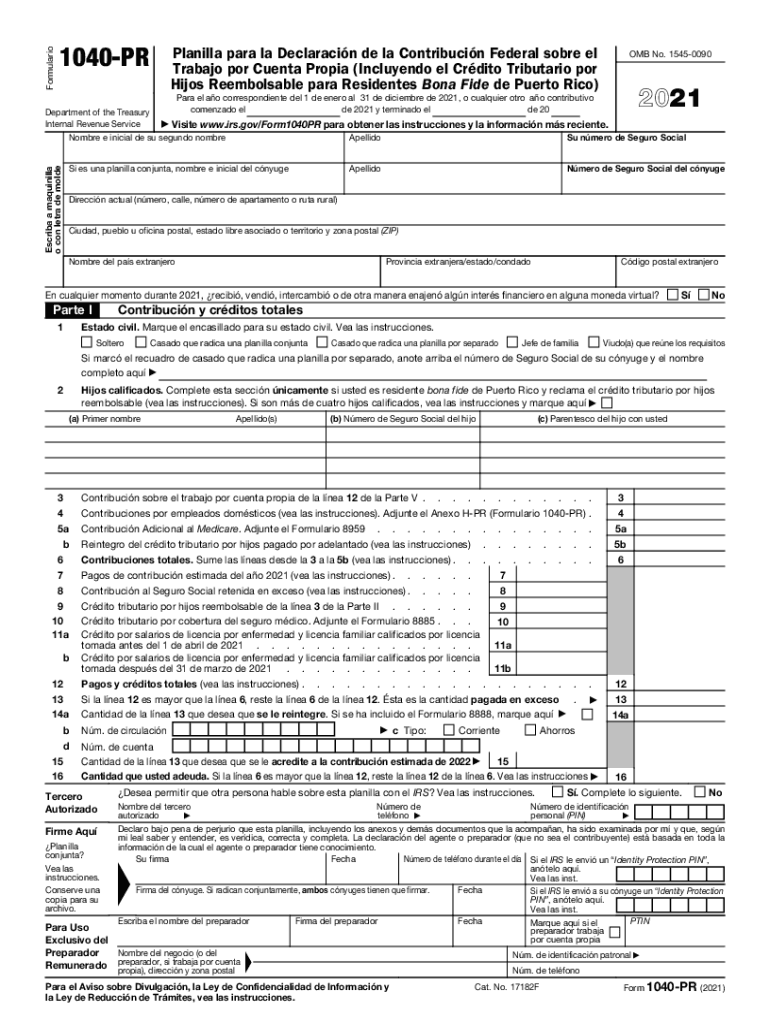
The 2017 Form IRS 1040-PR is a tax return form for self-employed individuals residing in Puerto Rico. This form allows these individuals to report their earnings and calculate their federal tax obligations. It includes sections for personal information, income reporting, deductions, and credits such as the refundable Child Tax Credit for bona fide residents of Puerto Rico. While similar to the standard 1040 form, the 1040-PR is tailored specifically for Puerto Rico residents who are self-employed.
Specific Sections
- Personal Information: Includes fields for filling out names, addresses, social security numbers, and filing status.
- Income Reporting: Sections where individuals declare their self-employment income and any other relevant earnings.
- Credits and Deductions: Opportunities to account for eligible deductions and claim credits, notably for children or other dependents.
Steps to Complete the 2017 Form IRS 1040-PR Fill Online, Printable, Fillable, Blank
-
Gather Required Documents: Before starting, ensure all necessary documents—such as income statements, deduction records, and social security numbers—are readily available.
-
Fill Out Personal Information: This section includes your name, address, and social security number, ensuring accuracy to avoid delays.
-
Report Income: Accurately detail all sources of income, focusing particularly on self-employment earnings. Use appropriate methods to calculate net income.
-
Claim Deductions and Credits: Deduct eligible expenses and claim any applicable credits. This can include expenses directly related to your business operations.
-
Submit and Save a Copy: Once completed, submit the form online through platforms that offer IRS-compliant filing. Save copies for your records, in both physical and digital formats.
Common Errors to Avoid
- Miscalculating Income: Double-check all income-related entries to ensure parity with your financial statements.
- Incorrect Social Security Number: Even minor errors can lead to processing issues.
Who Typically Uses the 2017 Form IRS 1040-PR Fill Online, Printable, Fillable, Blank
This form is primarily used by self-employed individuals who are bona fide residents of Puerto Rico. Such individuals typically include freelancers, contractors, and small business owners. The specific advantage for these users is the tailored guidance provided for reporting their unique set of incomes and calculating deductions pertinent to Puerto Rico.

Examples of Eligible Individuals
- Freelancers: Writers or designers who operate independently without a traditional employer.
- Contractors: Individuals offering services such as construction or consulting.
- Small Business Owners: Sole proprietors managing their own registered business entities in Puerto Rico.
Filing Deadlines / Important Dates
The filing deadline for the 2017 Form IRS 1040-PR aligns with the standard U.S. federal tax filing deadline, generally on April 15th (or the next business day if it falls on a weekend or public holiday). Early preparation is advised to mitigate any last-minute complications and ensure all deductions and credits are fully utilized.
Key Considerations
- Extensions: Requests for an extension can temporarily delay the filing deadline, but any owed taxes should still be paid by the original due date.
- Payment of Taxes: If taxes are owed, it is critical to pay them by the deadline to avoid penalties.
IRS Guidelines
The IRS provides specific guidelines tailored to the 1040-PR form to facilitate accurate and compliant filing. These guidelines focus on ensuring that all income is reported, and expenses are justified with appropriate documentation.
Highlights of Guidelines
- Self-Employment Tax Calculation: Clear instructions on how to calculate self-employment taxes.
- Eligibility for Credits: Criteria that must be met in order to qualify for various credits specific to Puerto Rico residents.
Importance of Securing Required Documents
Failing to gather all necessary documentation prior to filling out the form can result in inaccuracies and potential compliance issues.
Essential Documents
- Income Records: Dates and amounts of payments received.
- Expense Receipts: Proof of all business-related expenses claimed.
- Tax Identification Information: Valid social security numbers for each filer and dependent.
Potential Setbacks
- Missing Invoices: Can lead to underreporting income.
- Lost Receipts: May hinder the ability to back up deductions claims.
Why Should You Use the 2017 Form IRS 1040-PR Fill Online, Printable, Fillable, Blank
Opting to fill the form online provides several benefits, including greater convenience, quicker processing times, and reduced potential for human error. Platforms like DocHub allow users to fill, sign, and submit the form online, seamlessly integrating with other document management systems.
Advantages of Online Completion
- Instant Access: Begin filling the form browser-based, without waiting for paper forms to arrive.
- Ease of Use: User-friendly interfaces guide users through each section of the form.
- Error Checks: Built-in validations highlight missing data or apparent discrepancies before submission.
Form Submission Methods (Online / Mail / In-Person)
The 2017 Form IRS 1040-PR can be submitted through various channels, accommodating different preferences.
Submission Options
- Online: Platforms like DocHub provide tools to fill and submit forms electronically to ensure quicker IRS processing.
- Mail: Physical filing requires postal mailing to the appropriate IRS address, which can involve longer processing times.
- In-Person: Local IRS offices might accept forms for individuals preferring direct submission.
Benefits per Method
- Online: Fast, convenient, and often includes verification tools.
- Mail: Suitable for those who prefer traditional submission or are without consistent internet access.
- In-Person: Direct assistance is available for those needing hands-on guidance.