




Here's how it works
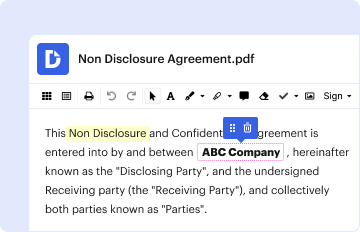
01. Edit your russell investments benefit payment direction form online
Type text, add images, blackout confidential details, add comments, highlights and more.
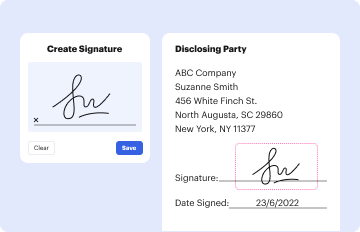
02. Sign it in a few clicks
Draw your signature, type it, upload its image, or use your mobile device as a signature pad.
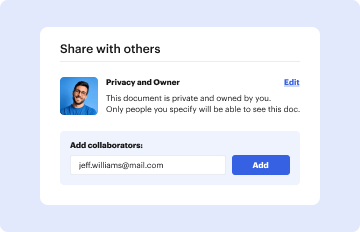
03. Share your form with others
Send investments benefit payment direction form via email, link, or fax. You can also download it, export it or print it out.
How to use or fill out Benefit Payment Direction Form - Russell Investments with our platform

- Click ‘Get Form’ to open it in the editor.
- Begin by filling out your personal details in Section 1. Include your title, surname, first name(s), address, contact numbers, date of birth, and member number.
- In Section 2, provide your Tax File Number (TFN) if you haven't submitted it before. This is crucial for processing your benefit correctly.
- Proceed to Section 3 to select your payment instructions. Choose from options such as transferring benefits to a pension fund or rolling over to another superannuation fund. Ensure you complete the relevant subsections based on your choice.
- In Section 4, make necessary declarations regarding retirement status and sign the form. This confirms that all information provided is accurate.
- Finally, review the checklist at the end of the form to ensure all required documents are attached before submitting it back to Russell SuperSolution.
Start using our platform today for free and streamline your Benefit Payment Direction Form process!
Fill out Benefit Payment Direction Form - Russell Investments online
It's free
It's free
See more Benefit Payment Direction Form - Russell Investments versions
We've got more versions of the Benefit Payment Direction Form - Russell Investments form. Select the right Benefit Payment Direction Form - Russell Investments version from the list and start editing it straight away!
| Versions | Form popularity | Fillable & printable |
|---|---|---|
| 2014 | 4 Satisfied (52 Votes) |
Got questions?
We have answers to the most popular questions from our customers. If you can't find an answer to your question, please contact us.
Contact us
Who is the new CEO of Russell Investments?
Zach Buchwald. Zach Buchwald is Chairman and Chief Executive Officer of Russell Investments, the global investment solutions provider founded in 1936 with approximately $331 billion 1 in assets under management.
Is Russell Investments a good super fund?
For the sixth year in a row Russell Investments was chosen as Money magazines 2019 Best of the Best Gold winner in the Multi-Sector Fund category. Russell Investments has been awarded Super Fund of the Year - Best Commercial Product Personal Winner 2018.
Who bought Russell Investments?
Meet the new owner of Russell Investments. After months of negotiations, Boston-based private equity firm TA Associates has reached an agreement to buy asset manager Russell Investments from the London Stock Exchange for $1.15 billion. Financial News takes a look at Russell Investments new owner. Who are TA Associates
How to withdraw super from Russell Investments?
To transfer your current benefit, you will need to complete a Benefit Payment Direction Form which is available by logging into your online account via russellinvestments.com.au/super. Prior to 1 May 2021, we used to close low balance accounts and send the account balance to an Eligible Rollover Fund (ERF).
Who owns Russell Investments?
Northwestern Mutual acquired Russell Investments during 19981999 for $1.2 billion. The companys headquarters were relocated to Seattle in 2009. In 2014, London Stock Exchange Group (LSEG) acquired the firm for $2.7 billion.
Security and compliance
At DocHub, your data security is our priority. We follow HIPAA, SOC2, GDPR, and other standards, so you can work on your documents with confidence.
Learn more


People also ask
What is the Russell benefit payment direction form?
The Russell SuperSolution Benefit Payment Direction Form is a document used to request benefit payments from the Russell SuperSolution Fund. It outlines the procedures for transferring benefits to another superannuation fund, rolling over benefits, or withdrawing cash.
Who are the shareholders of Russell Investments?
Russell Investments ownership is composed of a majority stake held by funds managed by TA Associates, with a significant minority stake held by funds managed by Reverence Capital Partners. Russell Investments employees and Hamilton Lane Advisors, LLC also hold minority, non-controlling, ownership stakes.