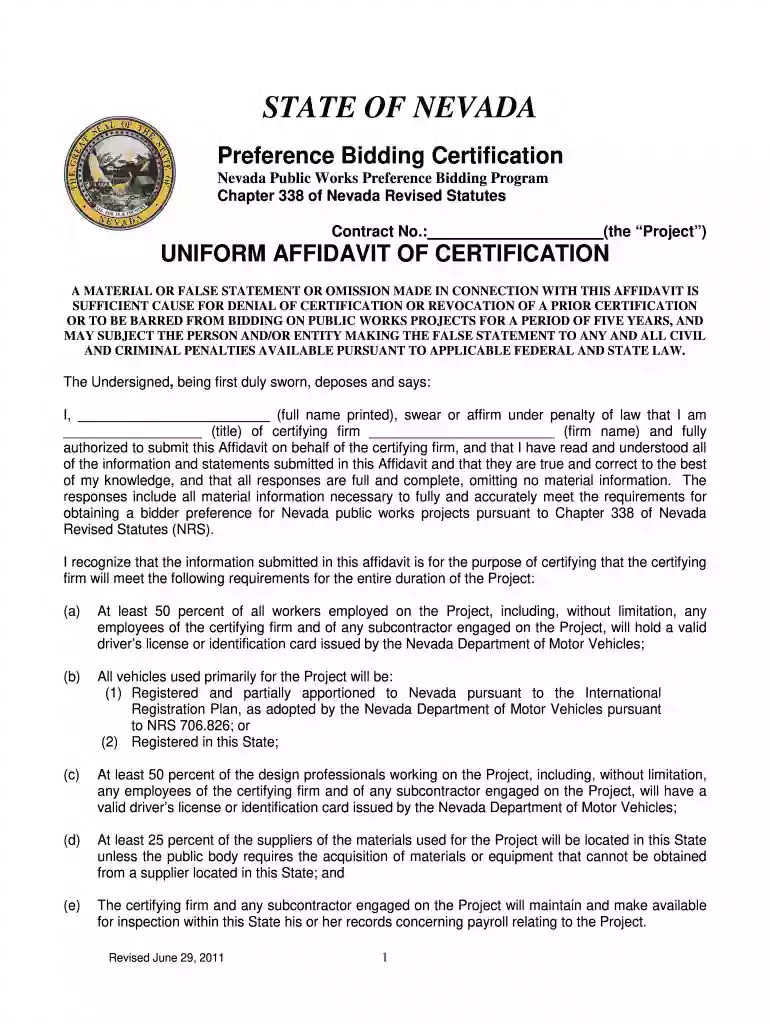
Definition & Meaning of the Nevada Affidavit of Certification
The Nevada affidavit of certification serves as a formal declaration made under oath, attesting to specific facts or compliance with statutory requirements relevant to various applications, particularly in businesses bidding for public works projects. This affidavit is essential for demonstrating that a firm meets certain qualifications set forth by Nevada law, specifically Chapter 338 of the Nevada Revised Statutes.
Key aspects of the document include:
- Purpose: It certifies compliance with labor regulations, materials obligations, and acceptable use of resources.
- Legality: Signing this affidavit involves legal responsibilities; any false representation may lead to penalties, including exclusion from bidding processes.
- Affirmation of Conditions: It typically includes details regarding workforce qualifications, the origin of goods, and adherence to regulations, which are crucial for maintaining transparency in governmental contracts.
How to Obtain the Nevada Affidavit of Certification
To obtain the Nevada affidavit of certification, individuals or businesses must follow a series of steps tailored to their specific need, whether for bidding purposes or compliance verification.
- Identify the Requirement: Understand the specific conditions under which the affidavit is needed, such as bids for public works or compliance for certain licenses.
- Obtain the Form: The affidavit can usually be downloaded from official state resources or provided by local government offices involved in public contracts.
- Complete the Form: Fill out the necessary information accurately, ensuring all required fields are completed to prevent delays.
- Notarization: Most affidavits must be notarized, adding a layer of authenticity to the declaration.
- Submission: Submit the completed and notarized affidavit to the appropriate authority, which may vary based on its intended use.
Steps to Complete the Nevada Affidavit of Certification
Completing the Nevada affidavit of certification requires attention to detail and adherence to specific instructions. The following steps outline an effective procedure:
- Gather Required Information: Collect pertinent personal or business details, including contact information, business structure, and relevant experience in the industry.
- Fill Out the Affidavit: Input all necessary information regarding certifications and compliance measures related to workforce and materials.
- Review for Accuracy: Double-check all entries for accuracy, as any discrepancies can lead to complications during processing.
- Signatures: Ensure that the person authorized to complete the affidavit signs it, potentially in the presence of a notary.
- Submit the Affidavit: Send it to the designated department or attaching it to a bid, maintaining copies for your records.
Important Terms Related to the Nevada Affidavit of Certification
Familiarity with pertinent terminology can help individuals navigate the complexities of the Nevada affidavit of certification more effectively. Here are a few key terms:
- Affidavit: A written statement confirmed by oath or affirmation, used as evidence in court.
- Notarization: The process of having a document certified by a notary public to verify the identity of the signer.
- Public Works: Projects reserved for public use, often funded by taxpayer dollars, which require strict compliance with relevant laws.
- Compliance: Adherence to laws and regulations; failure to comply can lead to penalties or disqualification from bidding.
- Bid Submission: The process through which vendors propose supply of goods or services, often requiring documentation such as the affidavit.
Key Elements of the Nevada Affidavit of Certification
The Nevada affidavit of certification features several critical elements that must be addressed for compliance and effectiveness:
- Identification Information: Name and contact details of the affiant and the business’s legal structure.
- Certification of Compliance: Statements confirming adherence to Nevada regulations, including workforce qualifications and material sourcing.
- Oath: A declaration asserting that all information provided is true and correct under penalty of perjury.
- Notary Block: A section for the notary public to confirm the validity of the signature.
- Signature and Date: The affiant’s signature should be dated to reflect when the document was executed.
Legal Use of the Nevada Affidavit of Certification
The Nevada affidavit of certification holds significant legal weight in formalizing compliance with state requirements. It can be utilized in several legal contexts, including:
- Contract Bidding: When applying for government contracts, the affidavit validates that the bidding firm meets specified qualifications.
- License Applications: Businesses may need to present the affidavit when seeking various operational licenses, particularly in regulated industries.
- Legal Proceedings: The affidavit can serve as a recorded statement in court should disputes arise concerning compliance of practices.
Examples of Using the Nevada Affidavit of Certification
The Nevada affidavit of certification has practical applications across various scenarios, reinforcing its importance:
- Public Works Contract: A construction company submitting a bid must include the affidavit to certify compliance with workforce regulations.
- Business Licensure: A service provider seeking to operate within the state must complete the affidavit as part of their application process to demonstrate adherence to state laws.
- Compliance Audits: In instances where businesses may face audits, the affidavit can serve as a formal assurance of meeting compliance requirements concerning labor and materials.
Penalties for Non-Compliance
Failure to accurately complete or submit the Nevada affidavit of certification can result in severe penalties, including:
- Disqualification from Bidding: Businesses that do not meet the affidavit requirements may be barred from participating in contract bidding processes.
- Legal Consequences: Misrepresentation within the affidavit can lead to legal action, potentially resulting in fines or other sanctions.
- Revocation of Licenses: Non-compliance may lead to the revocation of business licenses or permits necessary for operation.
By adhering to the guidelines surrounding the Nevada affidavit of certification, individuals and businesses can ensure they fulfill their legal obligations while gaining access to critical contractual opportunities.