







Definition and Meaning of Diocese Beg State
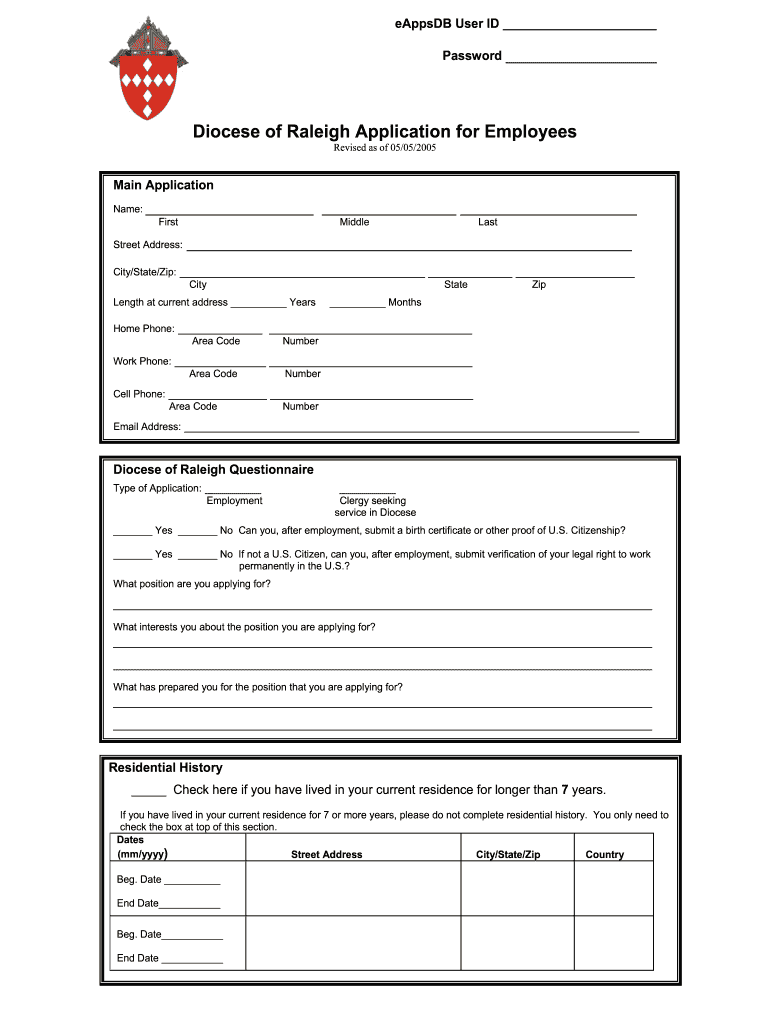
The diocese beg state form is an official document used primarily within the context of church-related applications, specifically related to the Diocese of Raleigh and similar ecclesiastical jurisdictions. This form collects essential details from individuals seeking employment or engagement within the diocese. Key information typically includes personal identification, contact details, educational backgrounds, and prior employment or volunteer experience relevant to church activities.
By understanding the definition and meaning of this form, applicants can better prepare the necessary documents for submission, ensuring compliance with diocesan expectations. Furthermore, the form may include specific sections pertaining to integrity declarations and compliance with established policies, reflecting the values and standards set by the diocese.
How to Use the Diocese Beg State
Using the diocese beg state form efficiently involves understanding its structure and requirements. Here are key steps to facilitate this process:
-
Complete Personal Information: Fill in your name, address, and contact information accurately. This ensures that the diocese can contact you for further steps in the employment process.
-
Detail Your Employment History: Provide a comprehensive overview of previous employment or volunteer roles, particularly those that relate to church operations or community service.
-
Education and Qualifications: List your educational background, focusing on any degrees or certifications relevant to the position you are applying for.
-
References and Declarations: Include references from credible individuals who can vouch for your character and work ethic. Additionally, prepare to declare your commitment to adhering to diocesan policies.
Being thorough and honest in each section creates a strong application and aligns with the diocese's requirements.
Steps to Complete the Diocese Beg State
To effectively complete the diocese beg state form, follow these structured steps:
-
Gather Required Documents: Before starting the form, collect necessary documents, such as identification, educational transcripts, and previous employment records.
-
Access the Form: Obtain the form either online or through the diocesan office. Ensure you are using the most current version for accuracy.
-
Fill in Personal Information: Start with your personal contact information, ensuring all details are correct to avoid any delays in processing.
-
Outline Your Experience: Elaborate on your professional history and provide relevant volunteer experience. Use clear and concise language to describe your roles and contributions.
-
Complete Additional Sections: Fill in any declarations or sections related to compliance with church policies. This may include affirmations regarding ethical conduct and adherence to community standards.
-
Review and Submit: Carefully review your completed form for errors or incomplete sections. Upon confirming its accuracy, submit the form as directed, either online, by mail, or in person.
Following these steps ensures completeness and maximizes the potential for a successful application.
Who Typically Uses the Diocese Beg State
The diocese beg state form is generally utilized by various individuals interested in contributing to church activities in an official capacity. Typical users include:
-
Job Applicants: Individuals seeking employment within the diocese, whether in administrative roles, teaching positions, or pastoral functions.
-
Volunteers: People wishing to engage in volunteer opportunities within the church, such as youth ministry or community outreach programs.
-
Interns and Students: Students or recent graduates looking for internships or entry-level positions to gain experience within ecclesiastical environments.
Understanding the primary users helps applicants relate their experiences to the diocese's expectations and highlight relevant qualifications that demonstrate their commitment to service.


Important Terms Related to Diocese Beg State
Familiarizing yourself with key terms associated with the diocese beg state form can enhance clarity throughout the application process. Notable terms include:
-
Diocese: A district under the pastoral care of a bishop in the Christian church, often comprising several congregations.
-
Bishop: The clergy leader responsible for overseeing the spiritual and operational aspects of the diocese.
-
Compliance: Adhering to established policies and guidelines set forth by the diocese, critical for all applicants.
-
Integrity Declaration: A statement within the form where applicants declare their commitment to ethical practices and the moral standards upheld by the diocese.
Understanding these terms can assist applicants in accurately completing the form and demonstrating their awareness of ecclesiastical governance.
State-Specific Rules for the Diocese Beg State
State-specific rules governing the diocese beg state form can significantly influence the application process. Each diocese may enforce differing requirements based on local laws and regulations. Important considerations include:
-
Background Checks: States may require thorough background checks for positions interacting with vulnerable populations, such as youth or the elderly.
-
Mandatory Training: Certain dioceses may mandate applicants to complete specific training sessions on safeguarding principles or church policies before being considered for roles.
-
Filing Procedures: Each state may have distinct submission formats or acceptable methods for submitting the diocese beg state form, such as online portals or in-person drop-off at diocesan offices.
Familiarity with these state-specific nuances is essential to ensure compliance and a successful application.
Examples of Using the Diocese Beg State
Real-world examples of how the diocese beg state form is employed can provide insights into its practical application. Consider the following scenarios:
-
Employment at a Local Parish: A candidate applies for a position as a youth minister by filling out the diocese beg state form, detailing their educational background in theology and previous volunteer work at youth camps.
-
Opportunity in Church Administration: An individual seeking a church administrative role completes the form, highlighting their experience managing office operations and community outreach initiatives.
-
Volunteering for Community Events: A college student fills out the form to volunteer for a church holiday event, focusing on their organizational skills and previous involvement in similar projects.
These examples demonstrate the versatility of the form and how it caters to various roles within the diocese, emphasizing the importance of detailed and relevant application materials.




