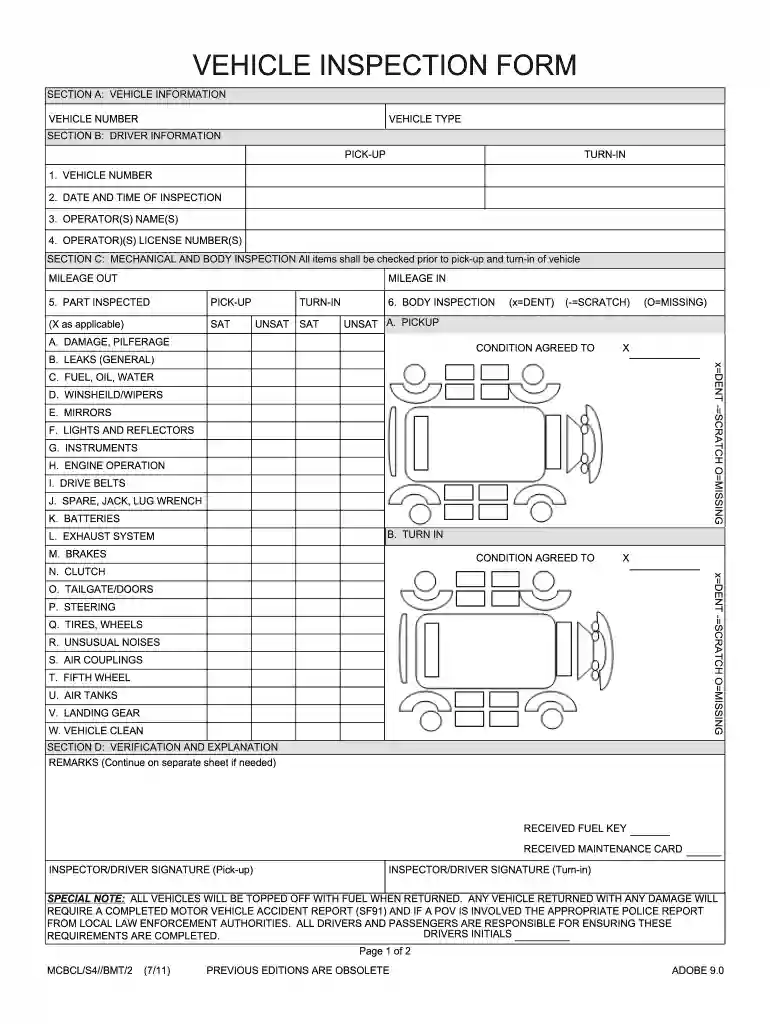
Vehicle inspection forms 2026

Get Form
free vehicle inspection form Preview on Page 1

Here's how it works

01. Edit your free vehicle inspection form online
Type text, add images, blackout confidential details, add comments, highlights and more.

02. Sign it in a few clicks
Draw your signature, type it, upload its image, or use your mobile device as a signature pad.

03. Share your form with others
Send vehicle inspection sheet pdf free via email, link, or fax. You can also download it, export it or print it out.

Vehicle Inspection Forms Overview

Vehicle inspection forms are essential tools used for assessing the condition of vehicles during various stages, such as pick-up and turn-in. These forms typically include sections dedicated to collecting both vehicle and driver information, ensuring that all relevant details are captured to allow for a thorough evaluation.

Key Components of a Vehicle Inspection Form

A comprehensive vehicle inspection form generally comprises several components:

  • Vehicle Information: Details such as make, model, year, VIN (Vehicle Identification Number), and odometer reading, which helps establish the vehicle's identity and condition.
  • Driver Information: The name and contact details of the driver, providing accountability and a point of contact for any follow-up actions.
  • Inspection Checklist: A detailed checklist covering various inspection items, categorized into mechanical systems (brakes, tires, lights) and body conditions (dents, scratches, rust). This detailed approach ensures no critical aspects are overlooked.

Completing the Vehicle Inspection Checklist

The checklist is a vital segment of the vehicle inspection forms, and its completion involves several steps:

  1. Begin with Mechanical Inspection: Inspect the vehicle's critical components, including:

    • Brakes: Assess functionality and wear.
    • Tires: Check tread depth and overall condition.
    • Lights: Ensure all lights are operational.
  2. Proceed to Exterior Inspection: Evaluate the vehicle’s body for:

    • Dents or scratches that may affect aesthetic or resale value.
    • Rust spots indicating potential structural issues.
  3. Interior Condition: Examine the interior for cleanliness and functionality, noting any damage to seats, dashboard electronics, and safety features such as airbags.

Each item in the checklist should have a corresponding box for inspectors to check off or mark comments. A visual inspection may be supplemented by taking photographs for documentation.

Legal Considerations and Compliance

When utilizing vehicle inspection forms, it is crucial to adhere to local laws and regulations governing vehicle inspections. Specific guidelines can differ by state, requiring unique compliance measures based on local legislation:

  • Documentation: Some states may require that inspection forms be submitted to authorities or retained as part of a vehicle's service history.
  • Penalties: Failing to adhere to state-specific regulations can result in fines or legal repercussions. Knowledge of your state's requirements is essential for compliance.

Using Vehicle Inspection Forms in Operations

These forms find a range of applications in various operational settings, including:

  • Rental Services: Vehicle rental companies utilize these forms to document the condition of vehicles before and after rentals. This process helps in clarifying responsibilities in the event of damage.
  • Fleet Management: Organizations managing fleets implement regular inspections to maintain vehicle safety and compliance, supporting best practices in vehicle maintenance.

Types of Vehicle Inspection Forms

There are several variants of vehicle inspection forms tailored to specific needs:

  • Free Vehicle Inspection Form: A generic template available for organizations needing a straightforward assessment tool.
  • Police Vehicle Inspection Form: Specifically designed for police vehicles, focusing on unique criteria pertinent to law enforcement needs.
  • Motor Vehicle Inspection Report: More detailed forms that often accompany official inspections, containing more extensive data and sometimes requiring certified inspectors.

How to Fill Up the Motor Vehicle Inspection Report

Filling up the motor vehicle inspection report, or MVIR, involves distinct steps that ensure comprehensive and accurate documentation:

  1. Input Vehicle Data: Clearly write all vehicle identification information, ensuring accuracy to avoid any discrepancies later.
  2. Tick Inspection Items: For each item on the checklist, indicate whether the vehicle passed or failed the inspection.
  3. Add Comments: Where necessary, provide comments to explain deficiencies observed during the inspection or details about repairs needed.

Signatures and Finalization

At the conclusion of an inspection, obtaining signatures from both the inspector and the driver or vehicle owner finalizes the document. This step not only validates the inspection results but also serves as a receipt of acknowledgment for both parties and protects against future disputes.

Conclusion on Vehicle Inspection Forms

In summary, vehicle inspection forms are foundational elements in maintaining vehicle safety and compliance. They serve diverse needs across different industries, ensuring a robust documentation process that promotes accountability and clarity in vehicle management.

See more vehicle inspection forms versions

We've got more versions of the vehicle inspection forms form. Select the right vehicle inspection forms version from the list and start editing it straight away!
Versions Form popularity Fillable & printable
2011 4.8 Satisfied (65 Votes)
be ready to get more

Complete this form in 5 minutes or less

Get form

Got questions?

We have answers to the most popular questions from our customers. If you can't find an answer to your question, please contact us.
Contact us
There are three types of vehicle inspections a courtesy inspection, an insurance inspection, and a 12-point inspection. Courtesy Inspection a visual inspection of common components (such as lights, oil, and wipers).
Do I need anything to get an inspection? A valid drivers license. Your vehicles title. Your vehicles registration. Proof of insurance.
These technicians run your car through a checklist of features that must be functioning properly to be considered safe. That includes visibility features like your lights, horn and mirrors, your steering and brakes, seatbelts, and your tires.
An inspection form is a checklist designed to review and evaluate the workspace.
The following are checked during the safety inspection: brake system, body and chassis, defrost, electrical system, exhaust system, fuel system, glass and mirrors, horn, lighting system, odometer, steering, suspension, tires, and windshield wipers/washing system.

Security and compliance

At DocHub, your data security is our priority. We follow HIPAA, SOC2, GDPR, and other standards, so you can work on your documents with confidence.

Learn more
ccpa2
pci-dss
gdpr-compliance
hipaa
soc-compliance
be ready to get more

Complete this form in 5 minutes or less

Get form