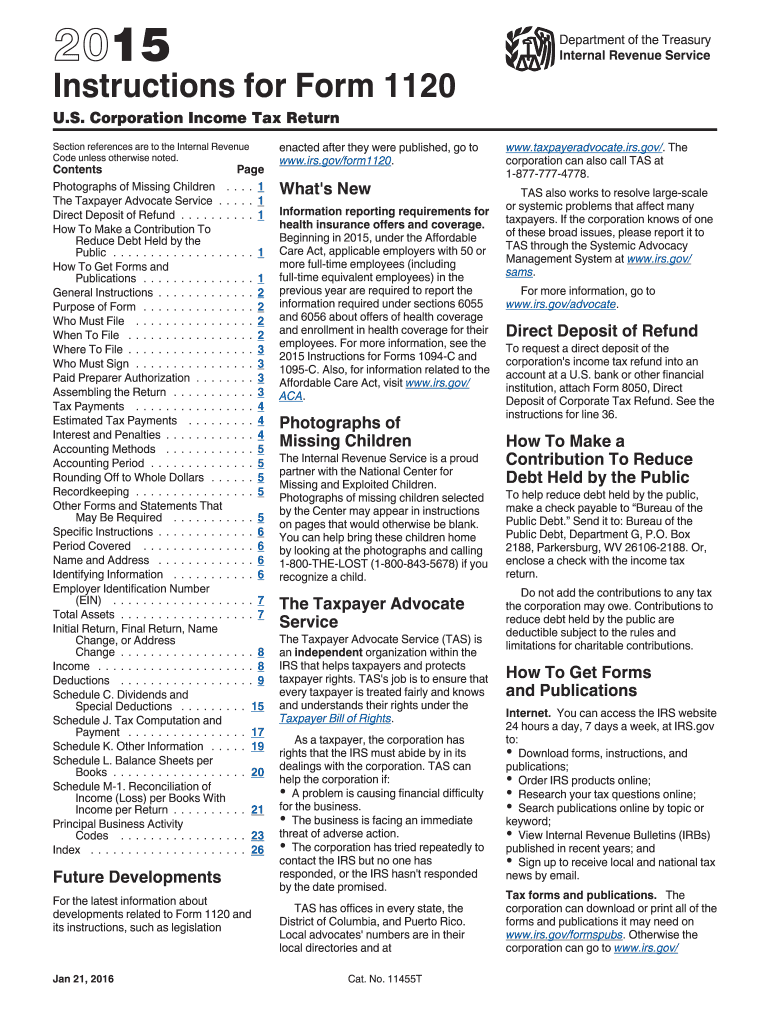







Introduction to 2015 Form 1120 Instructions
The 2015 Form 1120 instructions provide detailed guidance for corporations in the United States to accurately fill out the U.S. Corporation Income Tax Return. This form is essential for meeting federal tax obligations, as it outlines the income, deductions, and credits for corporations and determines their tax liability. Understanding these instructions helps ensure compliance with tax regulations and can aid in optimizing the tax filing process.
Importance of Filing 2015 Form 1120
Filing the Form 1120 is crucial for all domestic corporations, including entities taxed as corporations, such as certain limited liability companies (LLCs) and business trusts. The instructions provide necessary details on the various sections of the form, helping corporations report their taxable income and calculate their owed tax accurately. This meticulous reporting is not only required by law but helps businesses avoid potential penalties and interest from underreporting income or improperly claiming deductions.
Steps to Complete the 2015 Form 1120
-
Gather Required Documents: Start by collecting financial statements, receipts for business expenses, and prior year tax returns. Accurate records are essential for filling out the form correctly.
-
Income Reporting: Use the instructions to carefully detail all sources of corporate income, including sales receipts, dividends, and any other gains.
-
Deductions and Credits: Follow the guidelines for claiming deductions, such as salaries and wages, rent, interest, and advertising expenses. Identify available tax credits that may reduce overall liability.
-
Calculating Taxable Income: The instructions explain how to apply deductions to gross income, yielding the taxable income that determines the tax owed.
-
Filing Options: Corporations have the option to file electronically or via mail. The instructions detail submission methods, including addresses for paper returns based on entity type and location.
Critical Deadlines and Submission Methods
Corporations typically must file Form 1120 by the 15th day of the third month after the end of their tax year. For most corporations, this falls on March 15. The instructions highlight this date and detail options for filing extensions to avoid late penalties. Submission can occur online through the IRS e-filing system or by sending a paper version to the appropriate IRS address, based on the company's state of operation.
Penalties for Non-Compliance
Failure to file the Form 1120 on time can result in significant penalties. The IRS may impose a monthly fee based on the unpaid tax amount for each month the return is late. Additionally, the instructions caution against inaccuracies or underreporting, as both can result in audits and further penalties.
Detailed Overview of Income Reporting
Accurate income reporting is vital, as it forms the basis for tax calculations. The 2015 Form 1120 instructions emphasize including all relevant sources of income:
- Sales and Receipts: Documented gross sales must be reported, subtracting any returns or allowances.
- Interest Income: Include any income generated from interest-bearing accounts.
- Dividend Income: Corporations must report dividends received from investments in other corporations. Incorrect reporting in these areas can skew calculations of taxable income and lead to discrepancies.
Understanding Deductions and Credits
The instructions provide comprehensive details on eligible deductions which reduce taxable income:
- Business Expenses: Salaries, supplies, and other operational costs.
- Depreciation: Guidelines for calculating the depreciation of business assets.
- Credits: Applicable federal tax credits that lessen total tax liability. Corporations must support claimed deductions with thorough documentation to ensure compliance and reduce audit risks.
Instructions for Electronic Filing
For electronic submissions, the instructions outline compatibility with IRS-approved tax preparation software, such as TurboTax and QuickBooks. The e-file system offers a faster, more secure option, reducing the risk of lost paperwork and allowing immediate IRS acknowledgment of receipt. Benefits of electronic filing include:
- Immediate Confirmation: Instant acknowledgment from the IRS.
- Faster Processing: Quicker handling as compared to paper filings.
- Security: Secure transmission protocols protect sensitive financial data.
Business Entities and Eligibility Criteria
The Form 1120 instructions target a variety of business types, from large corporations to smaller entities taxed as corporations. Each business must ensure it meets specific eligibility criteria outlined in the instructions, ensuring proper tax treatment under federal guidelines. The instructions also clarify distinctions between different tax forms used by entities like partnerships or sole proprietorships.
Understanding the 2015 Form 1120 instructions is crucial for compliance and thoughtful tax planning. It assists businesses in comprehensively understanding the filing requirements, aiding them in making informed decisions to optimize their tax situations and adhere to federal mandates.