




01. Edit your trailer rental agreement online
Type text, add images, blackout confidential details, add comments, highlights and more.

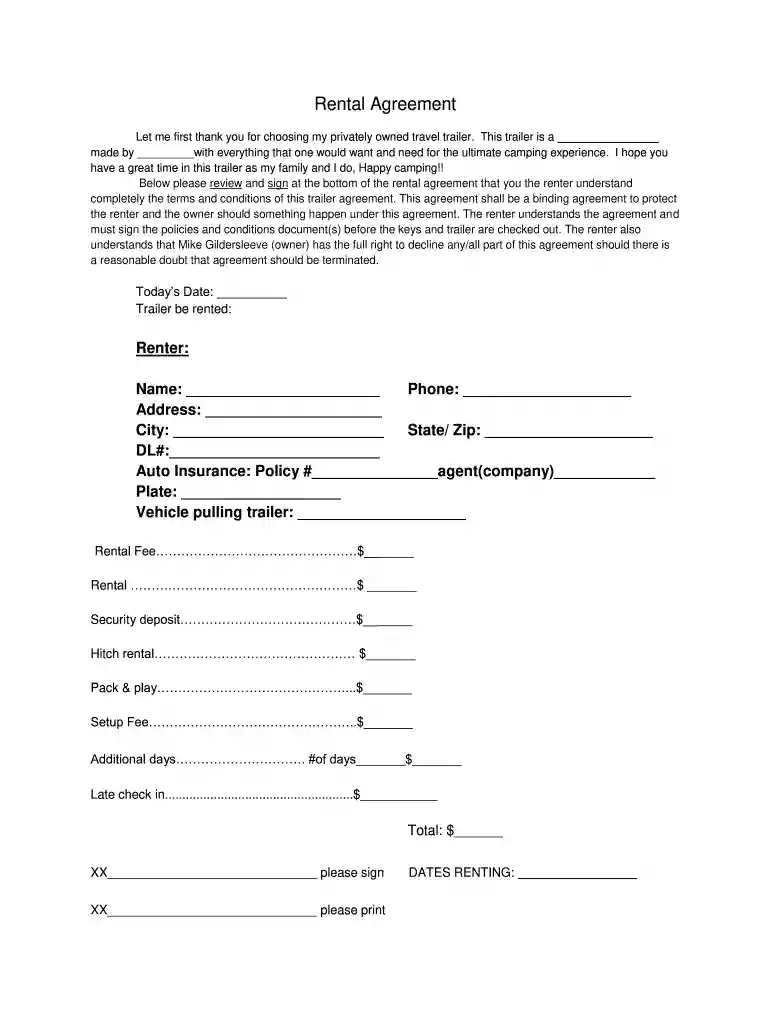
Type text, add images, blackout confidential details, add comments, highlights and more.

Draw your signature, type it, upload its image, or use your mobile device as a signature pad.

Send trailer rental agreement template free via email, link, or fax. You can also download it, export it or print it out.
A trailer rental agreement form serves as a legal document that outlines the terms and conditions associated with renting a trailer. This form is essential for both the renter and the trailer owner, ensuring that both parties are clear on their rights and responsibilities. Key elements typically included in these forms are rental fees, duration of the rental, security deposits, maintenance responsibilities, and consequences of any violations.
The main purpose of this agreement is to protect the interests of both the rental company and the individual renting the trailer. It is crucial that each party understands the implications of signing this document. The agreement establishes accountability and provides recourse should disagreements arise.
Understanding these components is vital for both parties involved to ensure a smooth rental experience.
Using a trailer rental agreement form effectively involves several steps to ensure that both parties are protected and that the rental process runs smoothly. The following guide provides a clear pathway for utilizing these forms.
Select the Correct Form: Choose a trailer rental agreement form that fits your specific situation. Options include utility trailer rental agreements, car trailer rental agreements, or specialized forms for refrigerated trailers.
Fill Out the Form: Carefully complete all fields within the document, ensuring that details about the rental duration, fees, and responsibilities are accurate.
Review Terms: Both parties should read the entire agreement to understand their commitments and the stipulations outlined. This includes understanding costs associated with damages or late returns.
Negotiate Terms: If any parts of the agreement require discussion or clarification, both parties should communicate to negotiate acceptable terms before signing.
Sign and Date: After agreement on terms, both parties must sign and date the document. This step is critical, as it turns the rental agreement into a legally binding contract.
Retain Copies: Both parties should keep a copy of the signed rental agreement for their records. This can prevent disputes and misunderstandings down the line.
Following these steps ensures that the trailer rental process adheres to legal standards and protects both parties involved.
Completing a trailer rental agreement form is a straightforward process, but it requires attention to detail to ensure accuracy and compliance. Here is a step-by-step guide to facilitate the completion of these forms.
Gather Required Information:
Choose the Appropriate Trailer Rental Agreement Template:
Fill In the Agreement:
Review for Clarity and Accuracy:
Sign and Date the Agreement:
Distribute Copies:
By meticulously following these steps, you can ensure a clear and legally compliant rental transaction.
Familiarity with the terminology commonly found within trailer rental agreements is crucial for both renters and owners to ensure clarity and prevent misunderstandings. Here are several key terms that are often encountered:
Understanding these terms will lead to a smoother interaction between the renter and the owner, facilitating clearer communication and expectations.
A well-structured trailer rental agreement includes several key elements that serve to protect the interests of both the renter and the owner. Familiarity with these elements can streamline the rental process and ensure compliance with legal obligations.
Identification of Parties: The agreement should clearly state the names and contact information of both the renter and trailer owner, ensuring that both parties can easily communicate.
Description of Trailer: Accurate details about the rented trailer, including its make, model, and identifying features, must be included. This ensures that both parties are referring to the same vehicle.
Payment Terms: This section comprehensively outlines rental fees, payment schedules, and security deposits. It should detail any additional charges for late returns or damages.
Usage Restrictions: The agreement must contain explicit limitations on how the trailer can be used, protecting the owner from potential misuse or legal liabilities.
Maintenance Responsibilities: It should clarify who is responsible for routine maintenance and checks during the rental period, often placing the burden on the renter to keep the trailer in good condition.
By ensuring that these elements are comprehensively addressed, both parties can maintain clarity and accountability throughout the duration of the rental agreement.
We've got more versions of the trailer rental agreement form. Select the right trailer rental agreement version from the list and start editing it straight away!
| Versions | Form popularity | Fillable & printable |
|---|---|---|
| 2014 | 4.8 Satisfied (143 Votes) |
At DocHub, your data security is our priority. We follow HIPAA, SOC2, GDPR, and other standards, so you can work on your documents with confidence.
Trailer Rental Contract Template as both a Microsoft Word document and a PDF fillable form. Trailer Rental Contract Template, with completion instructions
***All rental trailers require a pintle hitch, functional electric brake controller, and a 7 way RV electrical connection. Labor to correct customer truckRead more
GENERAL CONDITIONS OF EQUIPMENT RENTAL AGREEMENT (LEASE). The conditions of lease here below stated, together with the Agreement set forth on the reverseRead more


