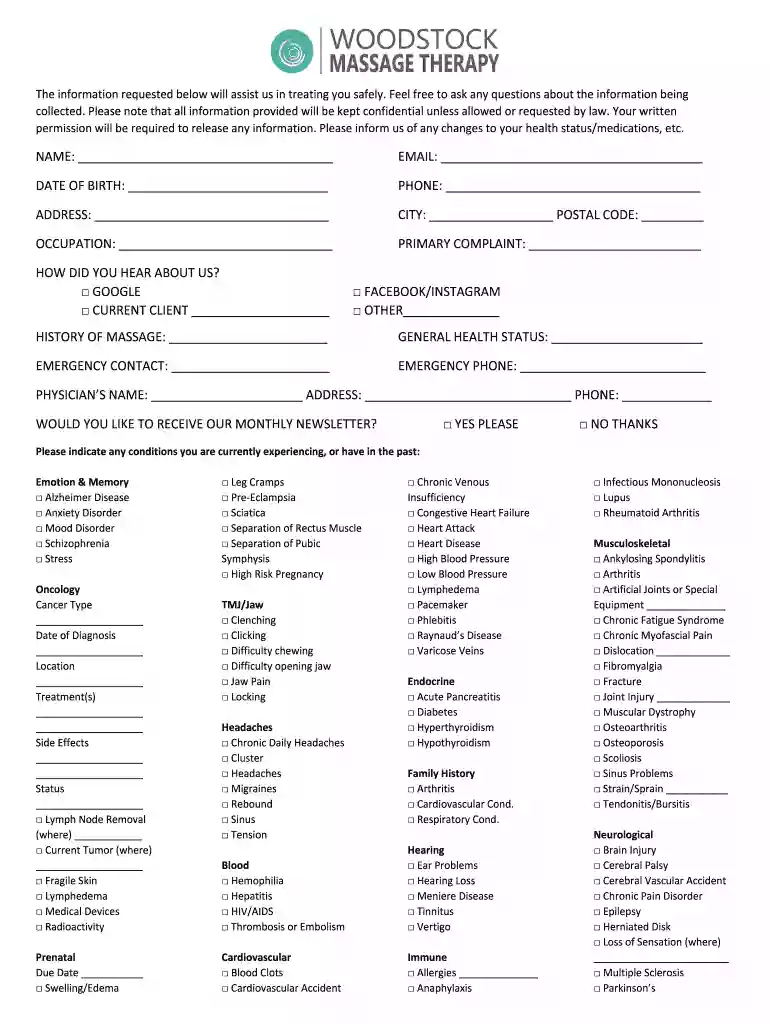
The information requested below will assist us in treating you safely 2026

Get Form
The information requested below will assist us in treating you safely Preview on Page 1

Here's how it works

01. Edit your form online
Type text, add images, blackout confidential details, add comments, highlights and more.

02. Sign it in a few clicks
Draw your signature, type it, upload its image, or use your mobile device as a signature pad.

03. Share your form with others
Send it via email, link, or fax. You can also download it, export it or print it out.

How to use or fill out The information requested below will assist us in treating you safely

Form edit decoration
9.5
Ease of Setup
DocHub User Ratings on G2
9.0
Ease of Use
DocHub User Ratings on G2
  1. Begin by clicking 'Get Form' to open the document in our editor.
  2. Fill in your personal details, including NAME, EMAIL, DATE OF BIRTH, PHONE, and ADDRESS. Ensure accuracy as this information is crucial for your treatment.
  3. Indicate your OCCUPATION and PRIMARY COMPLAINT. This helps the therapist understand your background and specific needs.
  4. Select how you heard about the service from the provided options. This feedback is valuable for our outreach efforts.
  5. Complete the sections regarding your HEALTH HISTORY and EMERGENCY CONTACT. Be thorough to ensure safety during treatment.
  6. Review the list of conditions and check any that apply to you. This section is vital for tailoring your therapy.
  7. Finally, read through the CANCELLATION POLICY and INFORMED CONSENT sections carefully before signing and dating at the bottom of the form.

Start filling out your form today for a seamless experience with our platform!

See more The information requested below will assist us in treating you safely versions

We've got more versions of the The information requested below will assist us in treating you safely form. Select the right The information requested below will assist us in treating you safely version from the list and start editing it straight away!
Versions Form popularity Fillable & printable
2017 4.6 Satisfied (21 Votes)
be ready to get more

Complete this form in 5 minutes or less

Get form

Got questions?

We have answers to the most popular questions from our customers. If you can't find an answer to your question, please contact us.
Contact us
ASSIST (Alcohol, Smoking and Substance Involvement Screening Test) The World Health Organization (WHO) Alcohol, Smoking and Substance Involvement Screening Test (ASSIST) is a questionnaire that screens for all levels of problem or risky substance use in adults.
ASSIST (Alcohol, Smoking and Substance Involvement Screening Test) On this page. The World Health Organization (WHO) Alcohol, Smoking and Substance Involvement Screening Test (ASSIST) is a questionnaire that screens for all levels of problem or risky substance use in adults.
An alcohol abuse evaluation or any substance abuse assessment will ask you questions such as: How much alcohol do you drink? How often do you drink? What kind of alcohol do you drink? When was your last drink? What were the circumstances surrounding your last drink? Do you ever feel guilty or ashamed after drinking?
Individual-level protective factors might include positive self-image, self-control, or social competence.
The revised version of the ASSIST (V3. 0) consists of eight questions or items, covering tobacco, alcohol, can- nabis, , amphetamine-type stimulants (including ecstasy), inhalants, sedatives, hallucinogens, opioids and other drugs, that can be answered by most patients in around 10 minutes.

Security and compliance

At DocHub, your data security is our priority. We follow HIPAA, SOC2, GDPR, and other standards, so you can work on your documents with confidence.

Learn more
ccpa2
pci-dss
gdpr-compliance
hipaa
soc-compliance
be ready to get more

Complete this form in 5 minutes or less

Get form

People also ask

Physical warning signs of drug abuse: Bloodshot eyes, pupils larger or smaller than usual. Changes in appetite or sleep patterns. Deterioration of physical appearance, personal grooming habits. Runny nose or sniffling. Sudden weight loss or weight gain. Tremors, slurred speech, or impaired coordination.

Related links