
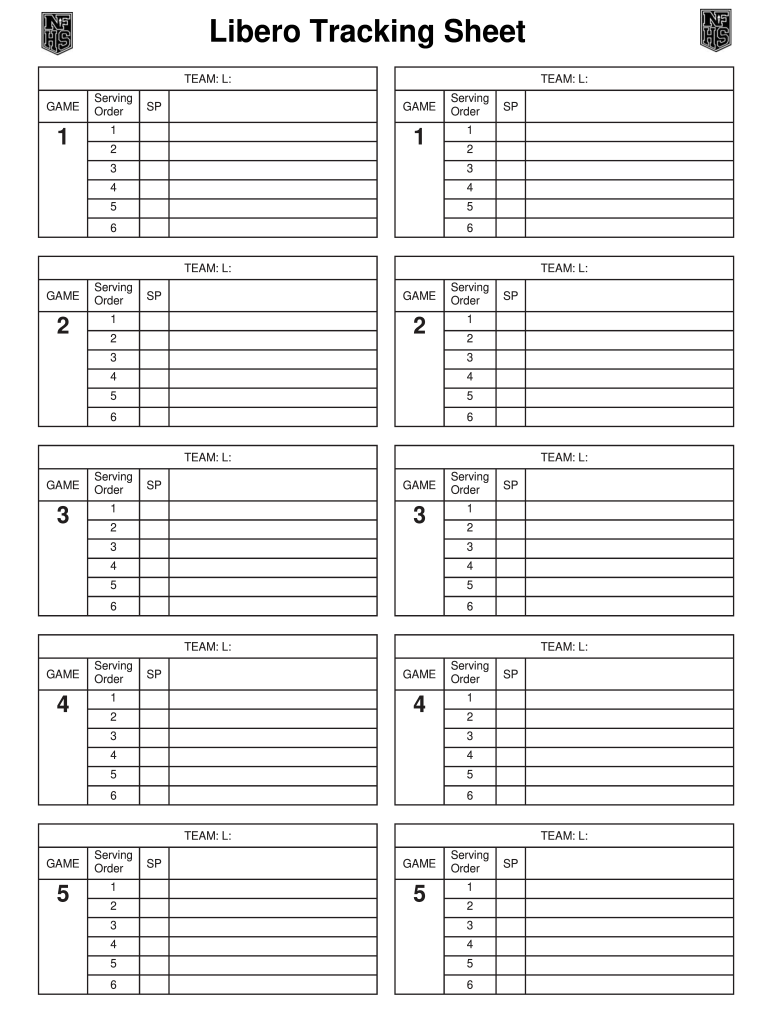







Definition and Purpose of the Libero Tracking Sheet
The libero tracking sheet is an essential tool used in volleyball to monitor the performance and substitutions of the libero position during games. The libero is a specialized defensive player, distinguishable by wearing a different color jersey and having specific rules governing their play. A libero tracking sheet helps coaches, players, and officials keep accurate records of libero rotations, ensuring compliance with the sport’s regulations and helping in team strategy.
- Key Functions of the Libero Tracking Sheet:
- Tracks serving order for the libero and other players.
- Records player positions and substitutions during the game.
- Ensures adherence to the rotation rules established by governing bodies like NFHS and FHSAA.
- Aids coaches in making informed decisions regarding player effectiveness and match strategy.
Types of Libero Tracking Sheets
Various formats of libero tracking sheets are available based on competition level and specific rules. The sheets can be categorized as follows:
- Printable Libero Tracking Sheet: A hard copy template used for manual tracking during games. It allows coaches to easily note down changes without technology.
- Digital Libero Tracking Sheet: An electronic version that may provide features such as automatic calculations for rotations and player performance metrics. These often come in PDF or Excel formats for easy use.
- State-Specific Tracking Sheets: Different states may have their own tracking sheets complying with regional regulations, like the NFHS libero tracking sheet or the FHSAA libero tracking sheet.
How to Use the Libero Tracking Sheet Effectively
To maximize the utility of a libero tracking sheet during a game, it is important to understand its structure and how to fill it out properly.
-
Filling Out the Initial Information:
- Begin by noting the date, teams involved, and specific match details at the top of the sheet.
- Include the names of players on both teams, highlighting the libero's name.
-
Tracking Substitutions:
- Use the columns designated for recording substitutions to document when the libero enters and exits the game.
- Cross-reference with the official scoring sheet to ensure all substitutions are accurately recorded.
-
Maintaining Service Order:
- Regularly update the service order for the libero to reflect any changes in rotations due to substitutions.
- Pay attention to matches where the libero may need to serve, as there are specific rules about when a libero can serve.
Examples of Recorded Data
-
In a typical match, if the libero enters the game, the time of entry and exit should be noted. For example:
- Player X (Libero) enters at 15:02 and exits at 16:15, where they made one successful dig.
-
All data can be later analyzed to determine the libero’s impact on the game, helping to inform coaching decisions.
Legal and Strategic Considerations for Libero Use
Understanding the regulations surrounding libero use is critical for effective gameplay and team compliance.
-
FHSAA and NFHS Rules: These bodies provide specific guidelines on when and how liberos can participate, including substitution frequency and the conditions under which they can serve.
-
Coaching Strategies Utilizing Libero Tracking:
- Many coaches analyze libero performance after games using the tracking sheet, identifying trends and areas needing improvement.
- Allows coaches to adjust training and develop defensive strategies tailored to the libero's strengths.
Variations of the Libero Tracking Sheet
Different formats exist depending on user preference and needs. Coaches may choose:
- Standard Libero Tracking Sheet Template: Simple, easy-to-use format suitable for most matches.
- Advanced Tracking Forms: These may include additional data points such as serves received, digs, and errors to provide a more comprehensive performance review.
Tools and Resources for Detailed Tracking
- Free Printable Libero Tracking Sheets: Many online platforms offer templates that can be downloaded and printed for immediate use during matches.
- Tracking Software: Some schools and clubs use specialized software to facilitate tracking and performance review, integrating direct stats input and analysis features.
Common Challenges with Libero Tracking
While using the libero tracking sheet, various challenges may arise that coaches and players must address:
- Inaccurate Record Keeping: It is crucial to keep accurate records in the heat of the game, as mistakes can lead to penalties.
- Failing to Update Quickly: Fast-paced substitutions necessitate immediate updates. Coaches may want to designate a dedicated statistician.
Best Practices
- Designate one person to manage the libero tracking sheet, ensuring consistency throughout the match.
- Review the sheet with the team post-game to improve upon future performances and clarify any inaccuracies before submitting official records to the league.
Conclusion on the Importance of the Libero Tracking Sheet
The libero tracking sheet is more than just a record-keeping tool; it plays a vital role in managing liberos during a match, ensuring compliance with league regulations, and assisting in strategic decision-making. By using it effectively, teams can enhance their strategic gameplay and improve overall performance.




