




01. Edit your fire watch log printable online
Type text, add images, blackout confidential details, add comments, highlights and more.

Type text, add images, blackout confidential details, add comments, highlights and more.

Draw your signature, type it, upload its image, or use your mobile device as a signature pad.

Send hourly fire watch log sheet via email, link, or fax. You can also download it, export it or print it out.
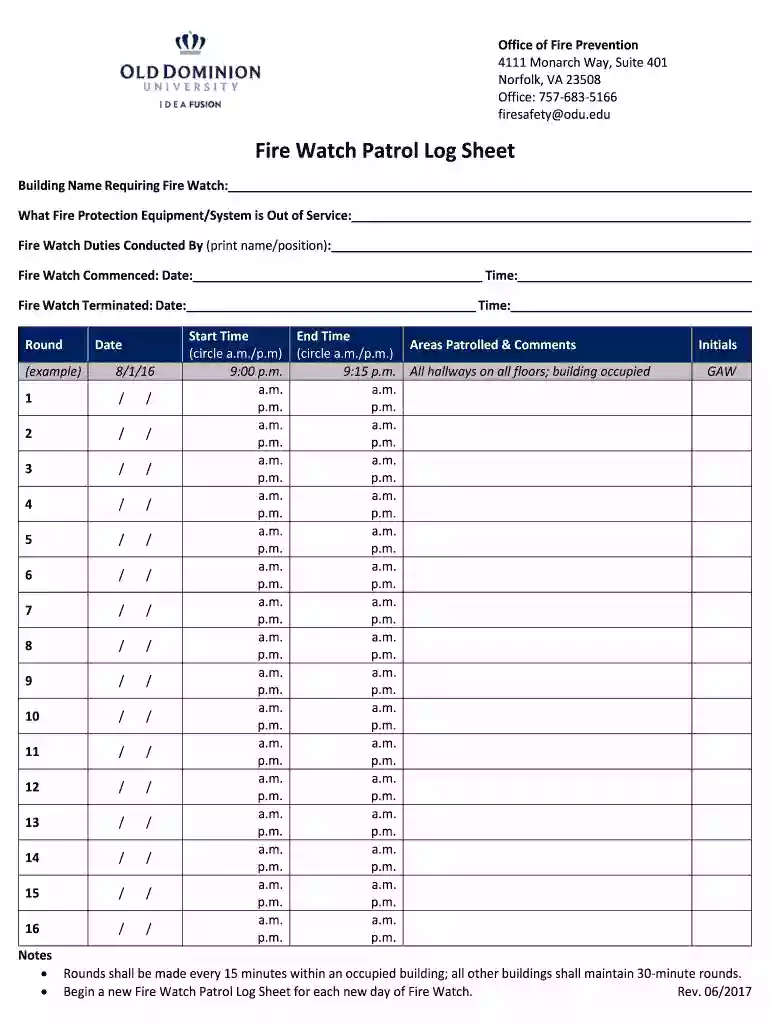
The fire watch patrol log sheet is an essential document used when fire protection equipment is out of service. This sheet provides a structured format for recording important information related to fire watch duties, ensuring compliance with safety regulations and protocols.
The fire watch patrol log sheet is designed for use in various settings, including commercial buildings, construction sites, and facilities undergoing maintenance. This document serves several critical purposes:
A comprehensive fire watch patrol log sheet includes several key components that help in effective monitoring and documentation. These components are critical for adherence to safety standards.
Proper completion of the fire watch patrol log sheet is critical for compliance with safety regulations. Here’s a step-by-step guide to ensure thorough documentation:
Maintaining an accurate fire watch patrol log sheet is not only a regulatory requirement but also a risk management tool. Inadequate documentation can lead to severe consequences:
The fire watch patrol log sheet is utilized across various scenarios, highlighting its versatility and necessity. Here are some common situations where the log sheet becomes instrumental:
Numerous digital and printable templates for fire watch log sheets are available to help streamline the documentation process. These templates often include:
Using a well-structured fire watch patrol log sheet helps organizations uphold safety standards, ensuring diligence in fire safety practices throughout the U.S.
We've got more versions of the fire watch log printable form. Select the right fire watch log printable version from the list and start editing it straight away!
| Versions | Form popularity | Fillable & printable |
|---|---|---|
| 2017 | 4.8 Satisfied (133 Votes) |
At DocHub, your data security is our priority. We follow HIPAA, SOC2, GDPR, and other standards, so you can work on your documents with confidence.
Jan 10, 2025 The CMOD will log turnover of the senior watch team member on deck in the deck log. After signing out of the virtual duty sectionRead more
Fire Watch Patrol Log Sheet. Start a new log sheet for each new day of fire watch. Retain records for review by Normal Fire Department personnel.Read more


