






Definition and Importance of Fire Drills in Surrey
Fire drills in Surrey are essential safety procedures designed to prepare individuals and organizations for effective evacuation during a fire emergency. These drills involve simulated fire scenarios that allow participants to practice their response to alarms, follow evacuation routes, and ensure that safety equipment is used properly. Their primary aim is to minimize risk and ensure the safety of occupants in various environments, including schools, offices, and factories.
Understanding the significance of these drills is crucial. Regular fire drills help to familiarize everyone with emergency procedures, thereby building confidence in their ability to respond to real situations. For example, schools conduct fire drills to teach students how to exit the building swiftly and calmly. In businesses, employees learn about evacuation routes and assembly points, enhancing overall safety preparedness.
How to Conduct Fire Drills in Surrey
Executing effective fire drills requires meticulous planning and organization. Here is a step-by-step guide to conducting fire drills:
-
Preparation
- Identify the participants and inform them about the drill schedule. This might include students, staff, or residents.
- Ensure that everyone understands the purpose and importance of the drill, emphasizing that it is for safety training rather than an actual emergency.
-
Develop a Plan
- Create a comprehensive fire drill plan that outlines the steps to be followed.
- Designate roles for staff members, including a coordinator who will oversee the drill, and fire wardens who will assist participants during the evacuation.
-
Select the Date and Time
- Choose a date and time that minimizes disruption yet enables realistic training.
-
Conduct the Drill
- Initiate the drill by activating the fire alarm system or simulating an alarm in a controlled environment.
- Guide all participants to evacuate promptly according to the established plan, using designated exit routes and assembly points.
-
Post-Drill Evaluation
- After the drill concludes, gather participants for a debriefing session.
- Discuss what went well, what challenges arose, and how the process can improve.
-
Documentation and Review
- Document the results of the drill, noting the time taken for evacuation and any issues encountered.
- Use this data to refine the fire drill plan for future exercises.
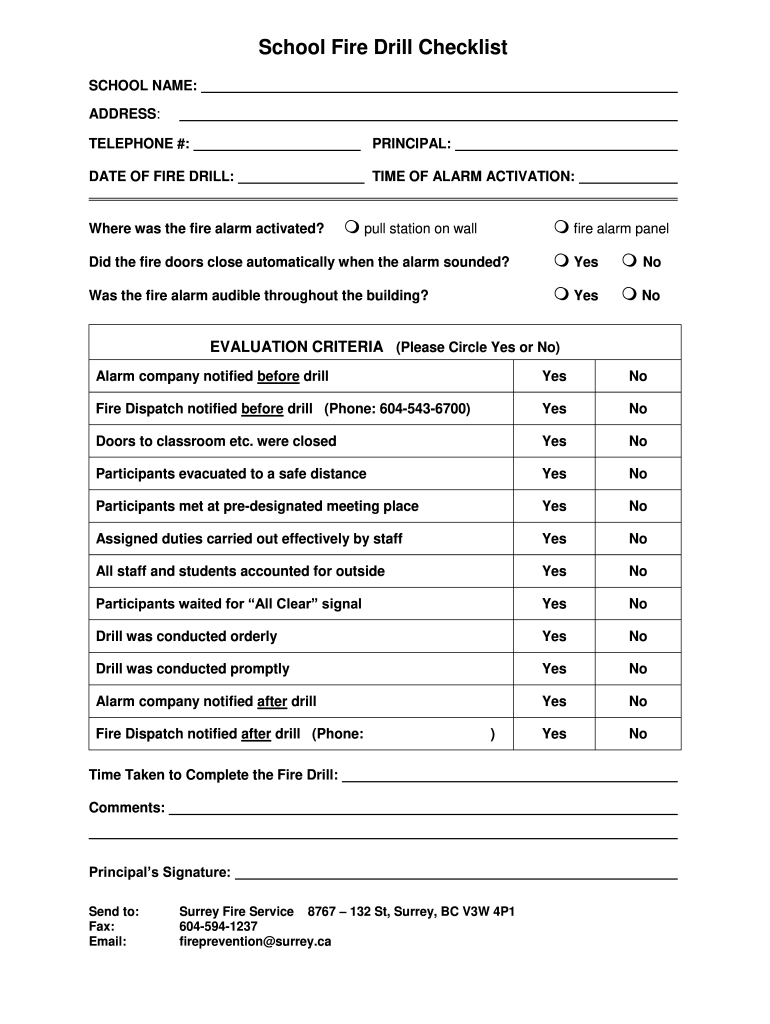
Fire Drill Evaluation Form
To assess the effectiveness of a fire drill, an evaluation form should be utilized. The form should include the following components:
-
Basic Information
- Date of the drill
- Participants involved
- Duration of the evacuation
-
Assessment Criteria
- Alarm response times: Did participants react promptly to the alarm?
- Evacuation procedures: Were the designated routes followed efficiently?
- Employee awareness: Did participants know their roles and responsibilities during the drill?
-
Feedback Section
- Areas of strengths and weaknesses noted during the drill
- Suggestions for improvement for future drills
This evaluation process is vital to enhancing the overall culture of safety within an organization and ensuring compliance with legal requirements regarding fire safety training.
Legal Considerations for Fire Drills
In Surrey, conducting fire drills is not just a best practice; it is often mandated by law, especially in educational and commercial settings. Organizations must be aware of the following legal requirements:
-
Fire Safety Regulations
- Organizations must comply with the Regulatory Reform (Fire Safety) Order 2005, which requires adequate fire risk assessments and regular fire drills.
-
Frequency of Drills
- Depending on the nature of the organization, fire drills may be required to occur annually or semi-annually, ensuring that fire safety protocols are regularly rehearsed and updated.
-
Documentation and Record Keeping
- Keeping a record of all fire drills is essential for compliance purposes. This includes documenting attendance, performance assessments, and any changes made to fire safety plans post-drill.
Key Elements of Fire Drill Procedures
Implementing effective fire drill procedures involves several key elements:
-
Communication
- Clear communication is critical both before and during a fire drill. All participants should understand the alarm signals, evacuation routes, and where to assemble post-evacuation.
-
Compliance with Safety Standards
- Ensure compliance with local laws and regulations concerning fire safety procedures, especially in workplaces and educational institutions.
-
Training and Education
- Regular training sessions should educate participants about fire safety measures, emergency protocols, and equipment handling.
-
Review of Procedures
- Post-drill reviews must evaluate the efficacy of existing procedures and identify areas where updates or new training sessions are necessary.
By focusing on these key elements, organizations in Surrey can enhance their preparedness for real fire emergencies, thereby protecting occupants and minimizing risks.