
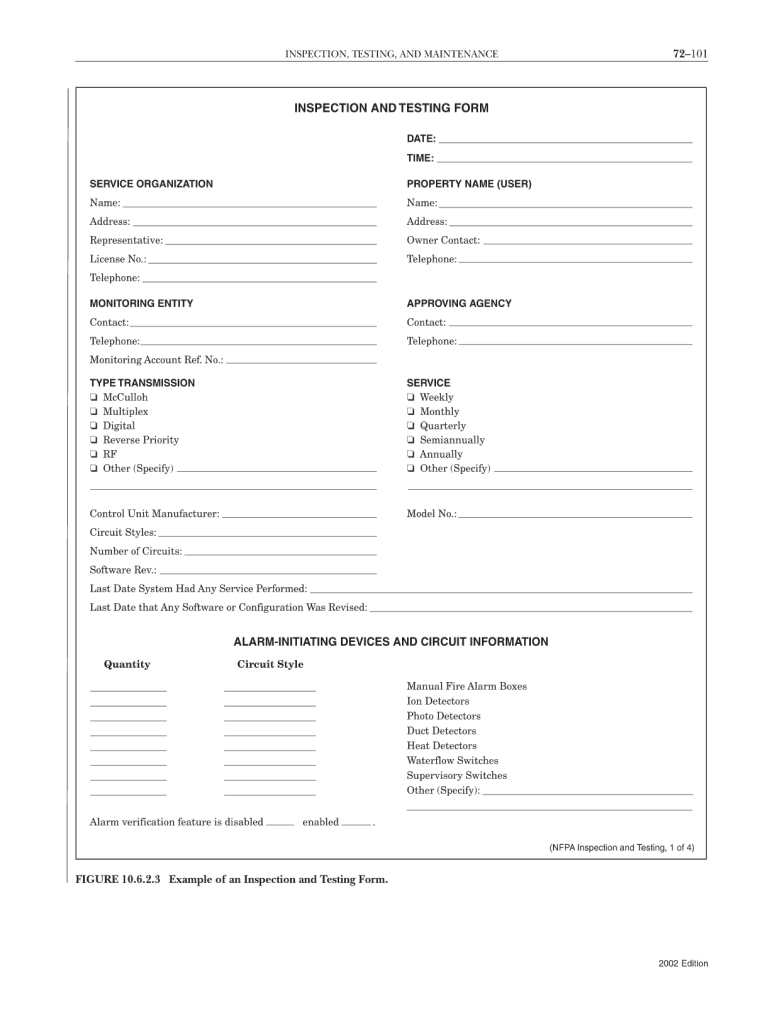







Definition & Meaning of Fire Alarm Inspection Form
The fire alarm inspection form serves as an essential document that details the evaluation and functionality of fire alarm systems. This structured checklist ensures compliance with safety regulations, particularly the NFPA 72 standards, which outline the installation, maintenance, and testing of fire alarm systems. The form typically includes sections for recording the date of inspection, operational status of individual components, maintenance tasks performed, and any discrepancies noted during the inspection process.
Purpose of the Fire Alarm Inspection Form
- Documentation: It provides a documented record of inspections, which is critical during compliance checks by safety authorities.
- Safety Assurance: Ensures that all systems are operational and in compliance with safety regulations, minimizing risks associated with fire hazards.
- Maintenance Tracking: Helps track the maintenance history of fire alarm systems, which can be vital during incidents or audits.
How to Use the Fire Alarm Inspection Form Excel
Using an Excel-based fire alarm inspection form streamlines the process of data entry and analysis. Follow these steps to effectively utilize the form:
- Open the Template: Download or open the fire alarm inspection form in Excel.
- Enter Facility Details: Fill in essential information about the location of the fire alarm system, including the address and facility name.
- Record Inspection Data: For each component of the fire alarm system, input relevant data such as functional testing results, sensor locations, and any findings.
- Use Formulas for Calculations: Employ Excel formulas to automatically calculate compliance scores or summarize findings if your template includes those features.
- Save & Share: Once completed, save the form and share it with stakeholders for review or record-keeping.
Benefits of Using Excel
- Data Analysis: Easily analyze inspection results using built-in functions for averages, trends, and summary statistics.
- Customization: Tailor the form to meet specific needs or compliance metrics pertinent to your organization.
Key Elements of the Fire Alarm Inspection Form Excel
An effective fire alarm inspection form should encompass several key elements to ensure comprehensive assessments. These components typically include:
- Identification Information: Space for recording the inspector's name, inspection date, and the facilities being inspected.
- Component Verification: Sections for each system component, such as smoke detectors, manual pull stations, and notification appliances, with checkboxes for operational status.
- Test Results: Areas to document the results of functional tests, including whether each component passed or failed.
- Maintenance Actions: Annotations for any corrective actions taken during the inspection, along with dates and personnel involved.
- Comments Section: Space for additional notes, observations about system conditions, or recommendations for future maintenance needs.
Importance of Each Element
- Ensures thorough evaluation of all critical components and provides a clear record for accountability and safety compliance.
Steps to Complete the Fire Alarm Inspection Form Excel
Completing the fire alarm inspection form requires diligent attention to detail. The following steps outline the process:
- Prepare Your Tools: Ensure that any necessary inspection tools, such as testing equipment or a flashlight, are on hand.
- Review Safety Procedures: Familiarize yourself with the fire safety protocols and the specific checklists required for NFPA compliance.
- Conduct Inspections: Carefully examine each component of the fire alarm system, testing functionality where required.
- Document Findings: As you inspect, fill in the inspection form in Excel, noting any issues immediately and avoiding last-minute entries.
- Review and Finalize: Double-check all entries to ensure completeness and accuracy, and finalize the document for submission or storage.
Additional Considerations
- Schedule inspections regularly to maintain compliance and minimize risks associated with fire safety.
Who Typically Uses the Fire Alarm Inspection Form Excel
A variety of professionals utilize the fire alarm inspection form, each playing a critical role in maintaining safety standards:
- Fire Safety Inspectors: Individuals responsible for conducting inspections as part of compliance verification.
- Building Managers: Personnel who oversee the maintenance of fire alarm systems in commercial and residential properties.
- Contractors: Professionals tasked with installing or servicing fire alarm systems, who may be required to fill out inspection forms to document their work.
- Insurance Inspectors: Representatives from insurance companies who assess compliance and risks associated with fire safety systems.


Relevance to Each User Group
Each group leverages the fire alarm inspection form to ensure compliance, facilitate maintenance, and reduce liability related to fire hazards.
Importance of the Fire Alarm Inspection Form Excel
The fire alarm inspection form is critical for several reasons:
- Regulatory Compliance: Adhering to local laws and NFPA guidelines avoids potential fines and legal actions.
- Safety Assurance: Regular inspections help identify failures before they contribute to hazardous situations.
- Documentation for Emergencies: Well-maintained records assist emergency responders during incidents, providing vital information about the system's condition.
Risk Mitigation
By using the fire alarm inspection form consistently, the risks associated with inadequate fire alarm systems are significantly reduced, enhancing overall safety for buildings and their occupants.




