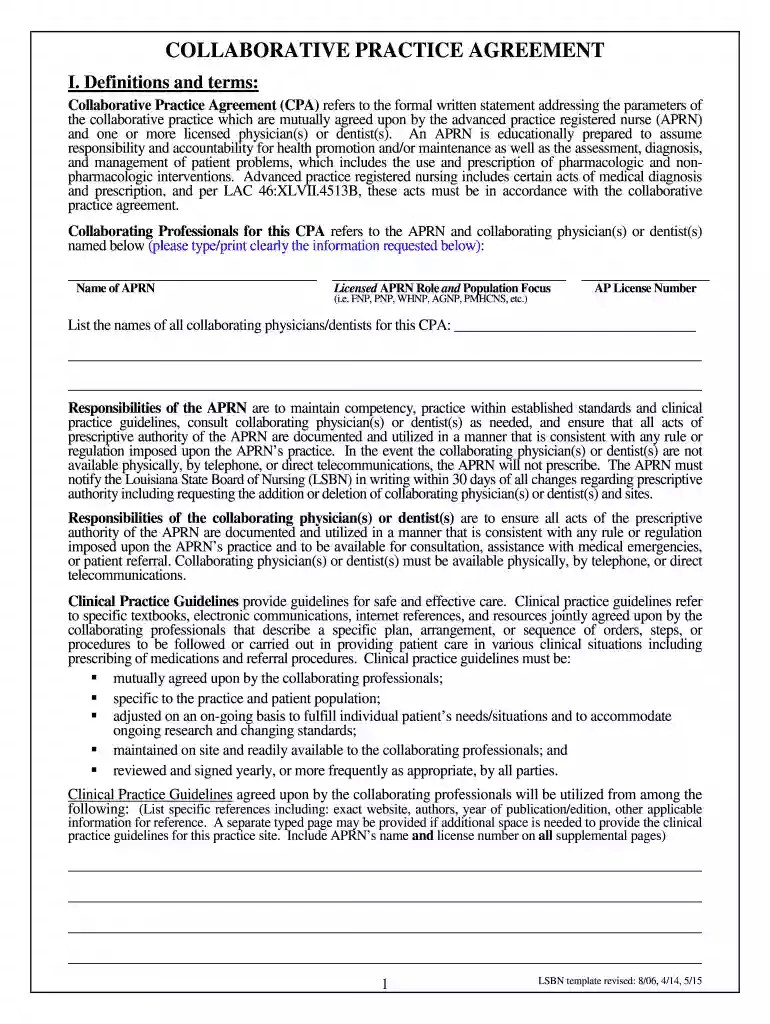
Definition and Overview of Nurse Practitioner Collaborative Agreement Template
A nurse practitioner collaborative agreement template is a formal document that outlines the working relationship between a nurse practitioner (NP) and a collaborating physician or dentist. This agreement delineates the roles, responsibilities, and scope of practice for the nurse practitioner, ensuring compliance with regulatory standards and guidelines. Understanding this template is crucial for establishing a clear framework for collaborative practice, which enhances patient care and safeguards the legal rights of all parties involved.
Key Components of the Collaborative Agreement
- Scope of Practice: Defines the specific services that the nurse practitioner is authorized to provide.
- Roles and Responsibilities: Clearly outlines the duties of both the NP and the collaborating physician, including shared obligations to patients.
- Patient Care Guidelines: Detailed protocols for patient assessment, diagnosis, and treatment methodologies.
- Prescribing Authority: Specific guidelines on the medications that the NP can prescribe or manage, which vary by state regulations.
- Documentation Practices: Establishes the standards for maintaining patient records and communication between the NP and physician.
How to Use the Nurse Practitioner Collaborative Agreement Template
Utilizing a nurse practitioner collaborative agreement template involves several clear steps that ensure the document meets legal and professional standards. This process not only promotes effective collaboration between healthcare providers but also complies with state-specific regulations.
Steps to Effectively Utilize the Template
- Select the Appropriate Template: Based on your state’s regulations, specific formats of the template may be required.
- Complete Relevant Information: Fill out essential details such as the names of the NP and the collaborating physician, addresses, and practice locations.
- Define the Scope of Practice: Clearly articulate the range of services the NP will provide, taking into consideration state laws.
- Review and Edit: Ensure all sections are accurate and comprehensive, allowing for future adjustments based on evolving legal requirements or practice needs.
- Secure Signatures: Both parties must sign the final document to validate the agreement, often necessitating witnesses or notary services depending on local laws.
Additional Considerations
- Keep copies of the signed agreement in both digital and physical formats for easy access.
- Regularly review the agreement to make updates based on changes in healthcare laws or practices.
How to Obtain the Nurse Practitioner Collaborative Agreement Template
Acquiring a nurse practitioner collaborative agreement template can be done through several channels. Ensuring that you have an up-to-date and legally compliant version is crucial.
Sources for the Template
- Online Platforms: Websites that specialize in legal or medical documentation, such as DocHub, often provide templates that can be tailored to specific state requirements.
- Professional Organizations: Associations for nurse practitioners typically offer resources, including templates vetted by legal experts in healthcare.
- Legal Counsel: Consulting with a lawyer who specializes in healthcare law can provide a customized template that meets specific operational needs and legal standards.
- State Boards: Some state nursing boards may provide sample templates or guidelines to ensure compliance with state laws.
Important Terms Related to the Nurse Practitioner Collaborative Agreement Template
Understanding the terminology associated with nurse practitioner collaborative agreements is essential for effective practice and legal compliance.
Fundamental Terms to Know
- Collaborative Practice Agreement: The full term for the type of document being discussed, providing a broader context for collaborative relationships.
- Advanced Practice Registered Nurse (APRN): A term encompassing nurse practitioners, nurse midwives, and clinical nurse specialists, each offering specialized care.
- Prescribing Authority: The legal permission granted to certain healthcare providers to prescribe medications.
- Scope of Practice: The defined boundaries of competence and responsibility for a healthcare provider.
- Collaborating Physician: The physician who partners with the nurse practitioner, providing oversight and collaboration based on state laws.
State-Specific Rules for the Nurse Practitioner Collaborative Agreement Template
Each U.S. state has its own set of regulations governing nurse practitioner practice, including the collaborative agreements. It is critical for nurse practitioners to understand these specific regulations to ensure compliance.
Overview of State Regulations
- California: Nurse practitioners must have a collaborative agreement to prescribe medications, emphasizing the roles of both NPs and physicians.
- Florida: Regulations focus on the level of supervision required and may allow for a more autonomous role for NPs compared to other states.
- Virginia: Specific requirements for initiating, maintaining, and terminating collaborative agreements, particularly in relation to prescriptive authority.
- Texas: Allows for reduced supervisory requirements after an NP has been in practice for a certain number of years.
Compliance Necessities
- Regularly update agreements to reflect changes in state legislation or practice guidelines.
- Maintain documentation to demonstrate compliance with state laws, which may include maintaining a list of approved medications and procedures.
Examples of Using the Nurse Practitioner Collaborative Agreement Template
Practical applications of a nurse practitioner collaborative agreement template are varied and reflect the diverse settings in which NPs work. Understanding these examples can enhance the clarity and utility of the template.
Real-World Scenarios
- Primary Care Settings: In a family practice, an NP utilizes the collaborative agreement to manage patient follow-ups independently while collaborating with a supervising physician for complex cases.
- Specialty Clinics: An NP in an oncology clinic employs the agreement to outline their role in administering treatments and patient education, while still having the physician available for consultations.
- Rural Health Clinics: In underserved areas, the template plays a crucial role in establishing a clear partnership between NPs and physicians to enhance healthcare access, creating shared responsibilities in patient management.
Benefits of Utilizing the Template
- Facilitates clear communication between healthcare providers.
- Provides a legal safeguard for both parties by outlining responsibilities and expectations.
- Enhances patient outcomes through defined collaborative practices, ultimately benefiting community health.
This structured approach to the nurse practitioner collaborative agreement template ensures a comprehensive understanding, aiding practitioners in establishing and maintaining effective collaborative relationships.